
Face paint offer: Buy 3, get the 4th for free!
Add 4 Epic Effect Water Based Make Up colors of your choice to your cart and get 1 of them for free.


Recently viewed products
Plate Armor Arms
A complete plate armor kit is built from the inside out, and the arms are where that process becomes most visible. Gauntleted fists, articulated elbow plates, vambraces catching the light along the forearm: arm armor is what transforms a chest piece into a proper harness and a costume into a convincing warrior. It is also, for many builders, where the most satisfying detail work happens.
This range covers the full arm from wrist to mid upper arm and beyond, in styles spanning historical reproduction to high fantasy. Whether you are assembling a historically grounded knight's harness piece by piece or pulling together a character kit for your next LARP event, the subcategories below are the place to start.
What Is Plate Armor for the Arms?
Medieval arm armor developed over centuries from simple leather and mail protection into one of the most sophisticated engineering achievements of the period. A fully articulated late medieval arm harness protected the entire arm from shoulder to fingertip while allowing enough mobility to fight effectively. Achieving that required a series of distinct components, each shaped to a specific part of the arm and each solving a different problem.
That component logic is still the right way to think about building an arm armor kit today. You rarely need everything at once, and different characters, combat systems, and budgets call for different levels of coverage. Understanding what each piece does and where it sits makes the whole process considerably more straightforward.
The Four Components: What Each One Does
Bracers
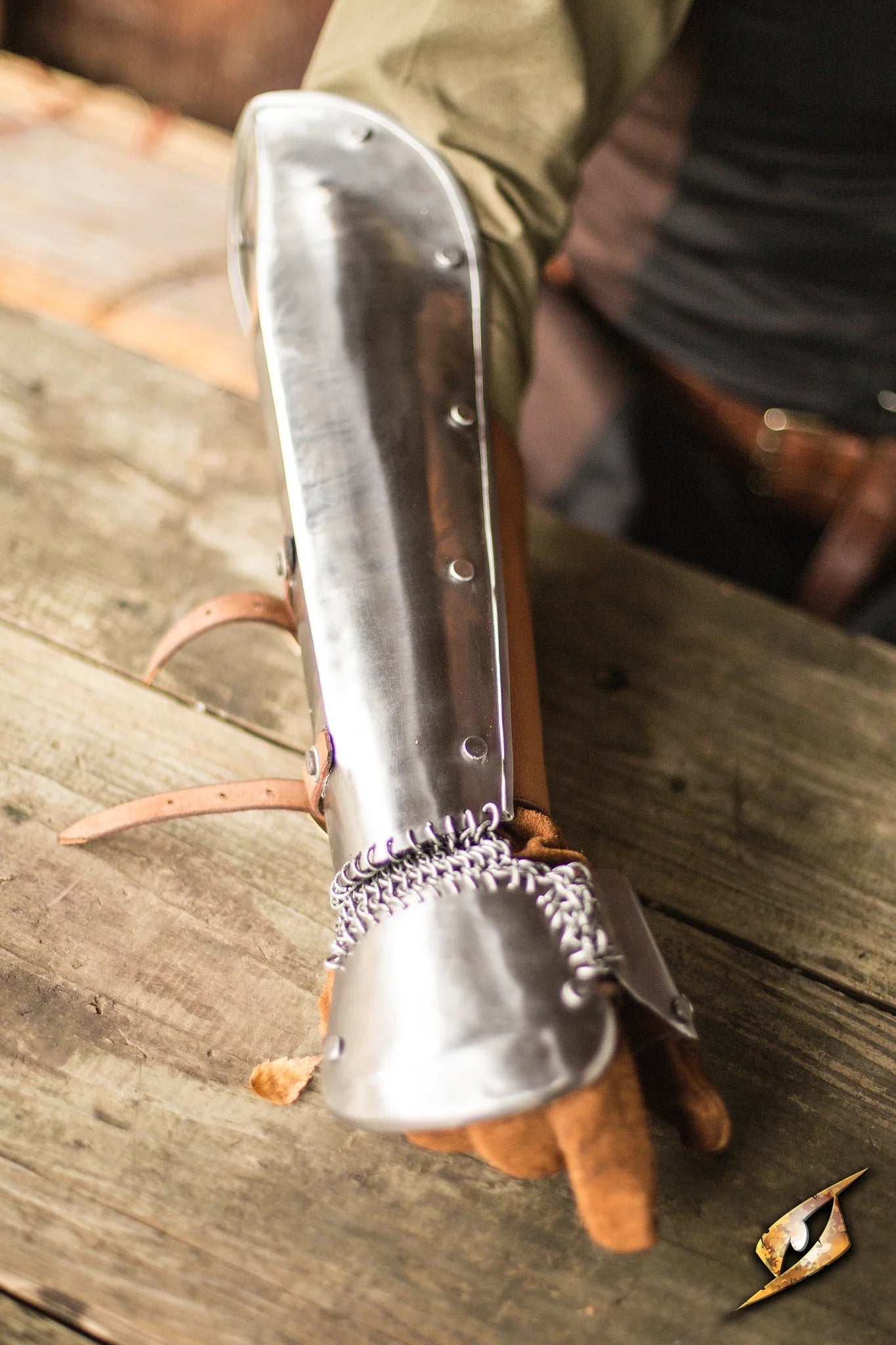
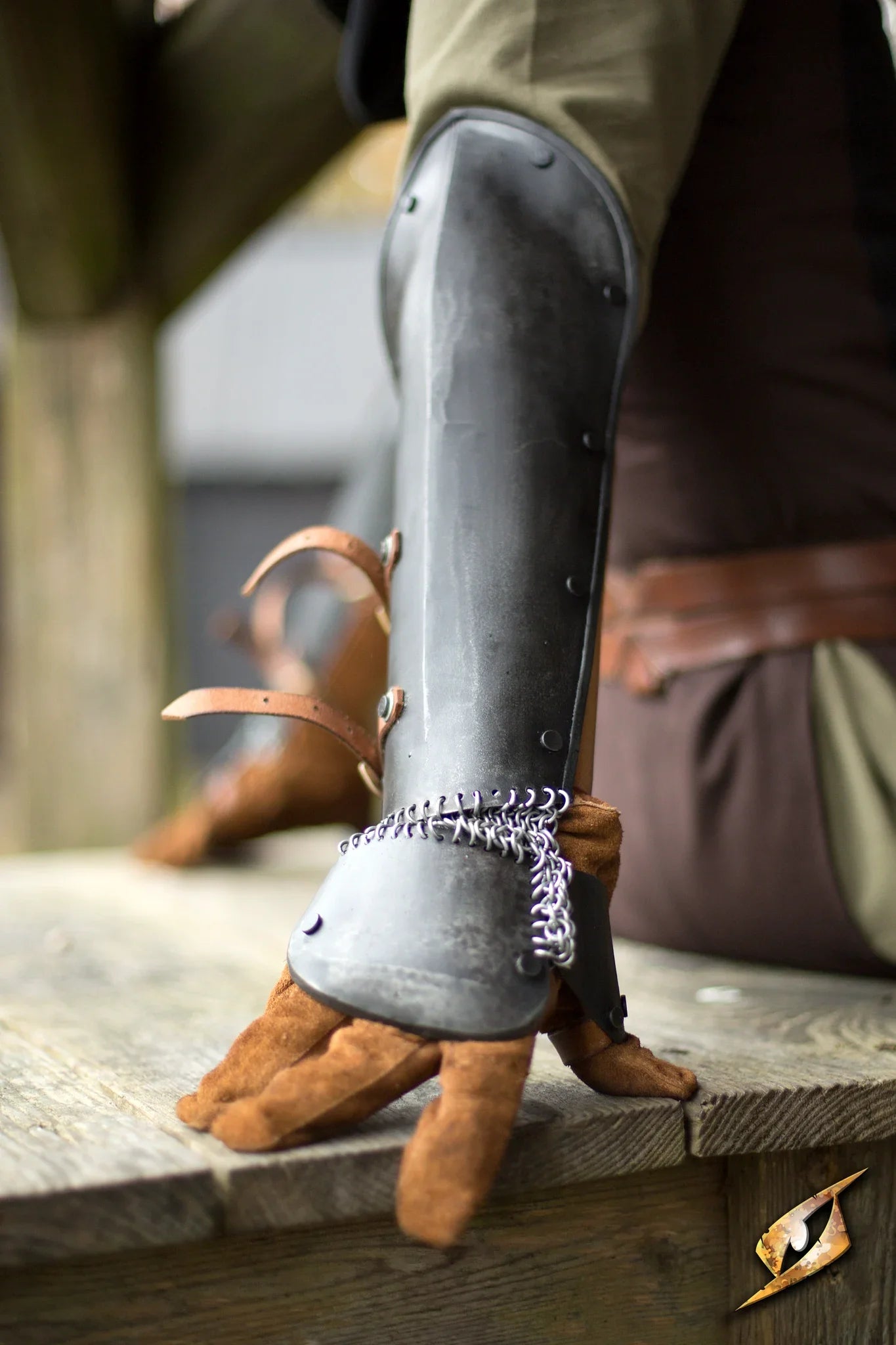
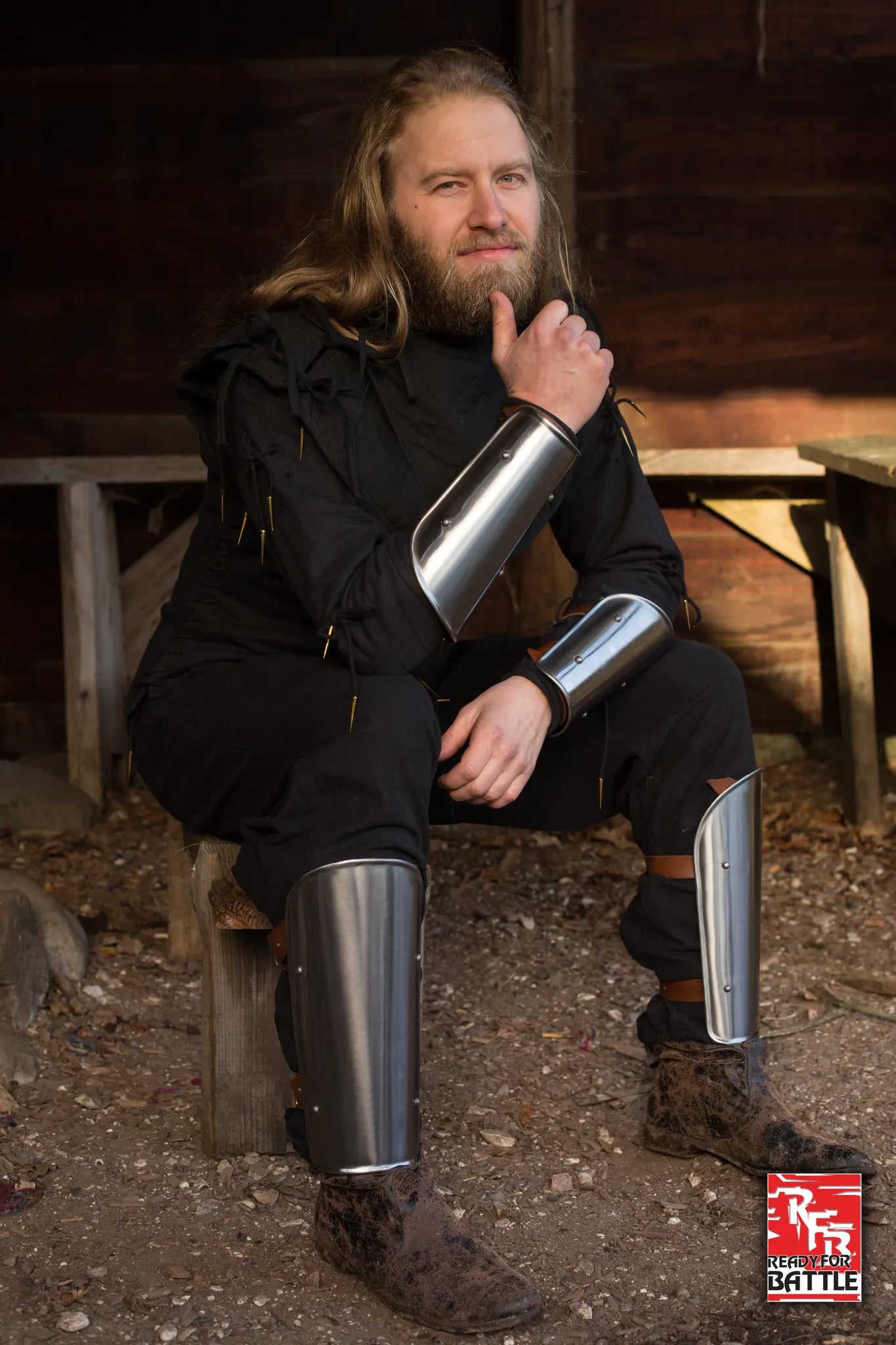
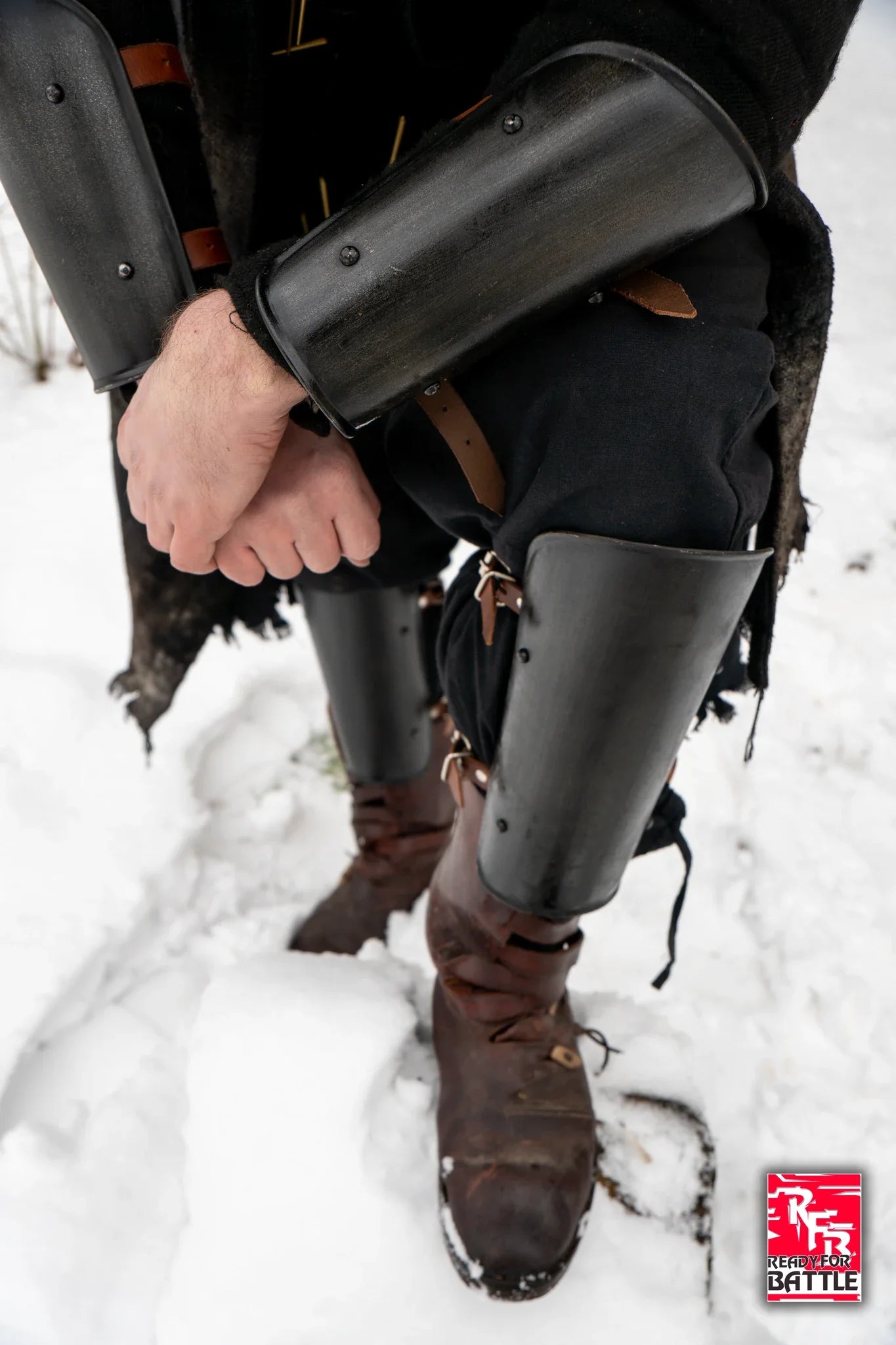
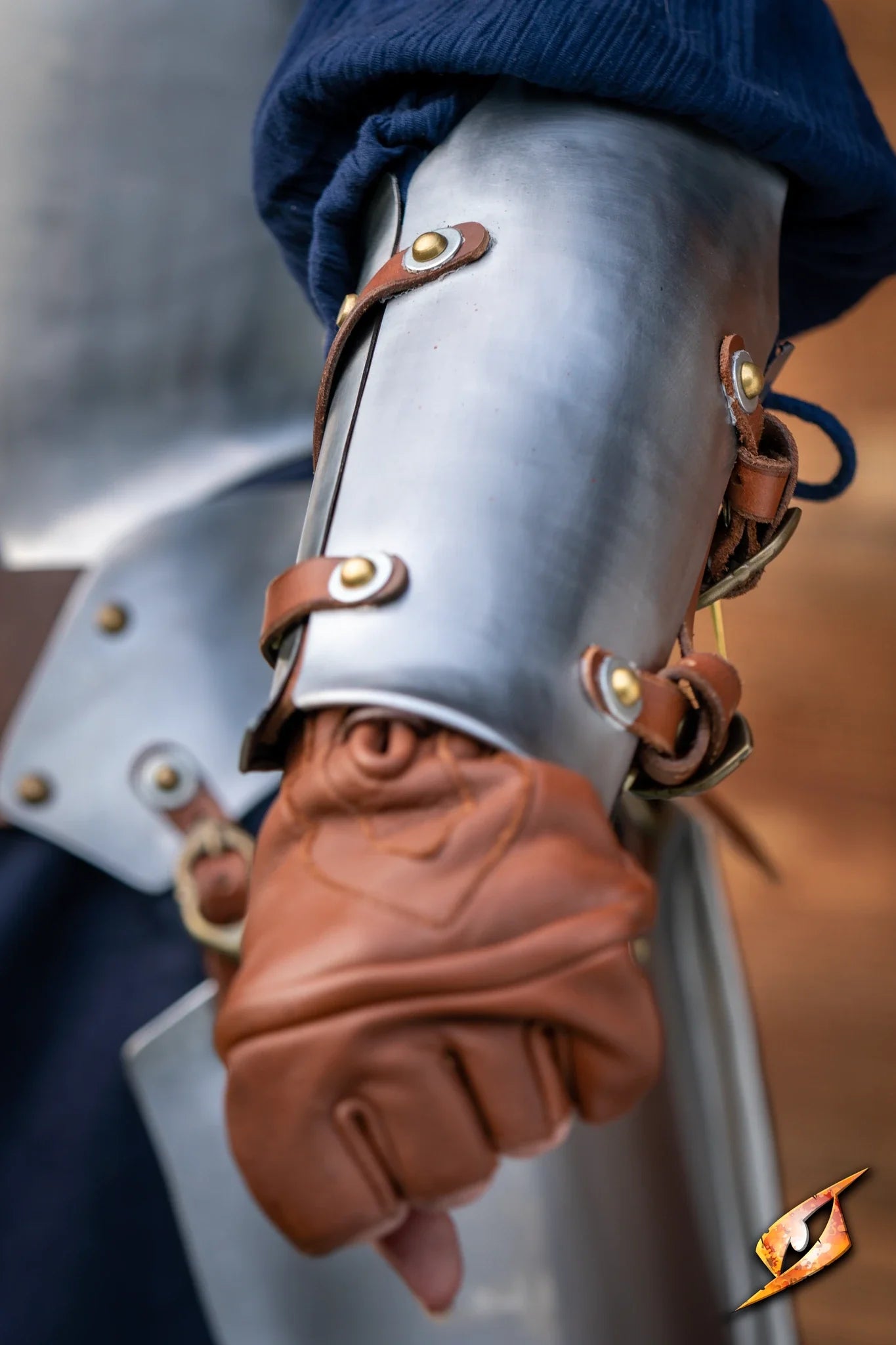
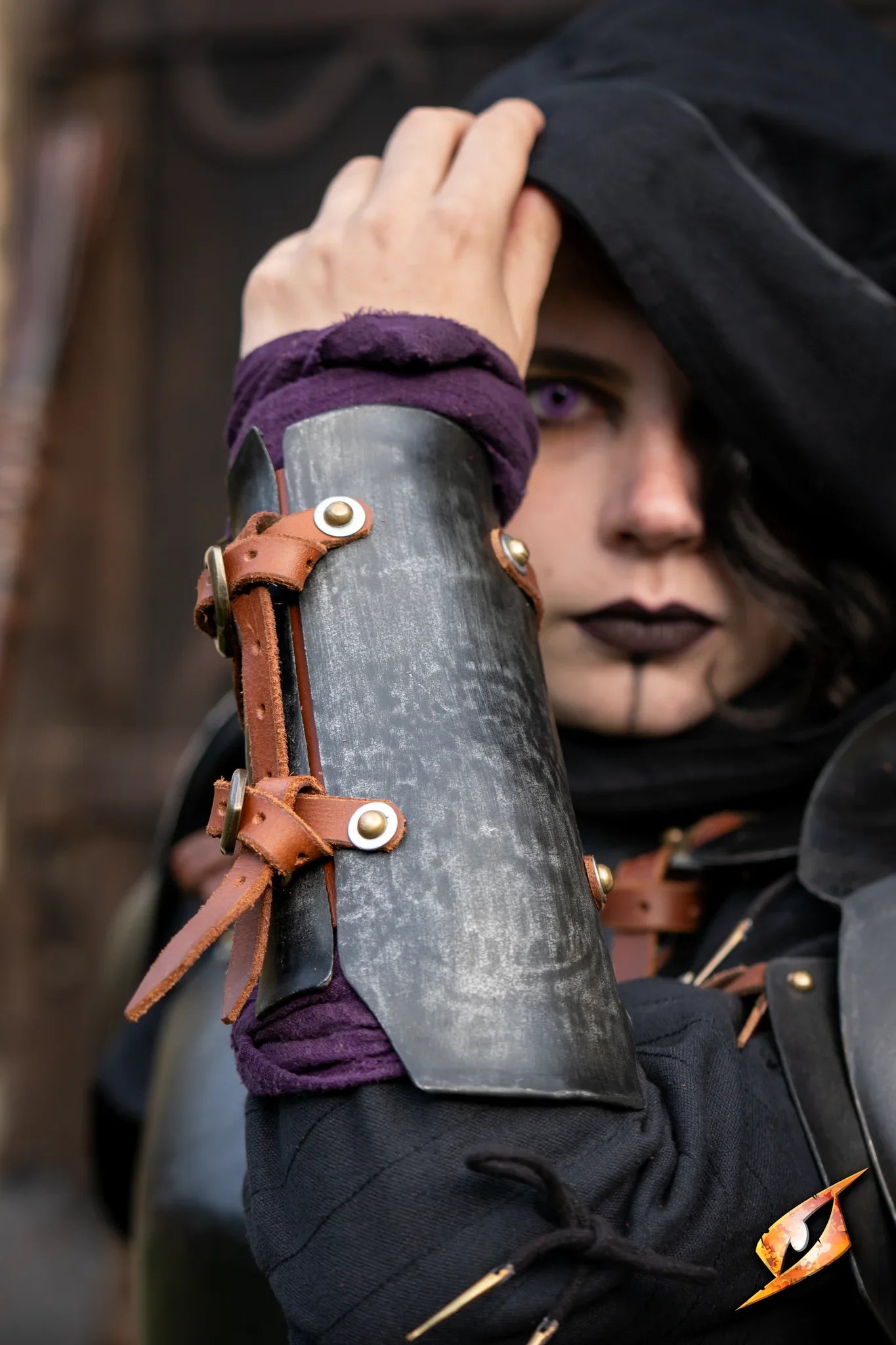
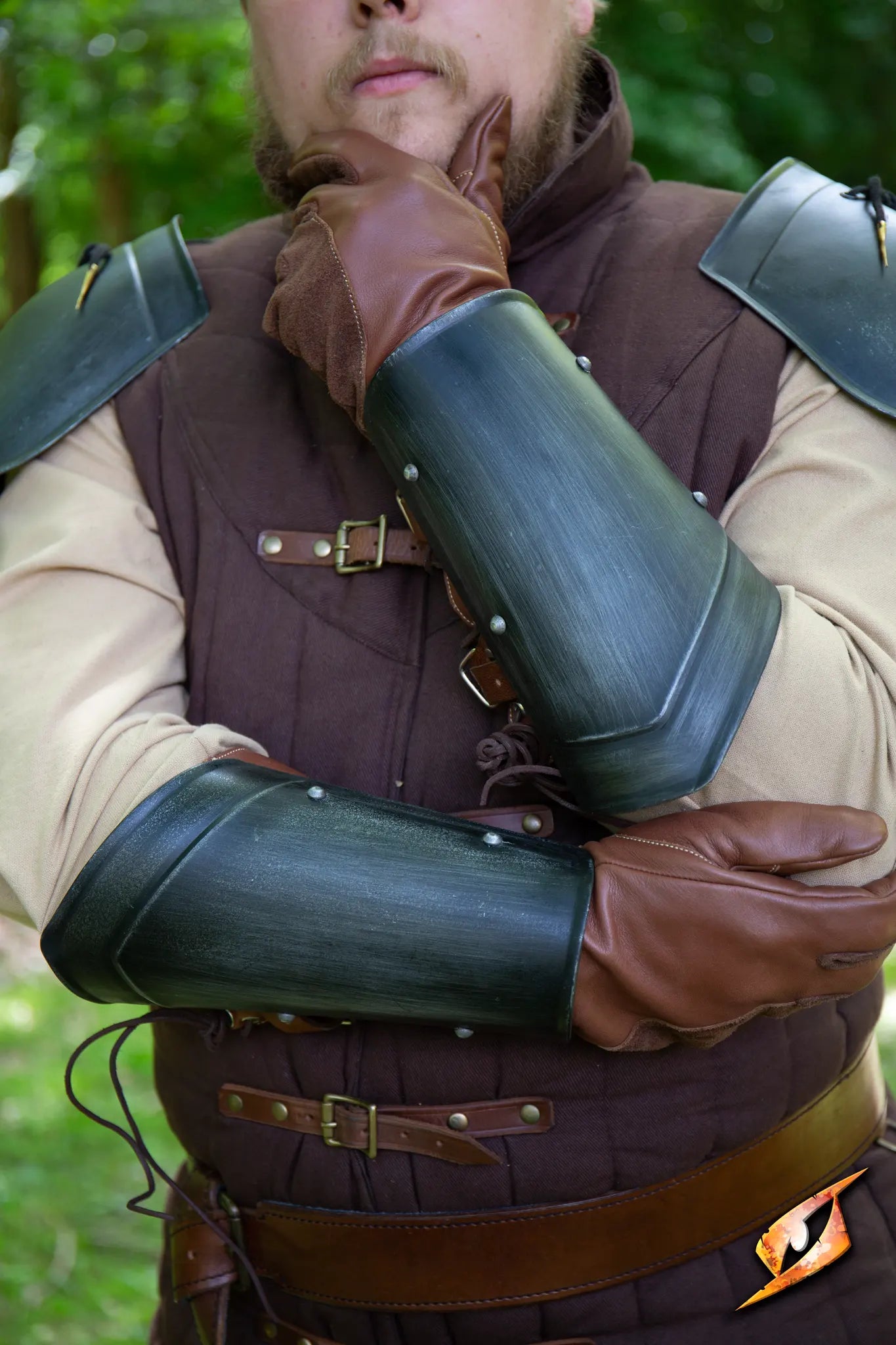
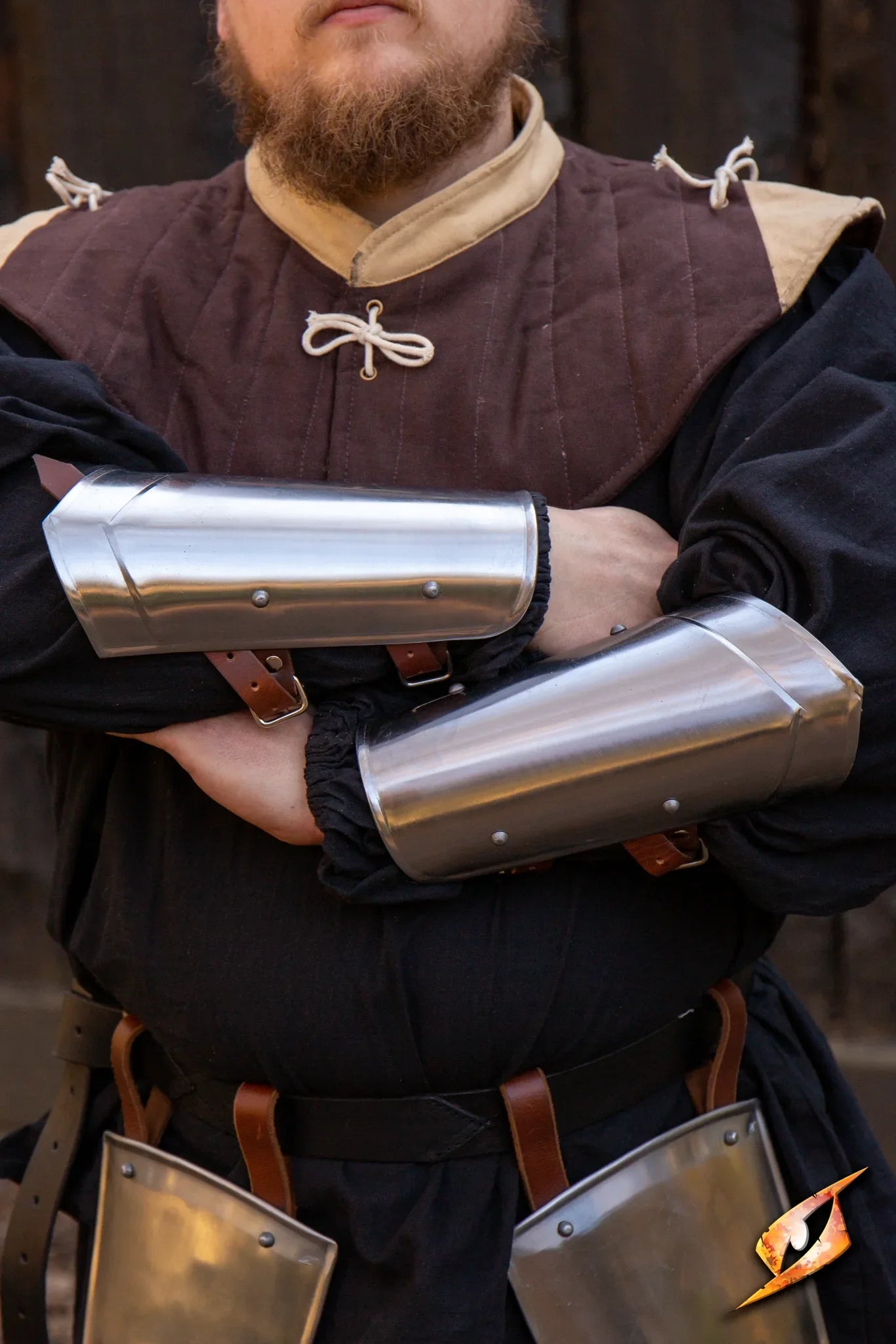
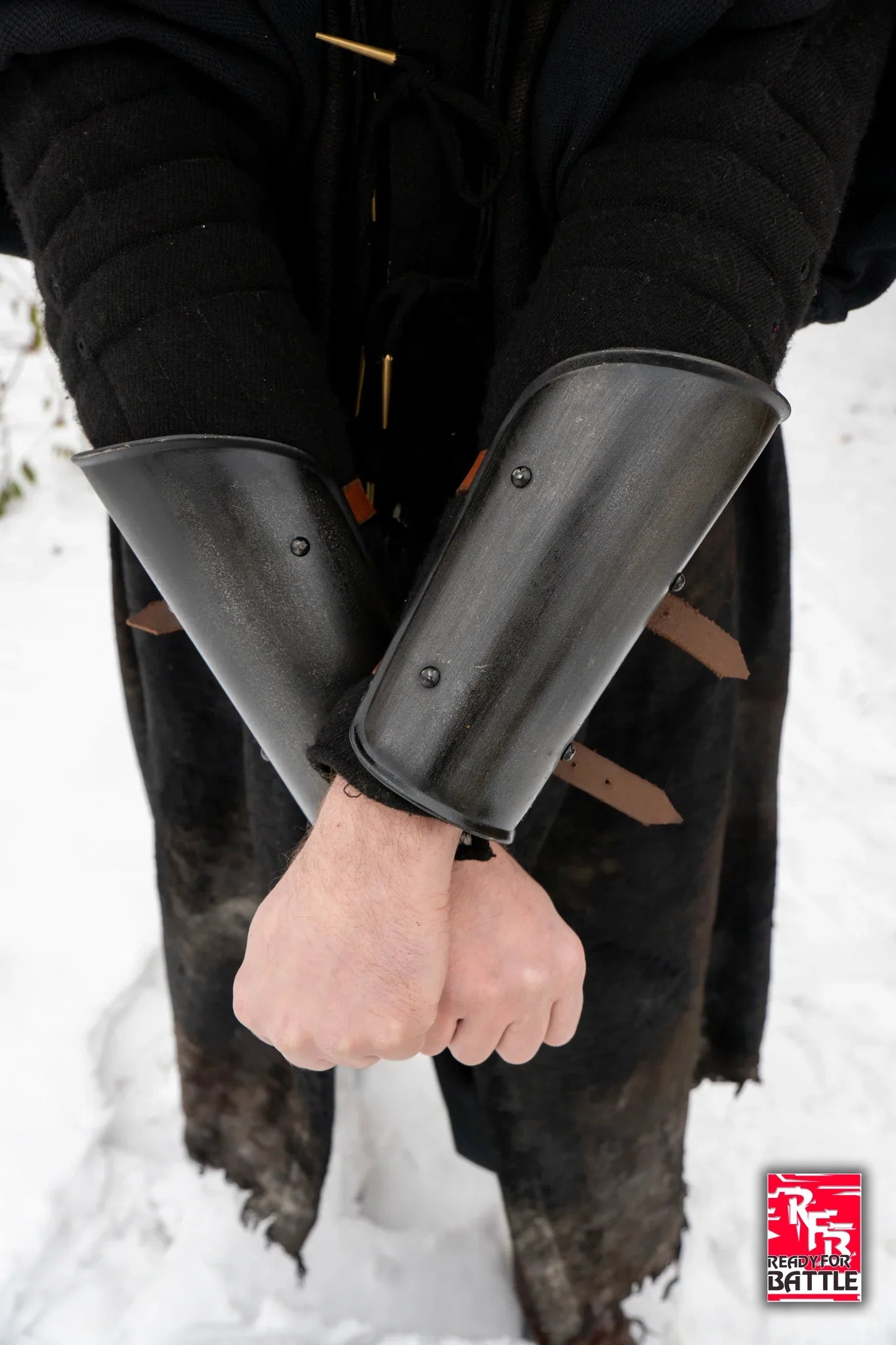
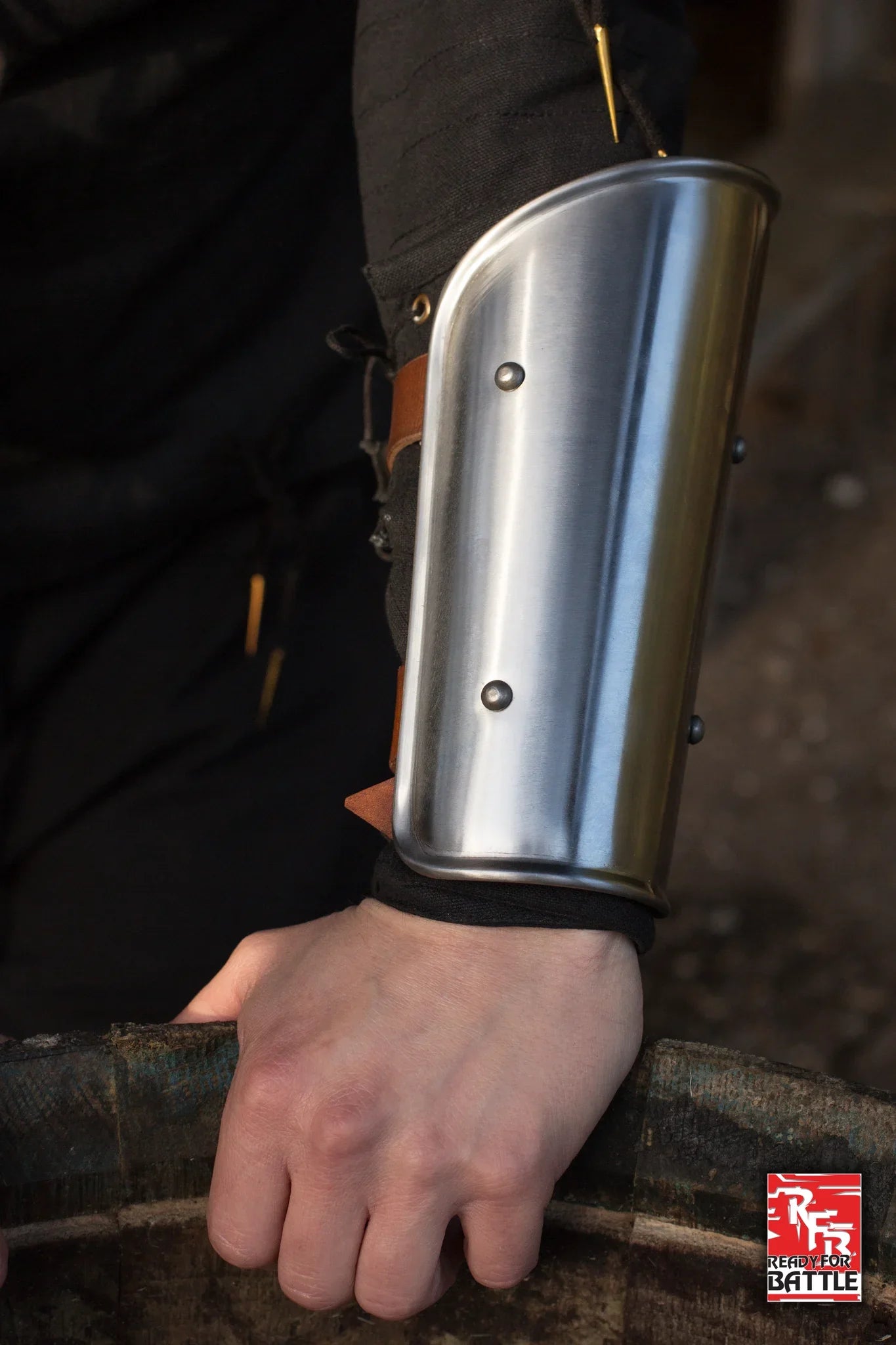
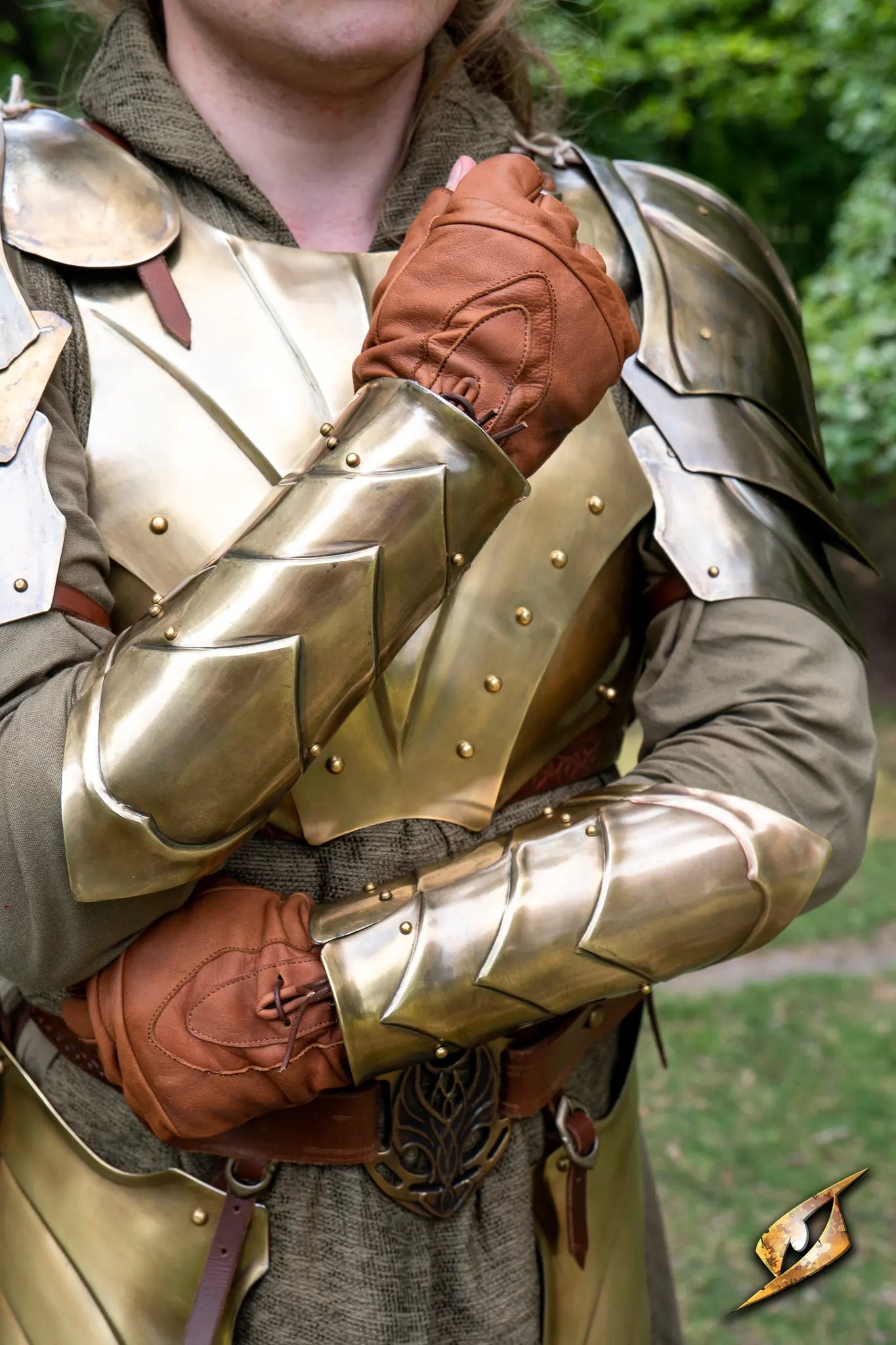
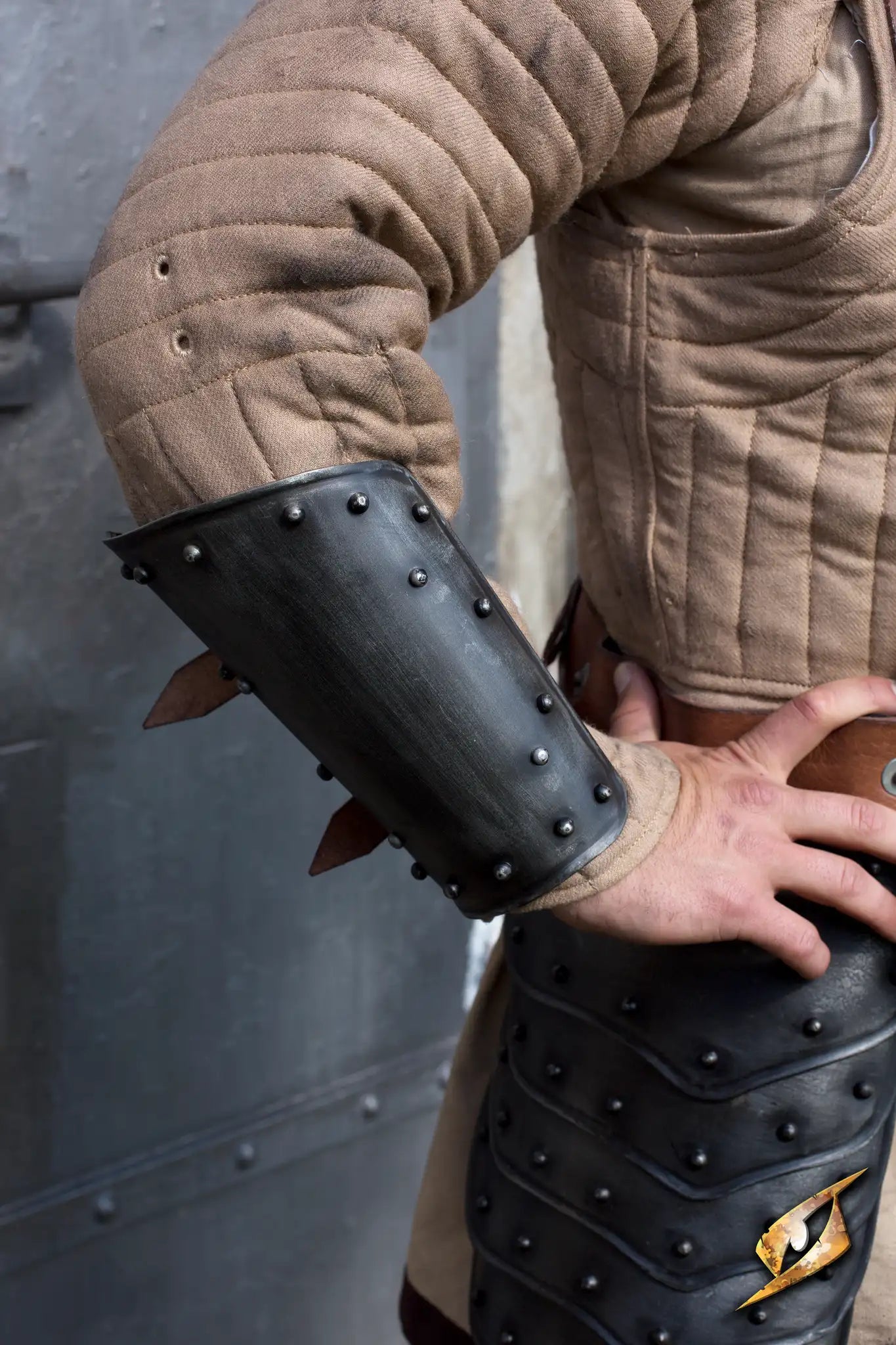
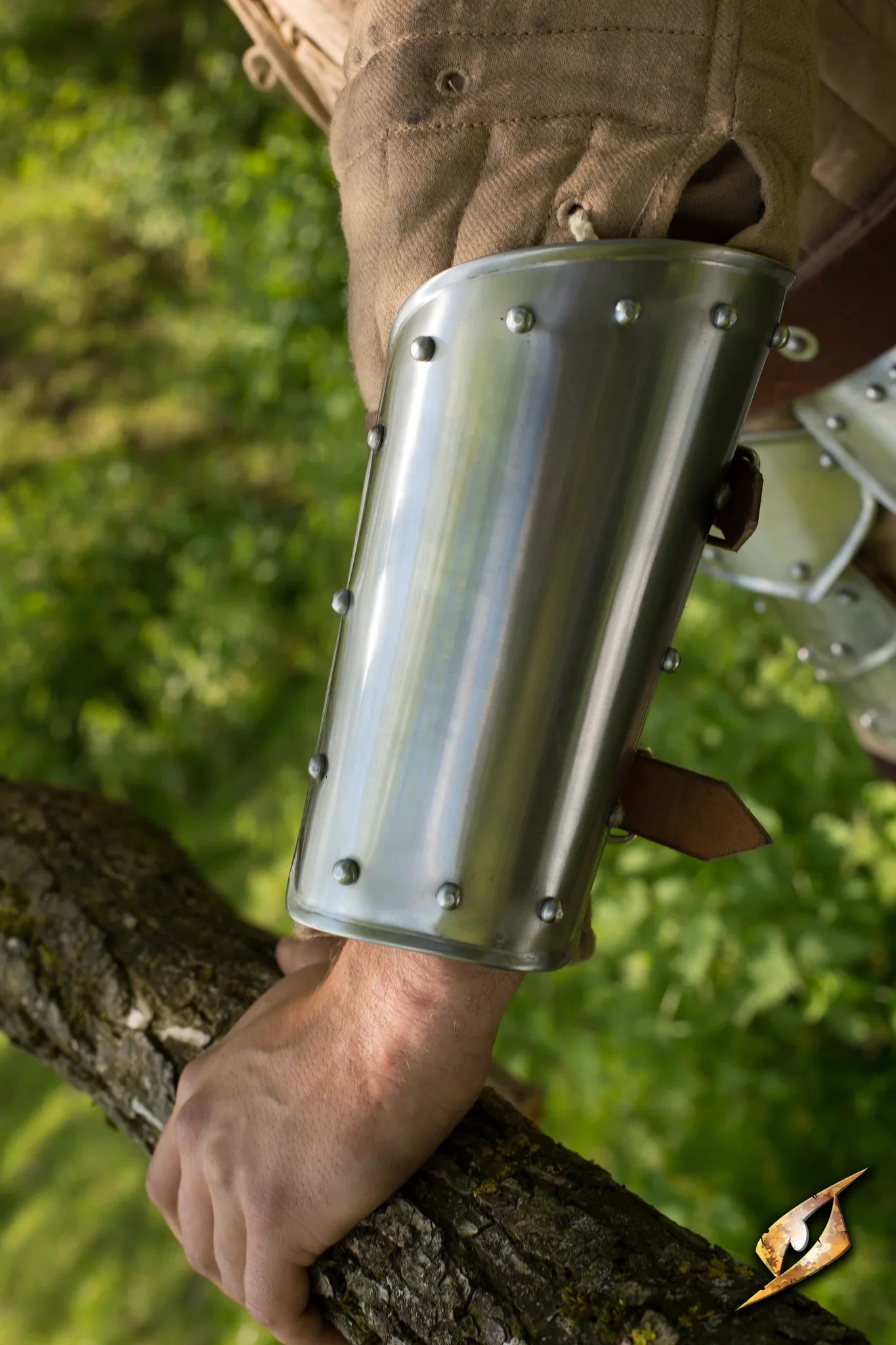
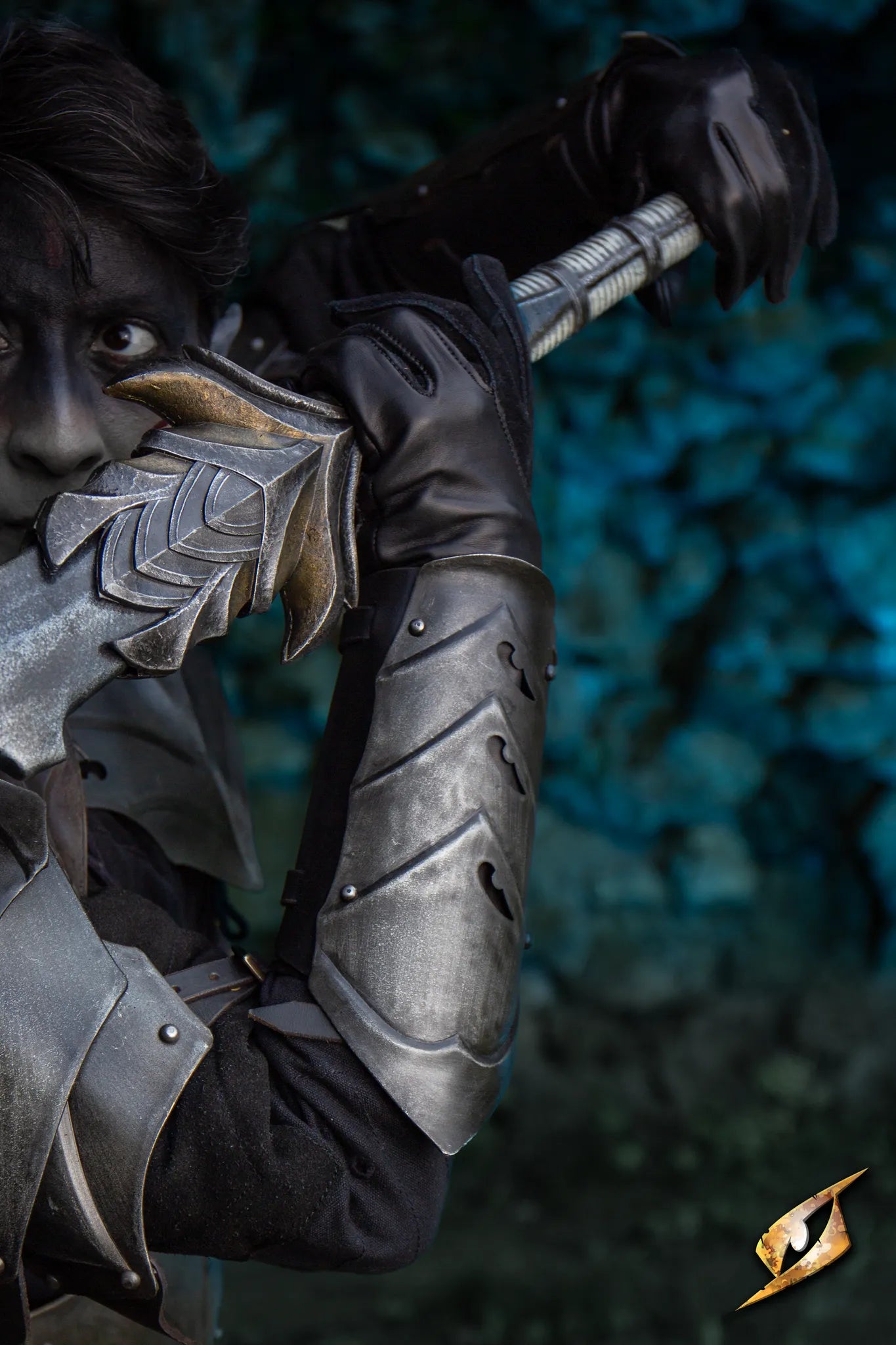
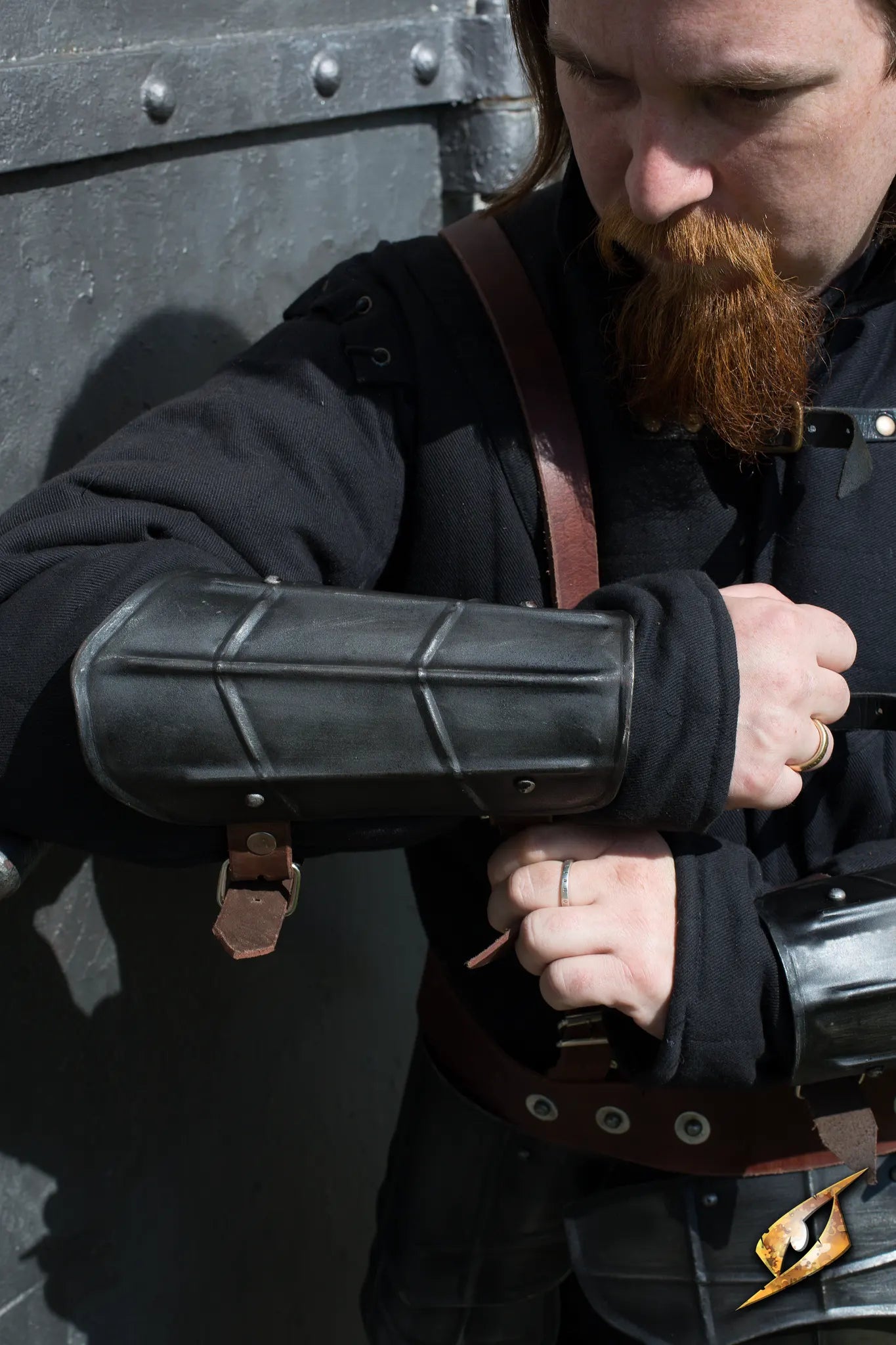
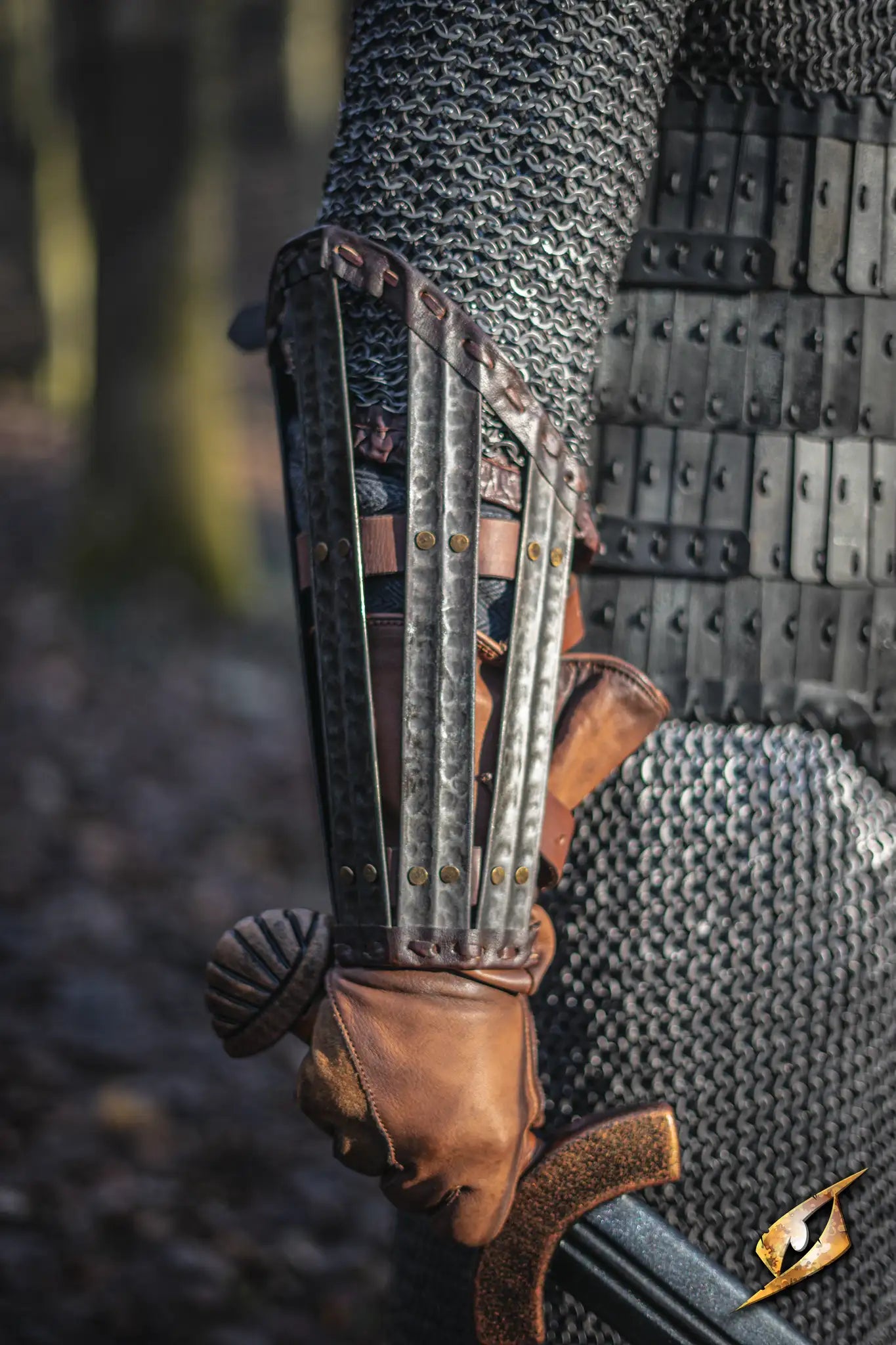
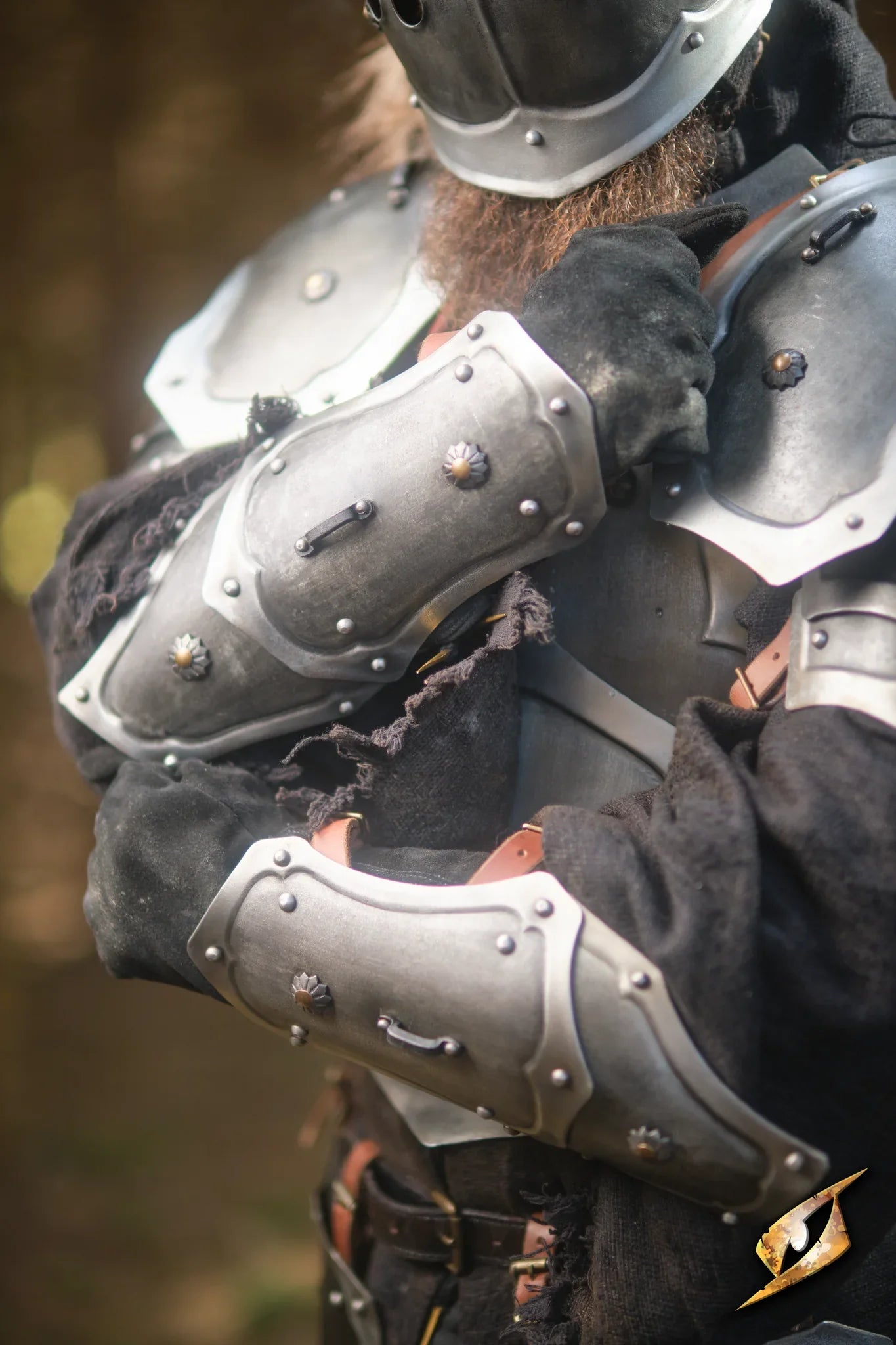
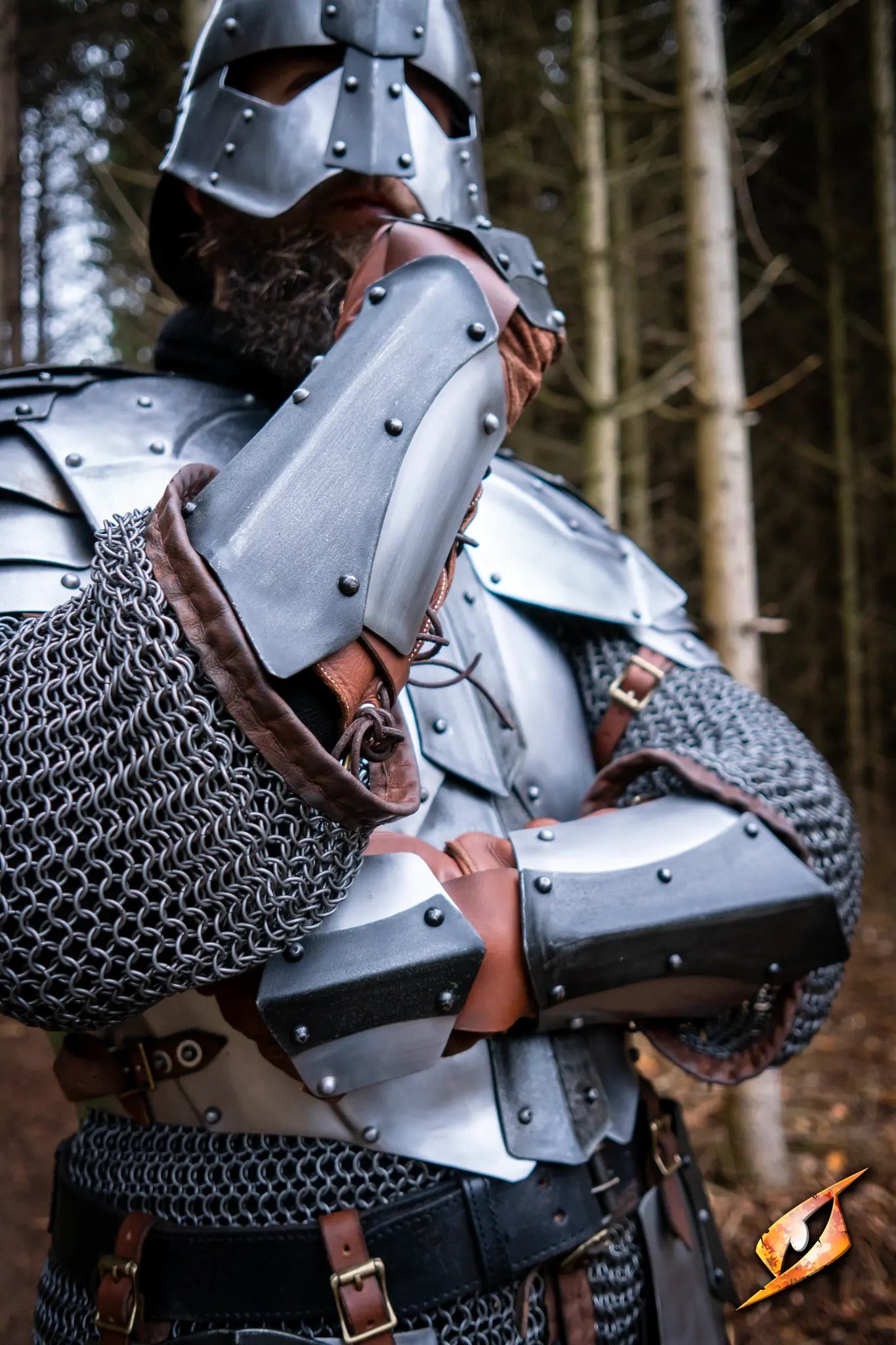
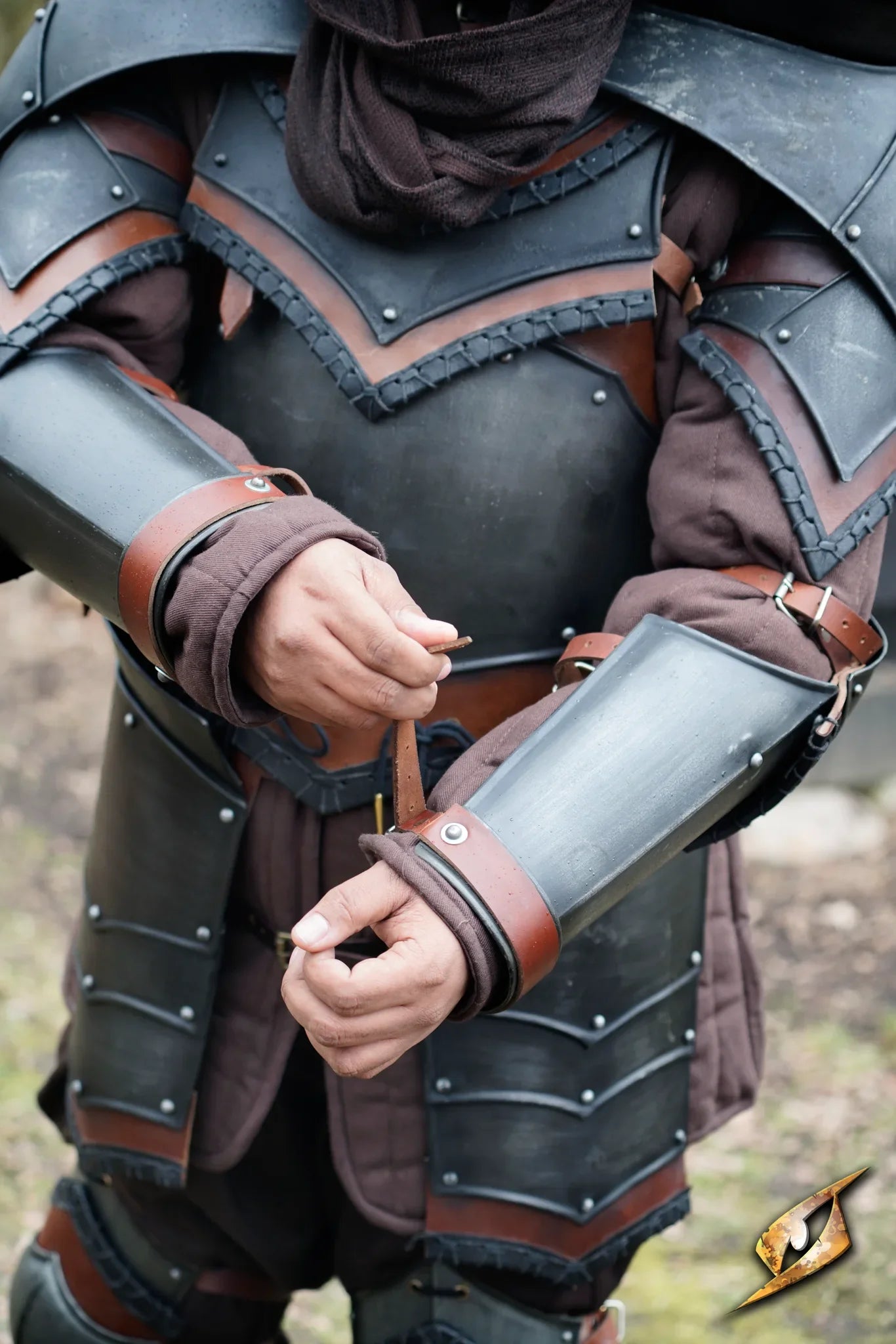
A bracer is the simplest form of forearm protection: a formed plate covering the outside of the lower arm from wrist to elbow. Historically, bracers were used across many cultures and periods because the forearm is one of the most exposed parts of the body in combat. In a LARP context, bracers are often the first arm armor piece a player adds to their kit: affordable, visually effective, and easy to layer over a sleeve or gambeson without restricting movement. They work across a wide range of character types and pair naturally with both leather and steel chest pieces, making them the obvious entry point into arm armor.
Couter
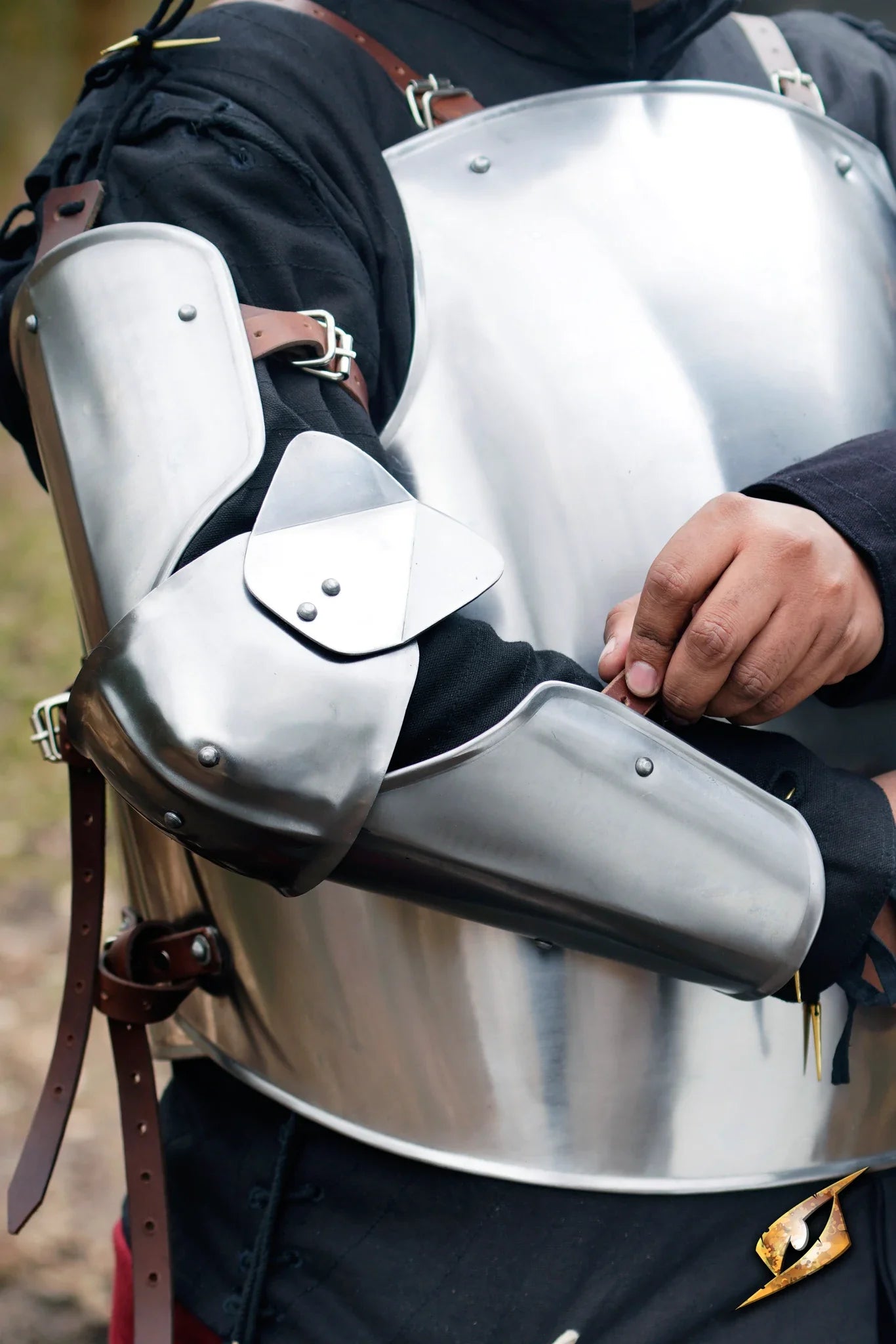
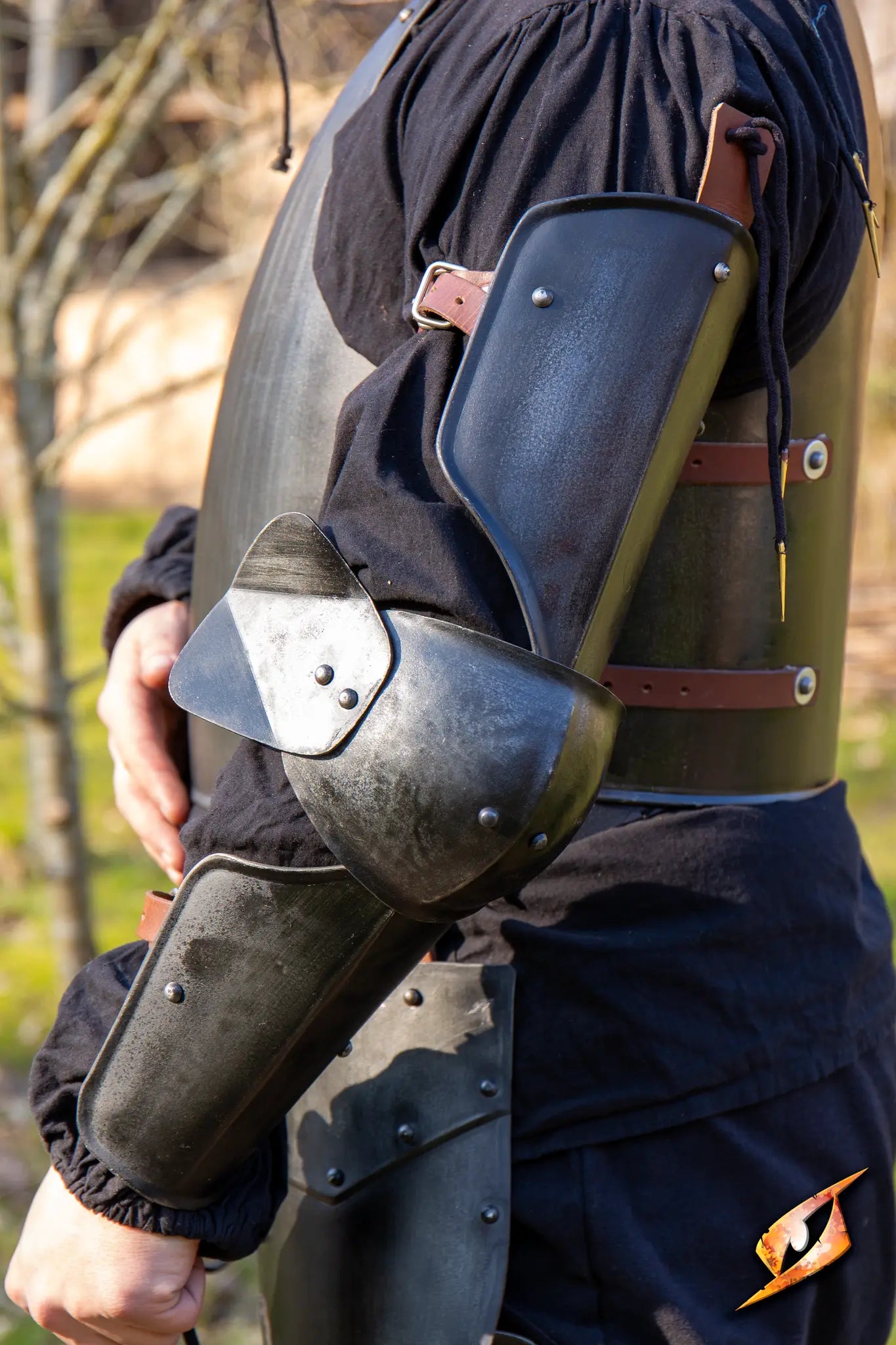
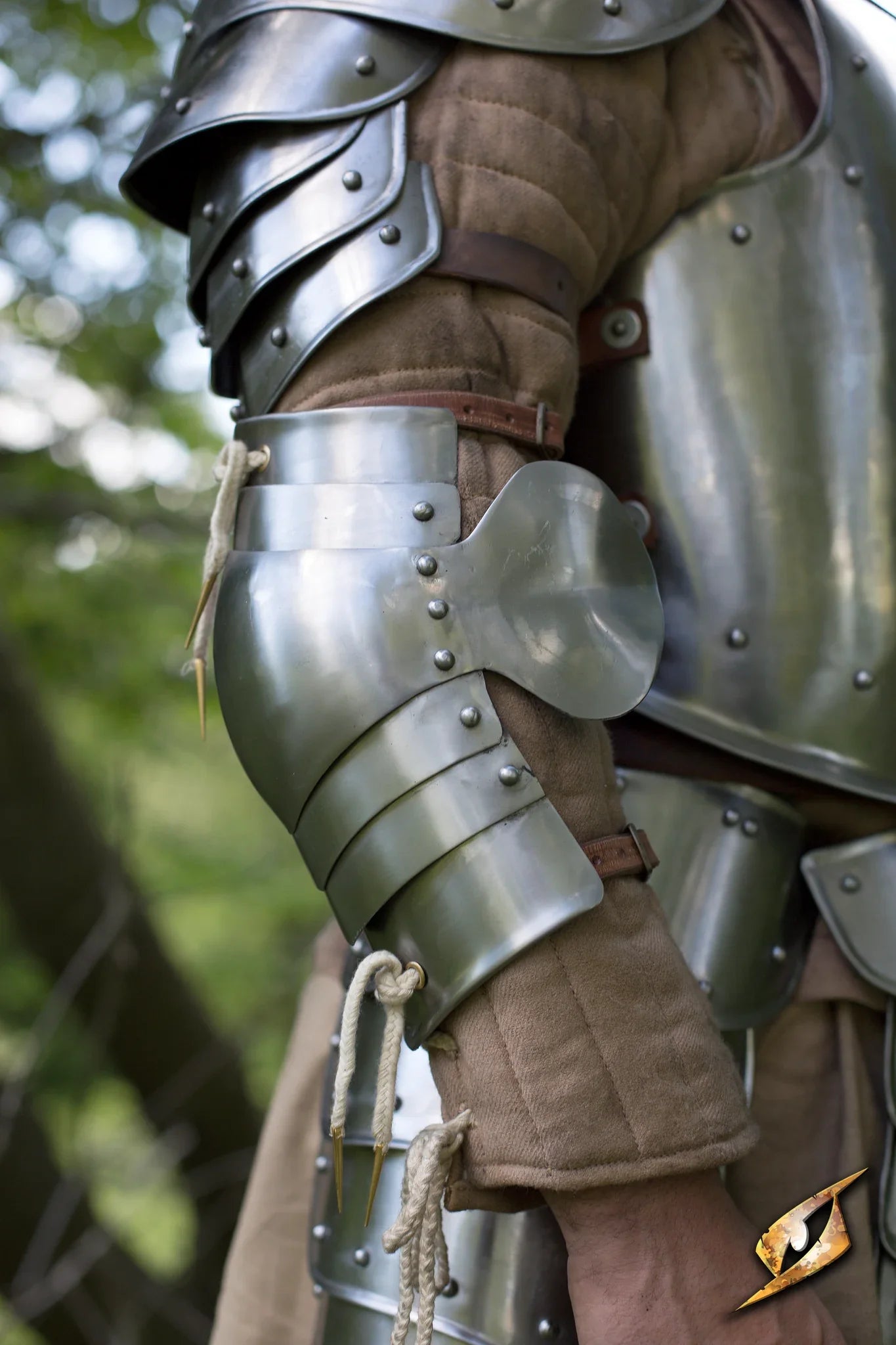
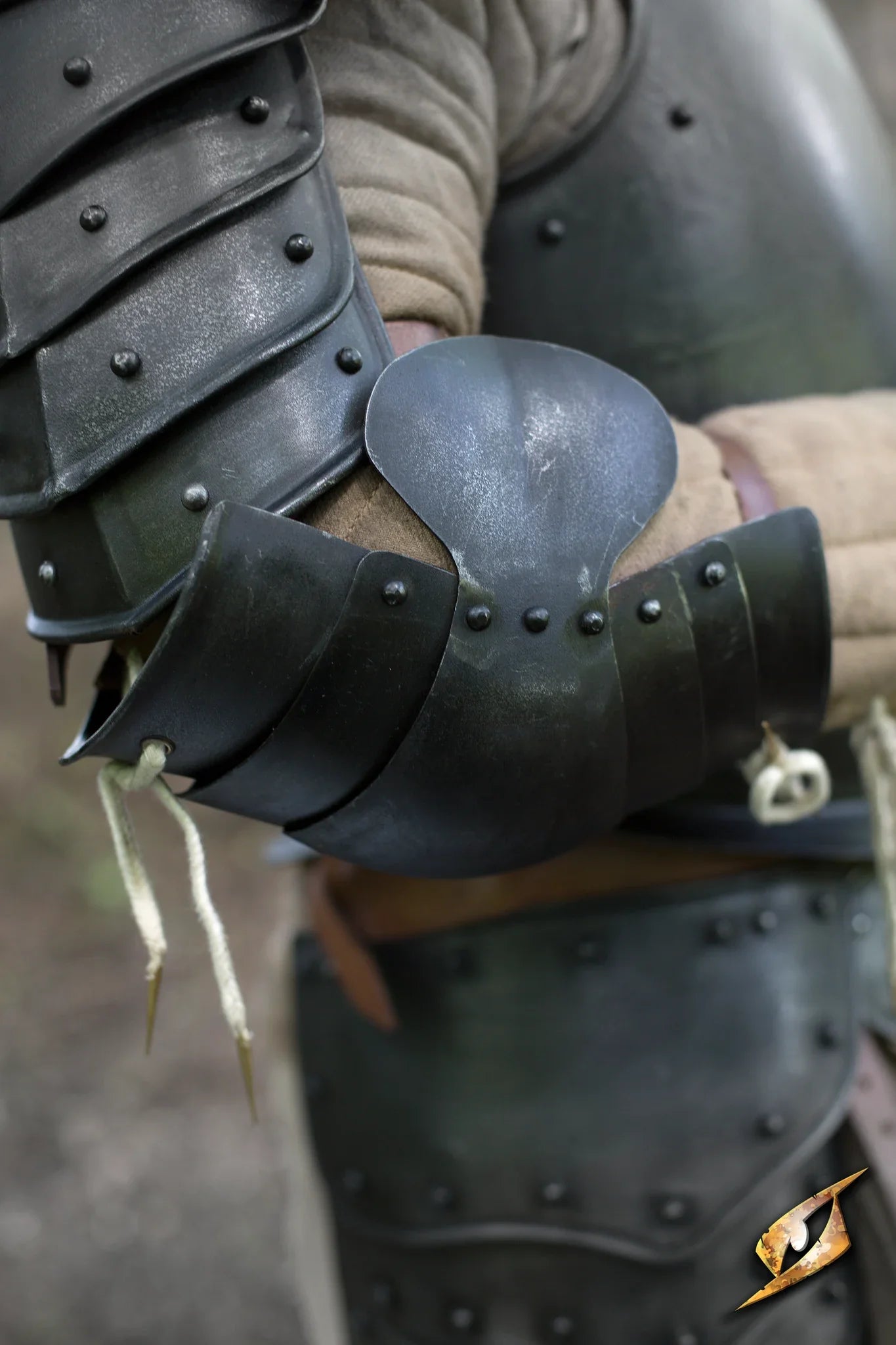
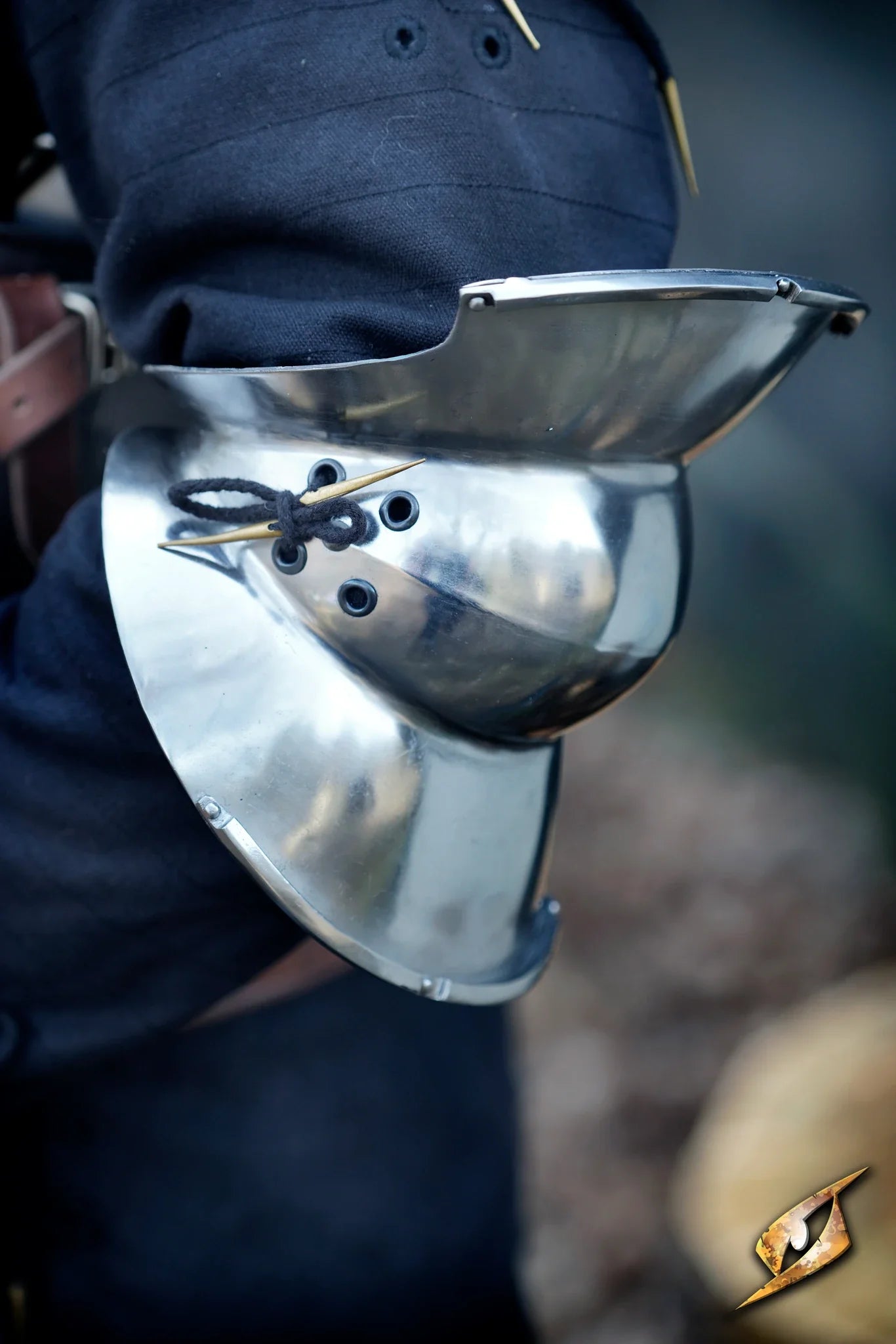
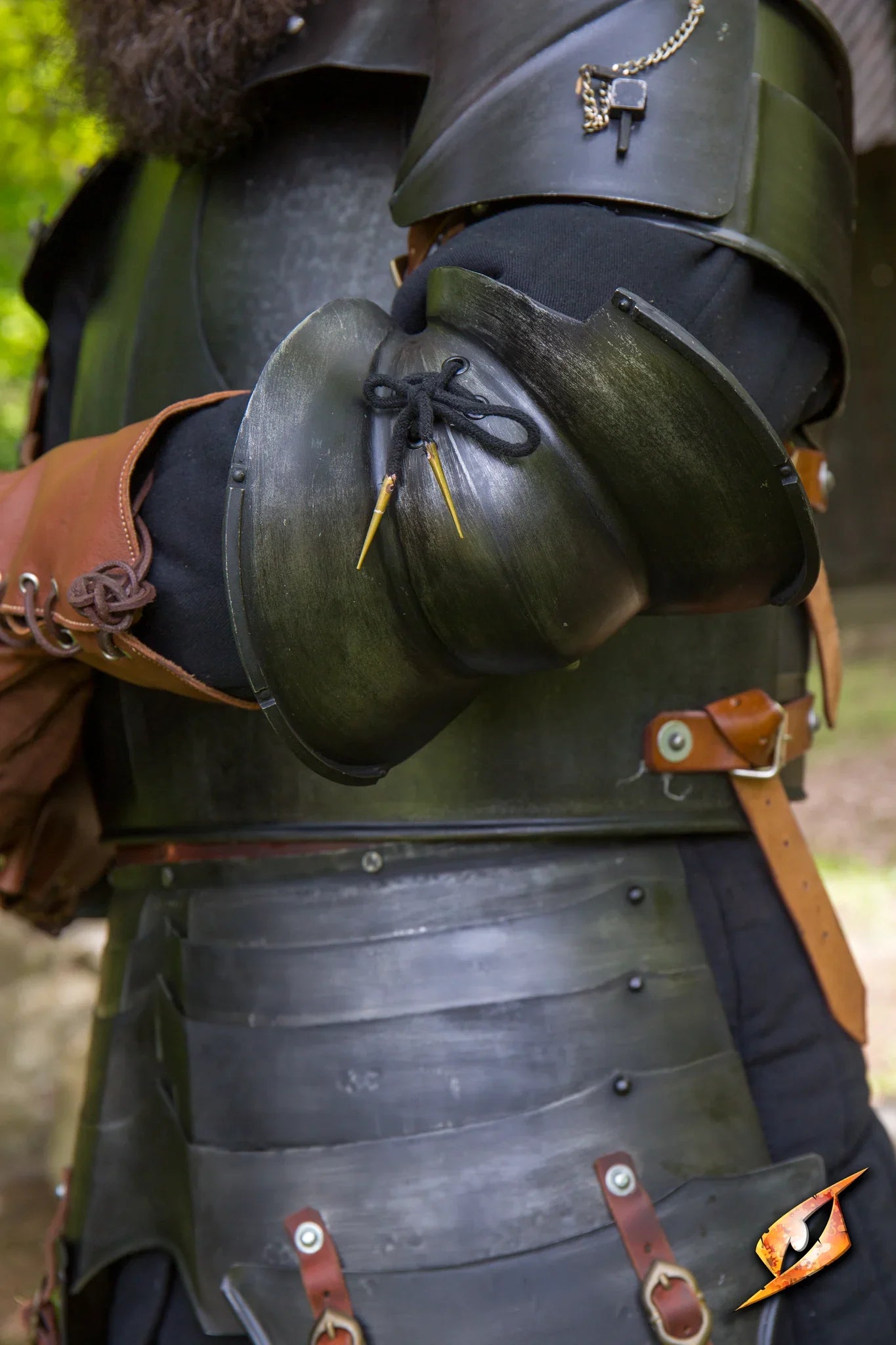
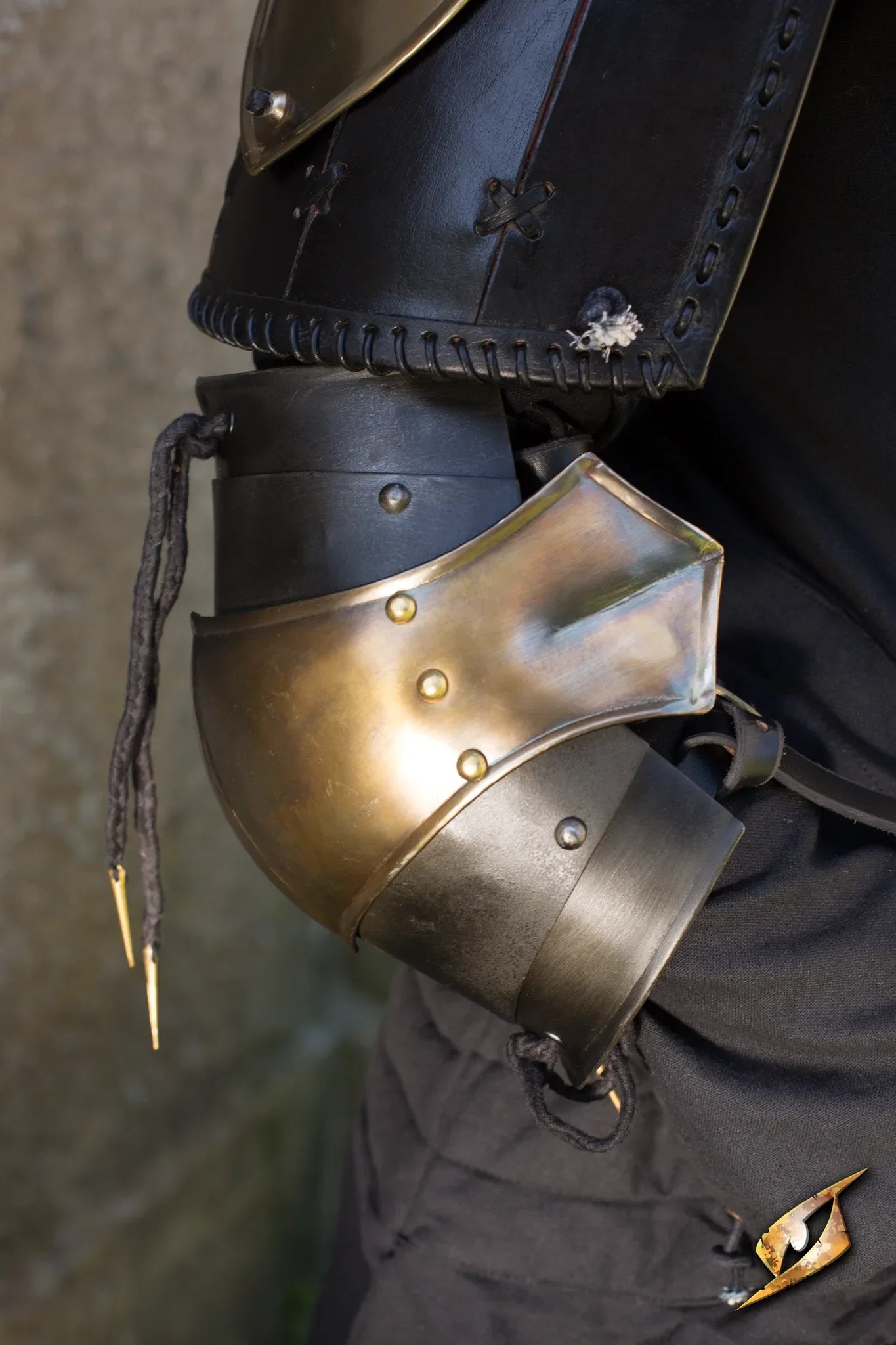
The couter is the elbow plate: the piece that protects the joint and allows the arm to bend without leaving an exposed gap. It is one of the less immediately visible components of an arm harness but one of the most recognizable to anyone with an eye for historical armor. As a standalone piece it works well as an affordable addition to a bracer setup, adding elbow coverage and considerably more visual complexity without requiring a full arm commitment. It also makes an effective upgrade path: start with bracers, add couters, and you have a kit that already reads as substantially more complete on the field.
Vambraces
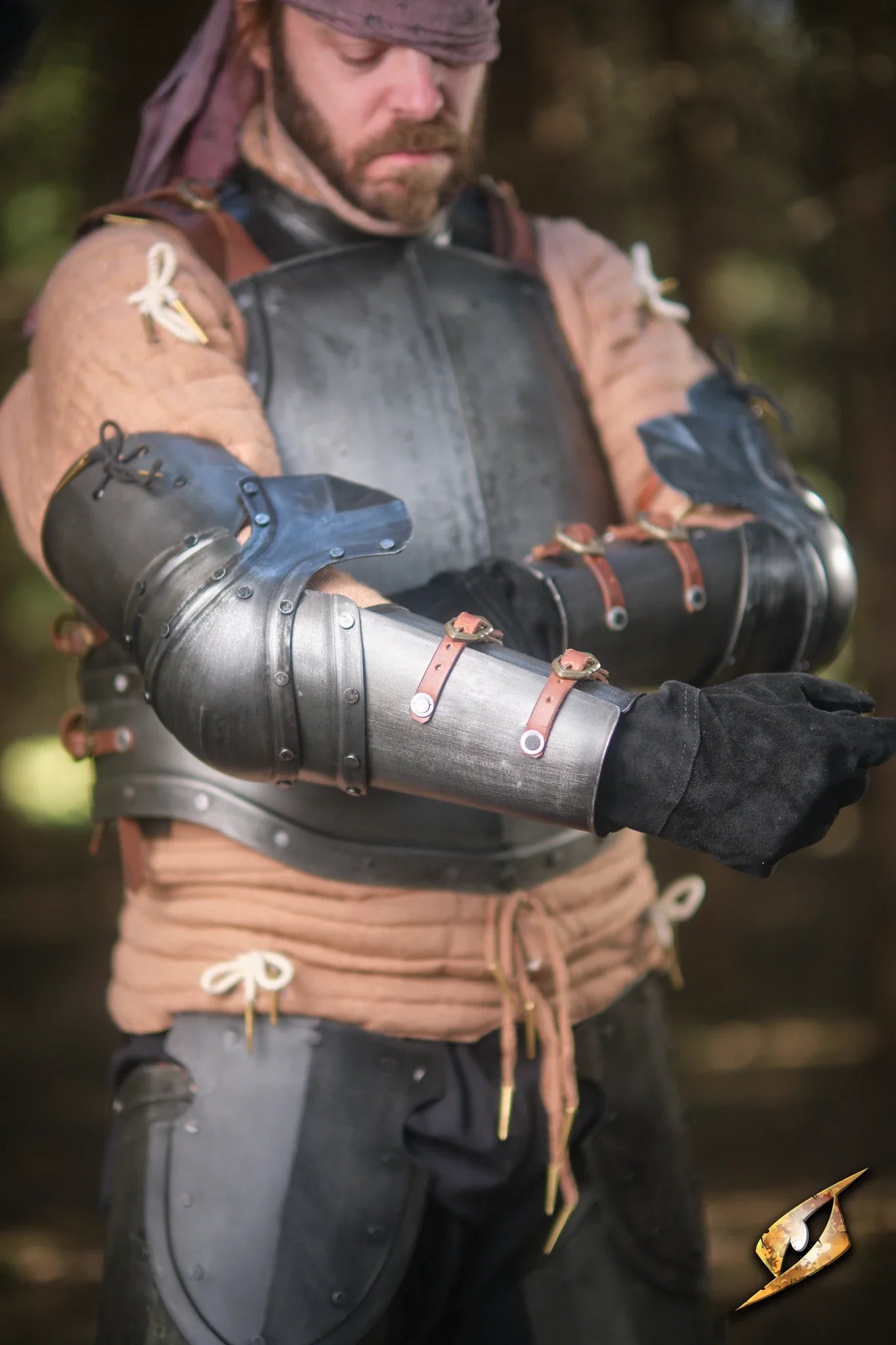
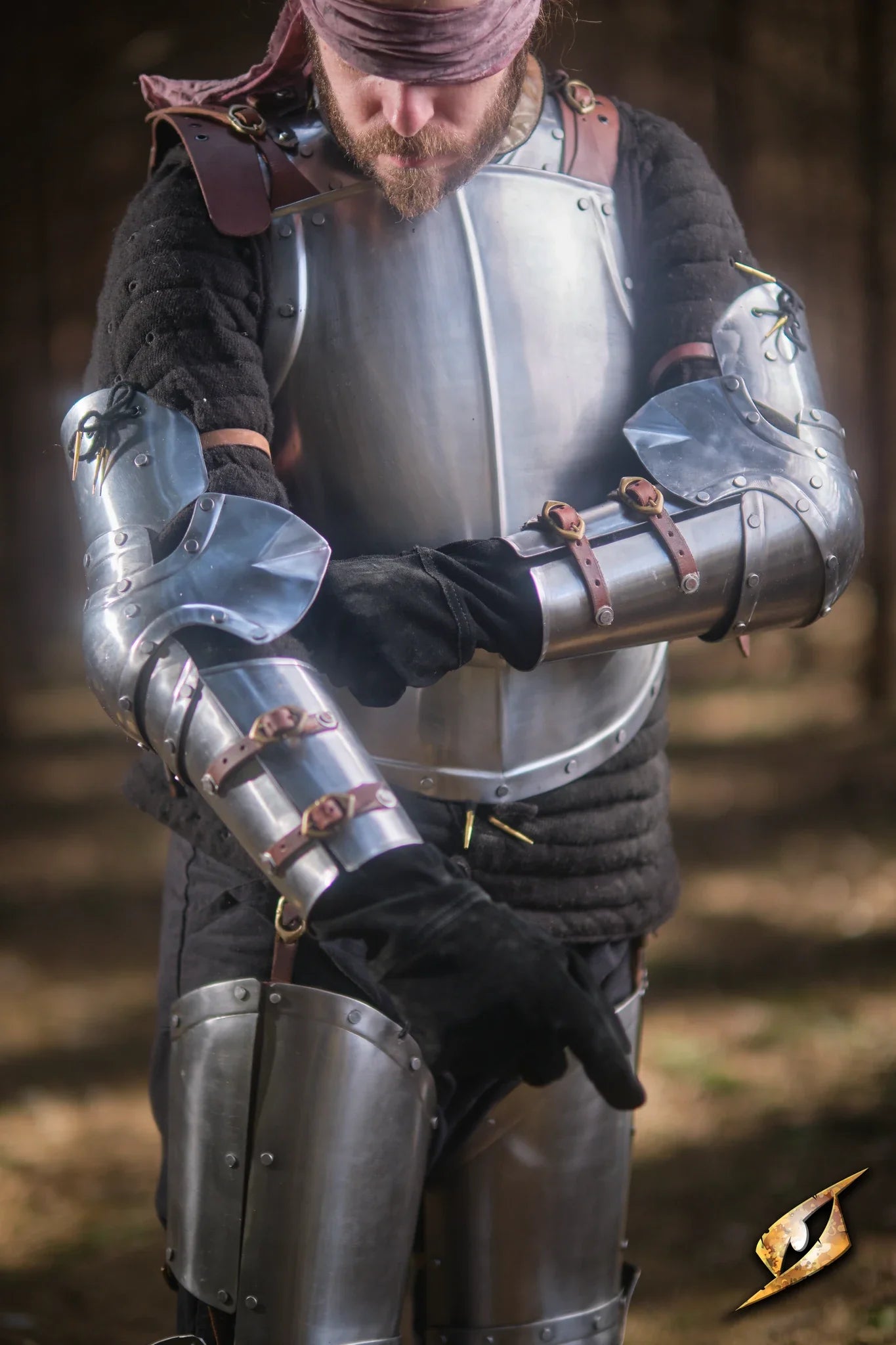
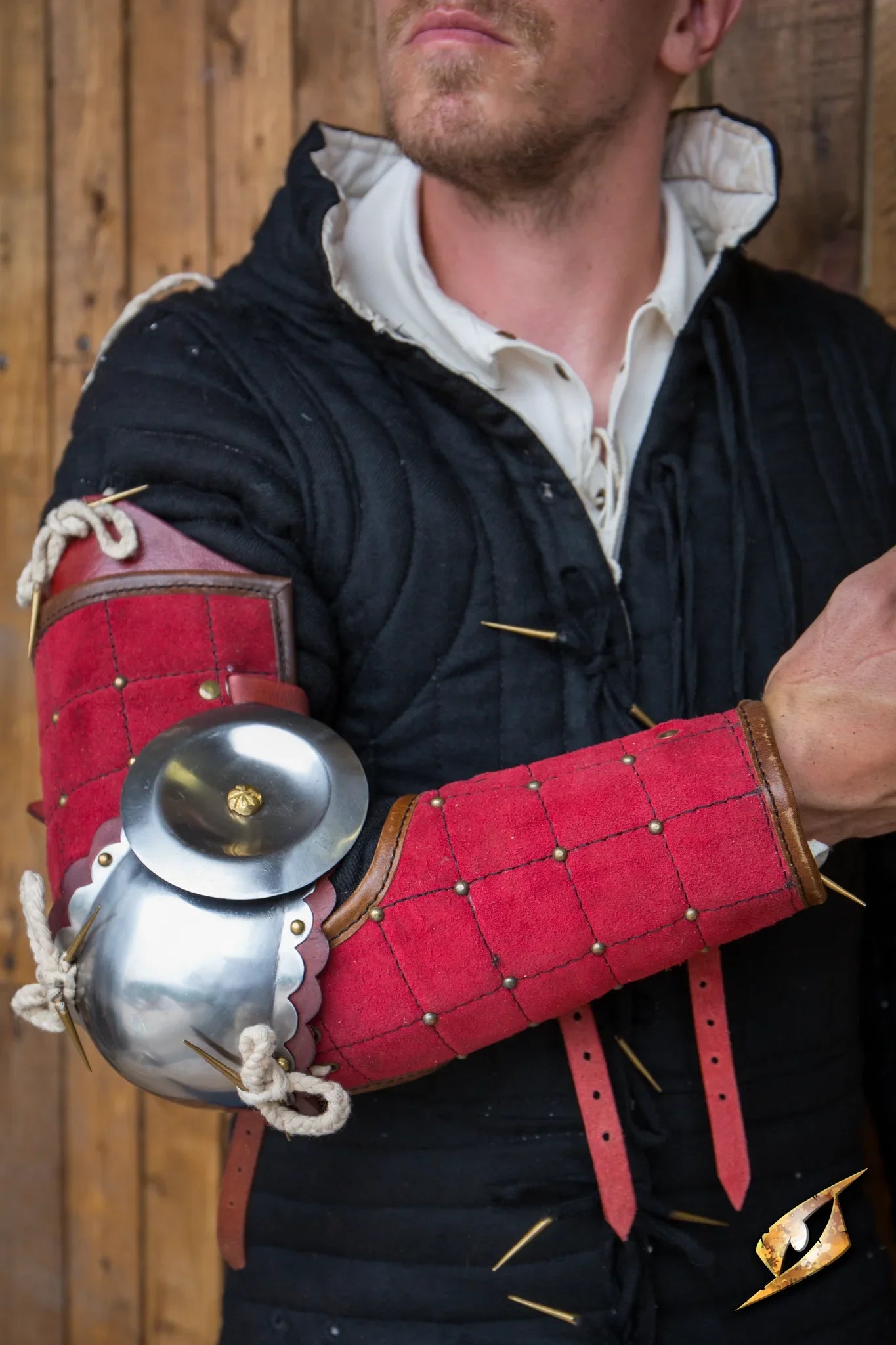
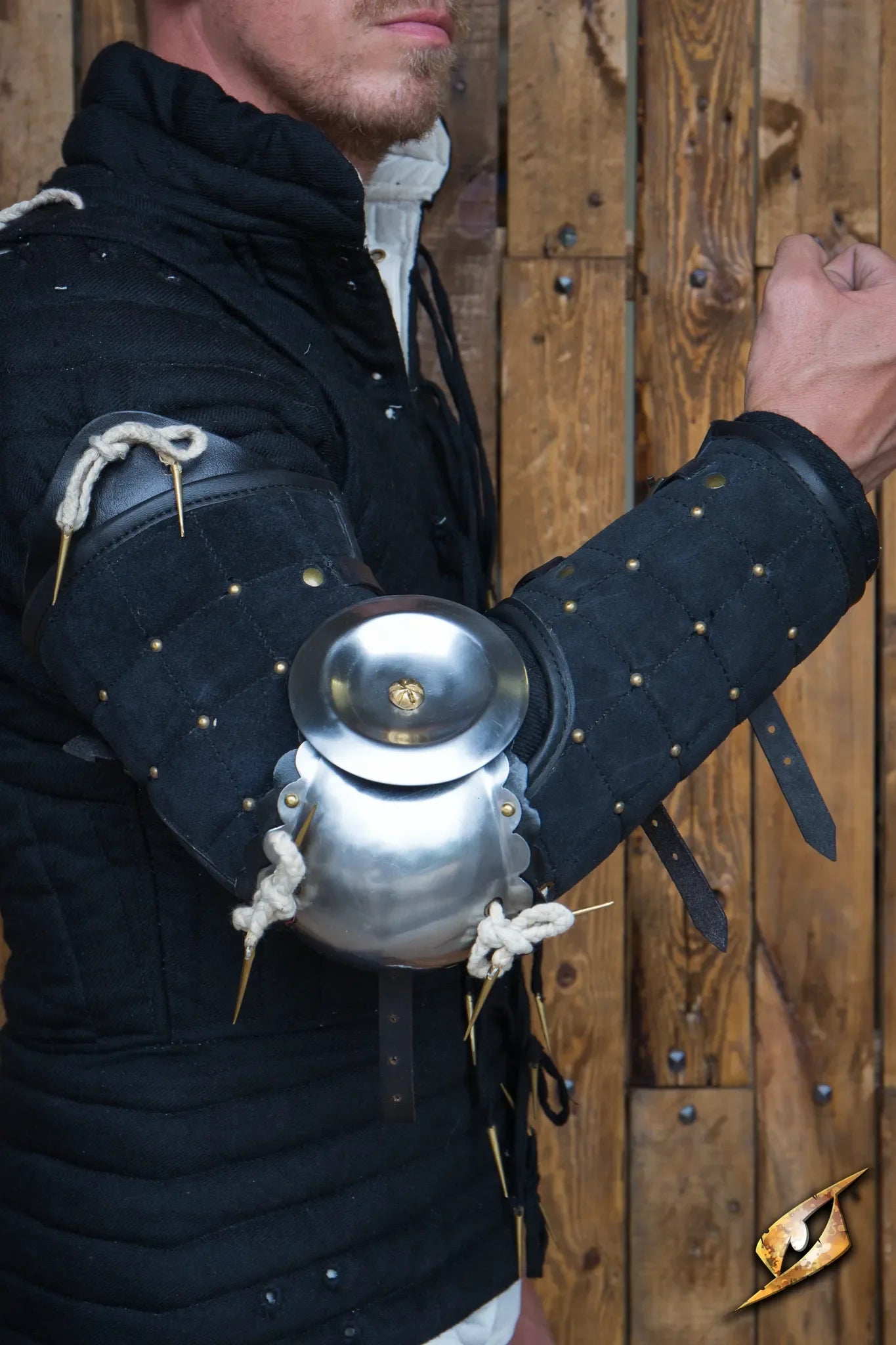
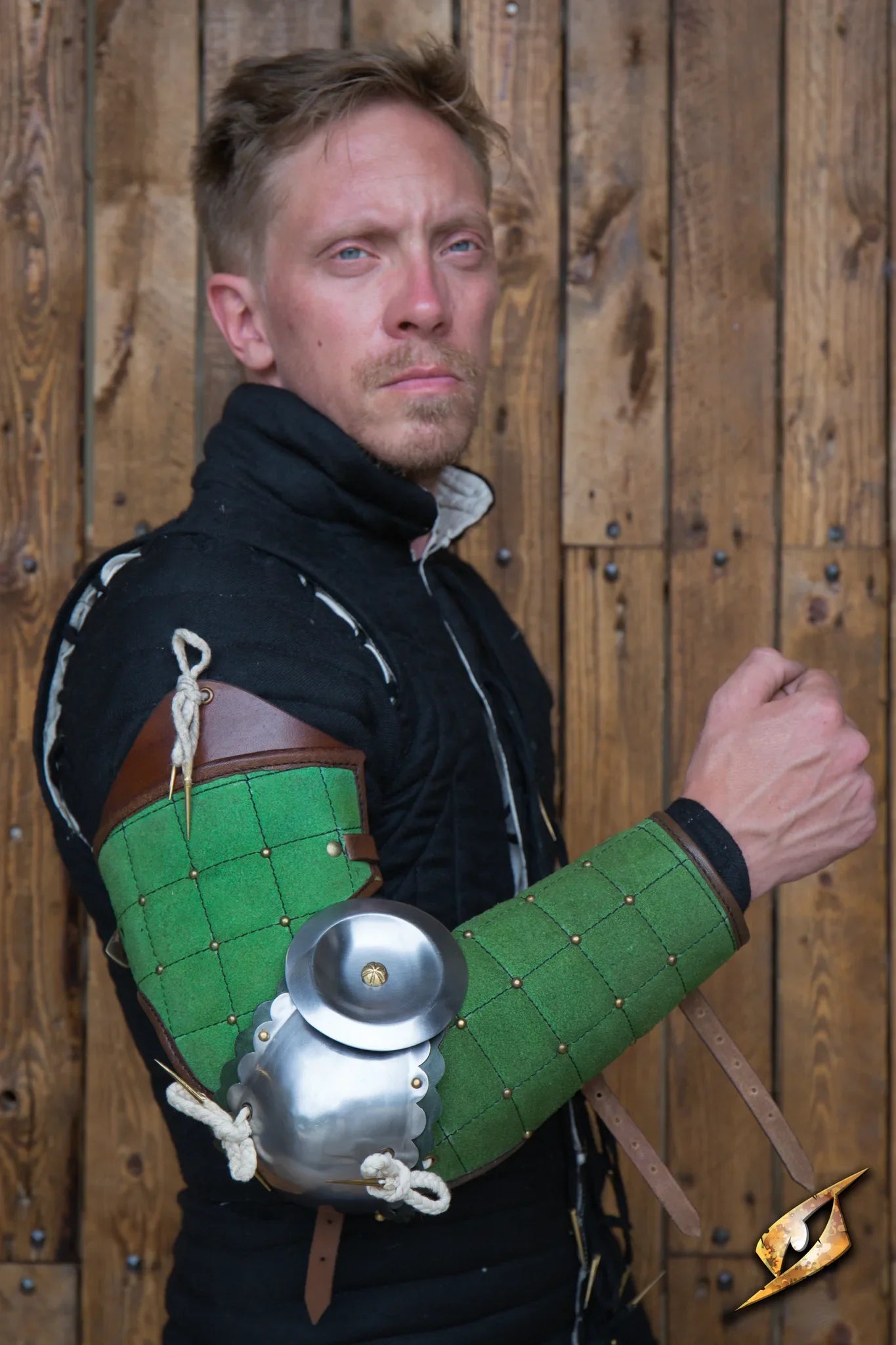
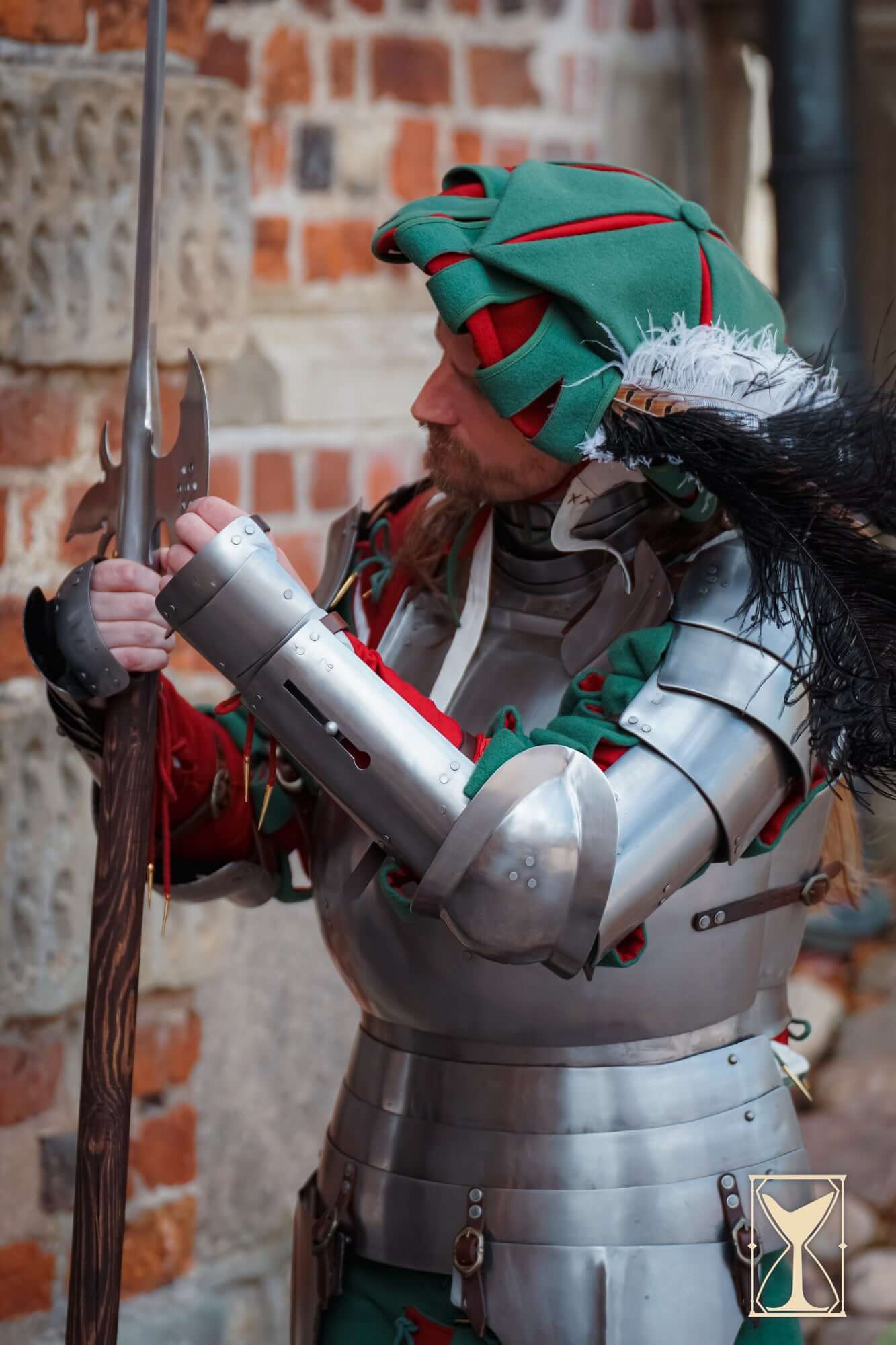
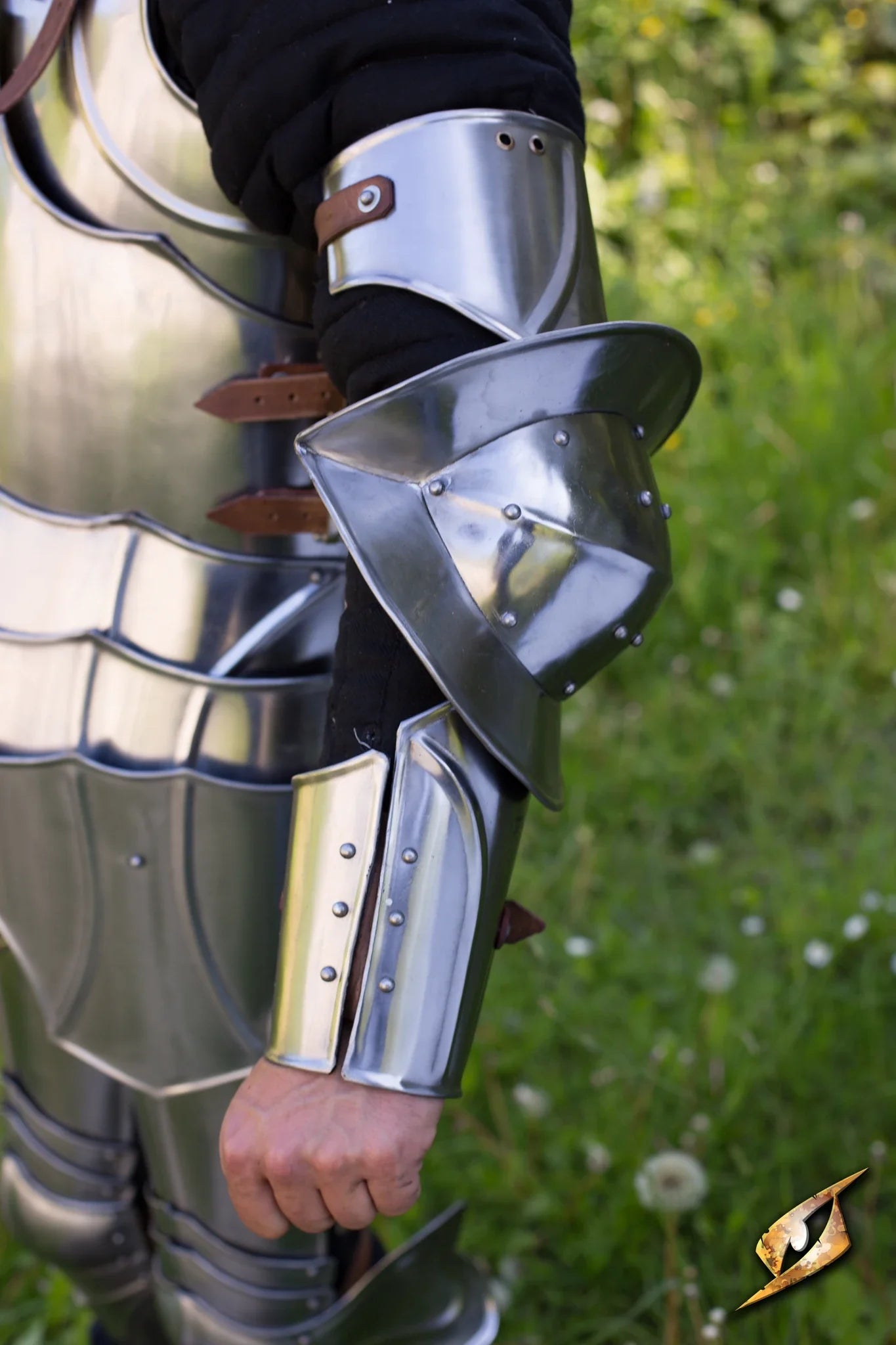
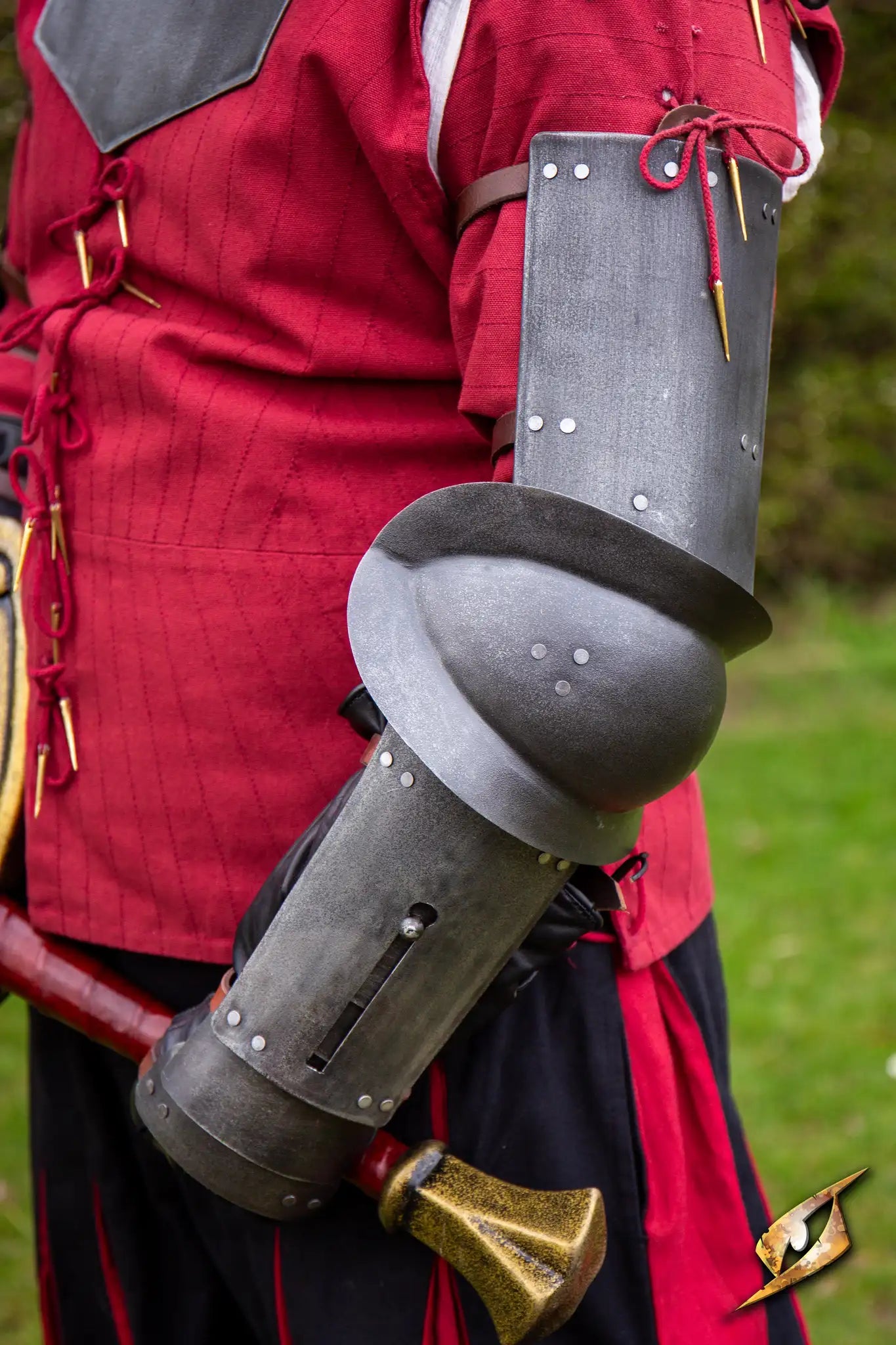
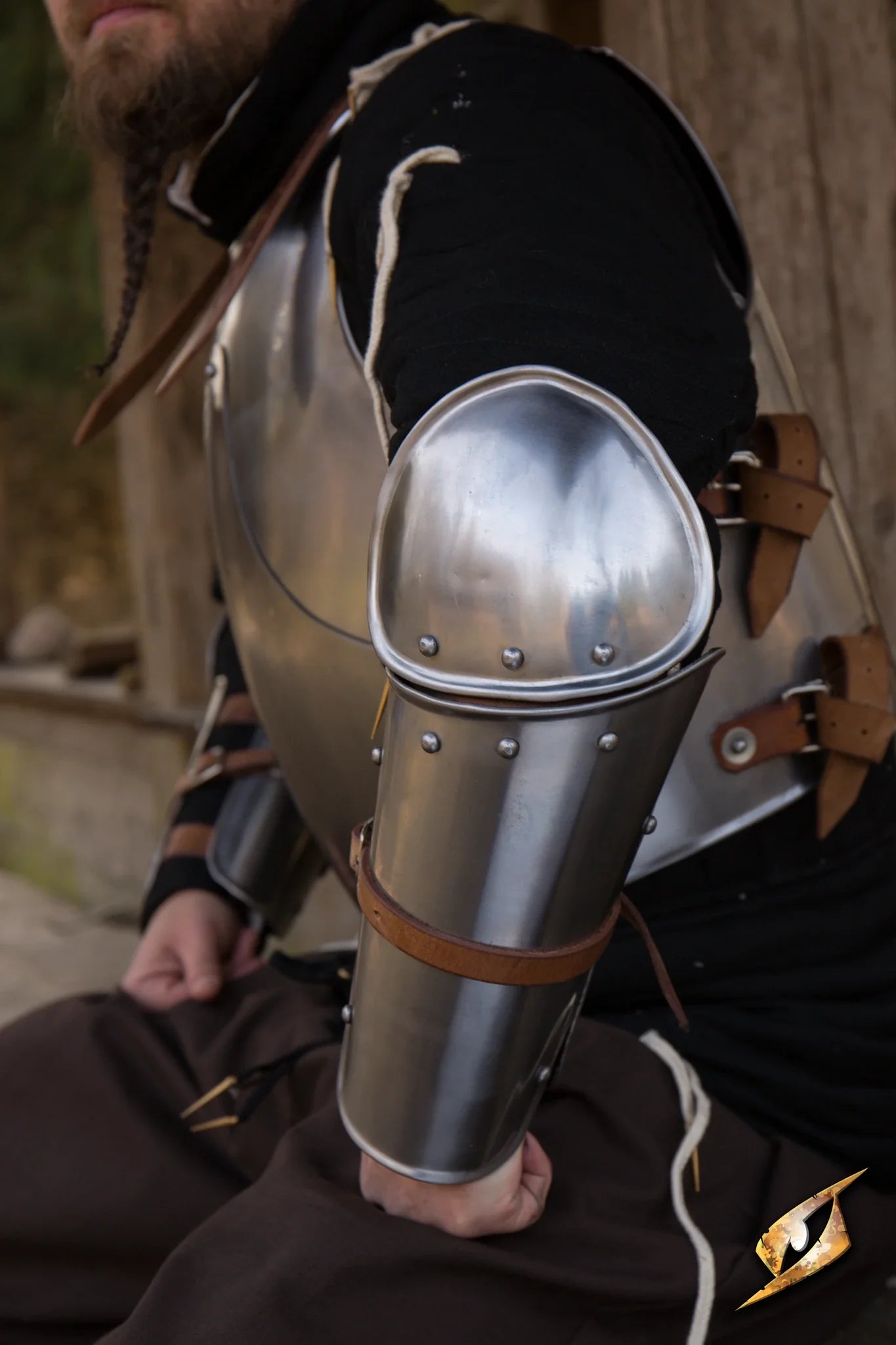
Vambraces are the full arm harness from mid upper arm to wrist, combining three components into one cohesive piece of armor: the rerebrace covering the upper arm, the couter protecting the elbow, and the lower arm plate enclosing the forearm. Together they form the complete arm protection a knight or man-at-arms would have worn in the field, everything from the shoulder down to where the gauntlet begins.
This is the most complete arm armor option in the range and the one that makes the strongest visual statement. A pair of vambraces transforms the silhouette of a kit entirely, adding articulated coverage across the full length of the arm and closing every gap between the chest piece and the hand. For LARP players building toward a serious harness and reenactors aiming for historical accuracy, vambraces are the definitive arm armor choice. They require a little more time to fit and put on correctly, but the result is a level of completeness that bracers and couters alone cannot match.
Gauntlets
Gauntlets are armored gloves, and they are among the most iconic images in medieval martial history. In a LARP or reenactment context they carry the same weight: a gauntleted hand is the detail that signals a fully committed kit. They pair naturally with vambraces as the final addition to a complete arm harness, closing the last gap between wrist and fingertip.
Gauntlets do present a practical consideration for LARP players, since dexterity requirements vary by combat system and event. Articulated finger gauntlets offer the most complete and historically accurate look but require some adjustment in how you grip and handle a weapon. Mitten-style gauntlets trade individual finger movement for a simpler construction that is generally easier to fight in. Both styles appear in this range.
Building an Arm Harness: Where to Start
Most players start with bracers and work outward from there. If you are new to plate armor, a pair of bracers over a padded sleeve is an achievable and visually effective starting point that works on the field without requiring a large investment. Adding couters is a natural second step that significantly increases the complexity and completeness of the look. Vambraces are the destination for anyone committed to a full arm harness, combining all three elements into a single cohesive piece. Gauntlets complete the picture.