




























Recently viewed products
Men's Medieval Clothing:
Male Fashion from the 5th to the 15th Century
Men's medieval clothing spans roughly a thousand years, from the fall of the Western Roman Empire in the 5th century to the eve of the Renaissance in the 15th. Across that stretch of time, male dress went from simple practical tunics to some of the most extravagant and body-conscious fashion Europe had ever seen. Throughout it all, what a man wore told the world exactly who he was.
The Early Middle Ages (5th to 10th Century): Practicality Above All
The Tunic as the Foundation
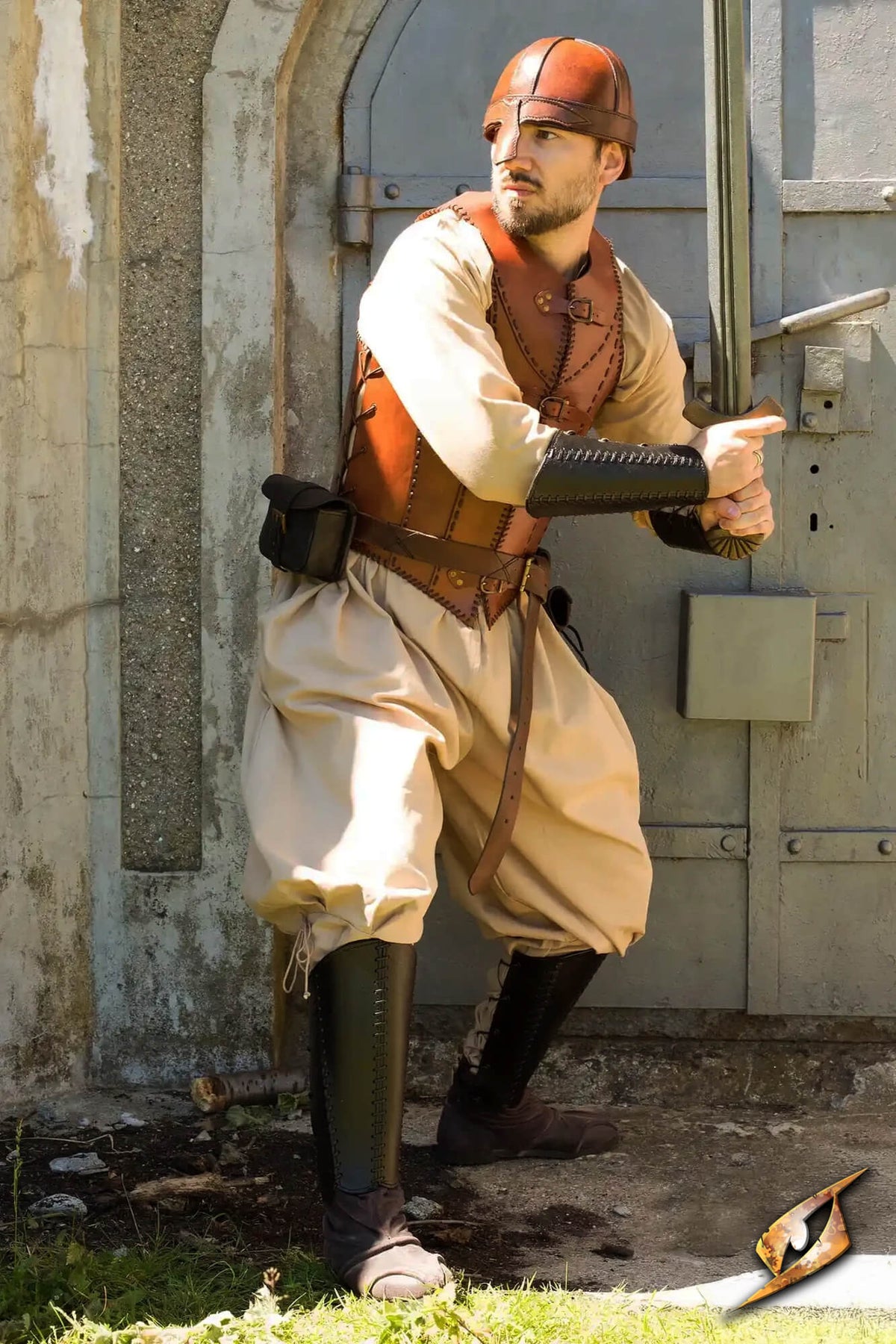
The tunic was the universal male garment of the early medieval period, worn by kings and peasants alike. Knee-length, belted at the waist, and made from wool or linen depending on the season, it was layered over a linen shirt that served as the base layer. What separated a nobleman's tunic from a peasant's was not the cut but the cloth: finer weaves, richer dyes, and embroidery at the collar, cuffs, and hem for those who could afford it.
Trousers, Hose, and Leg Coverings
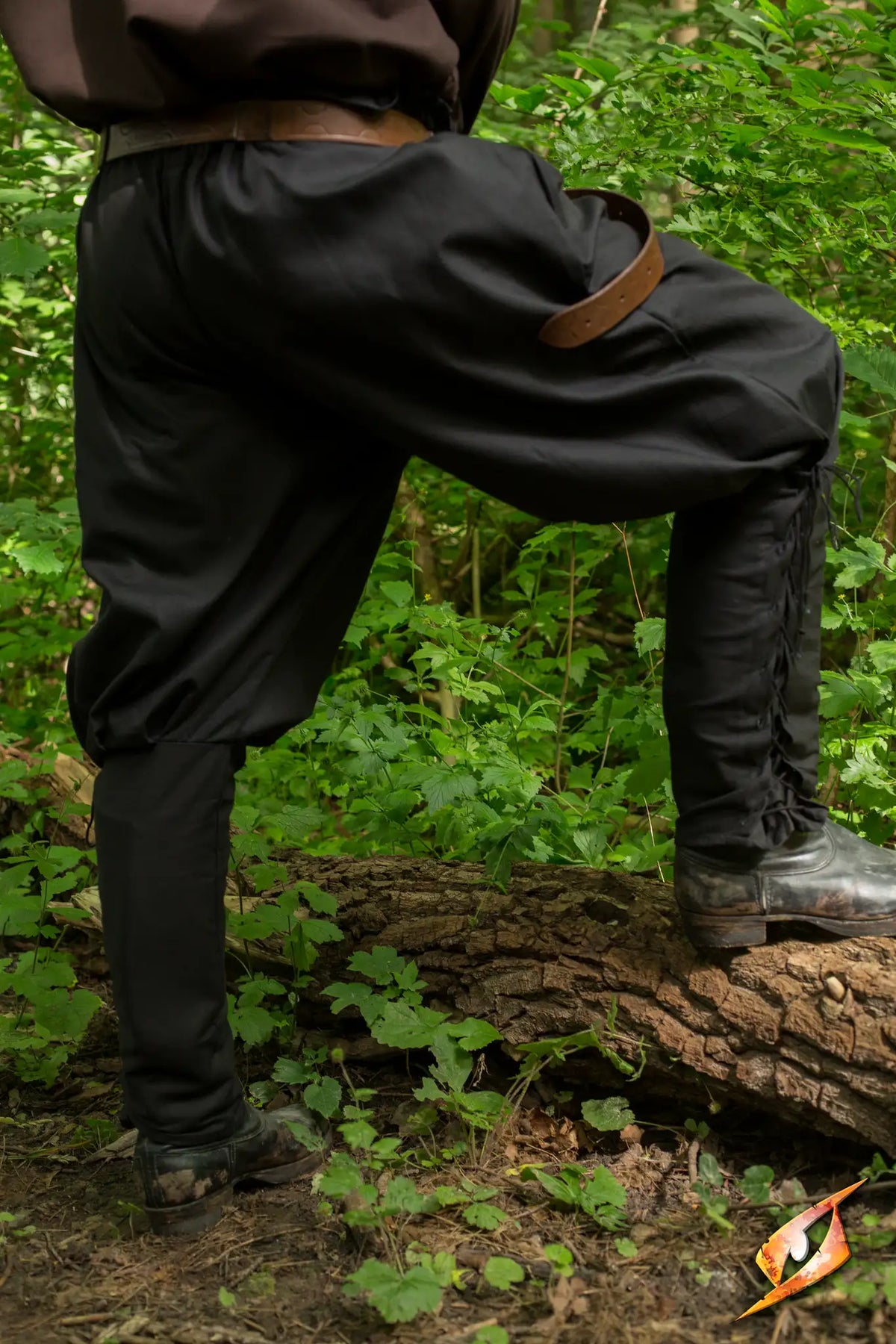
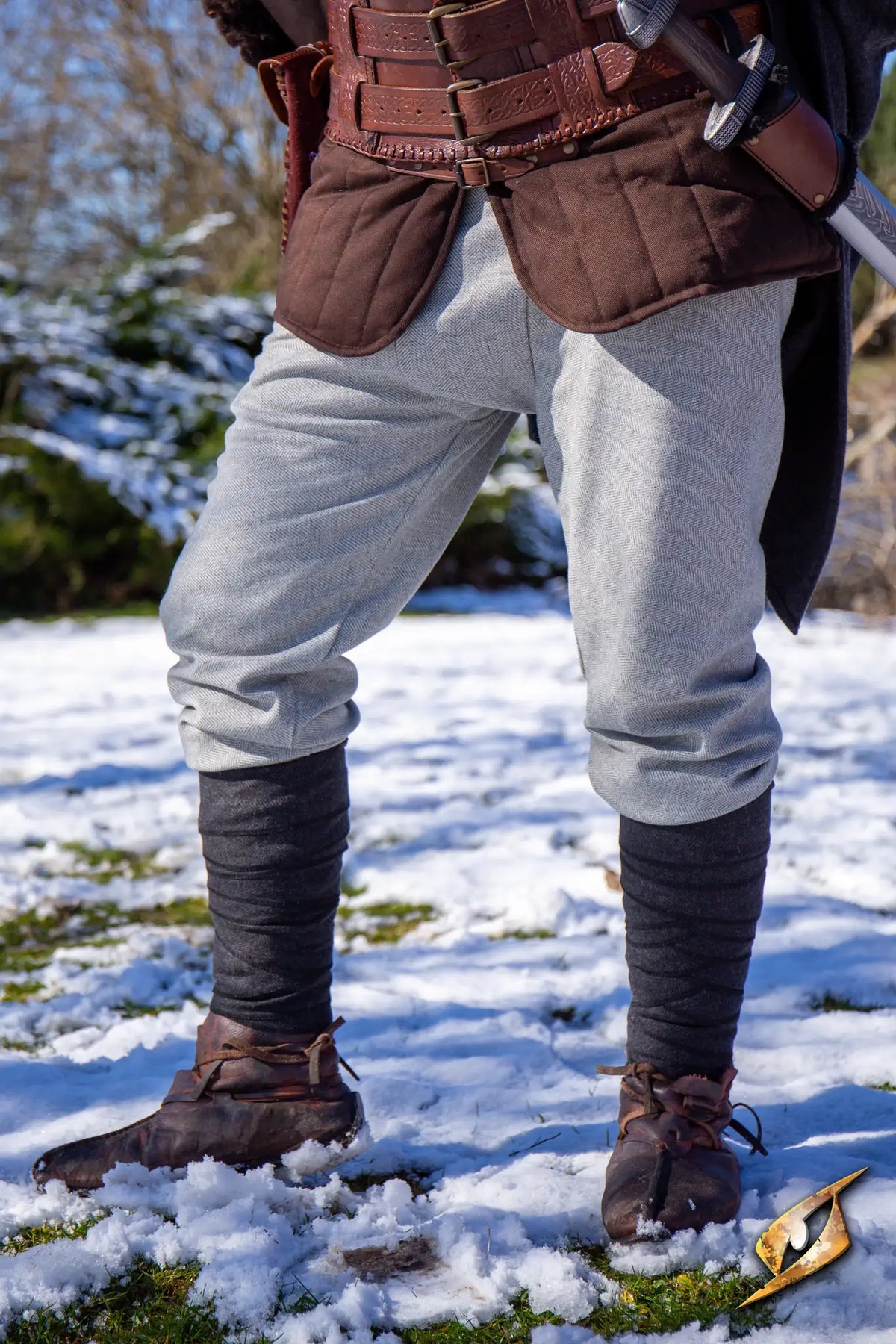
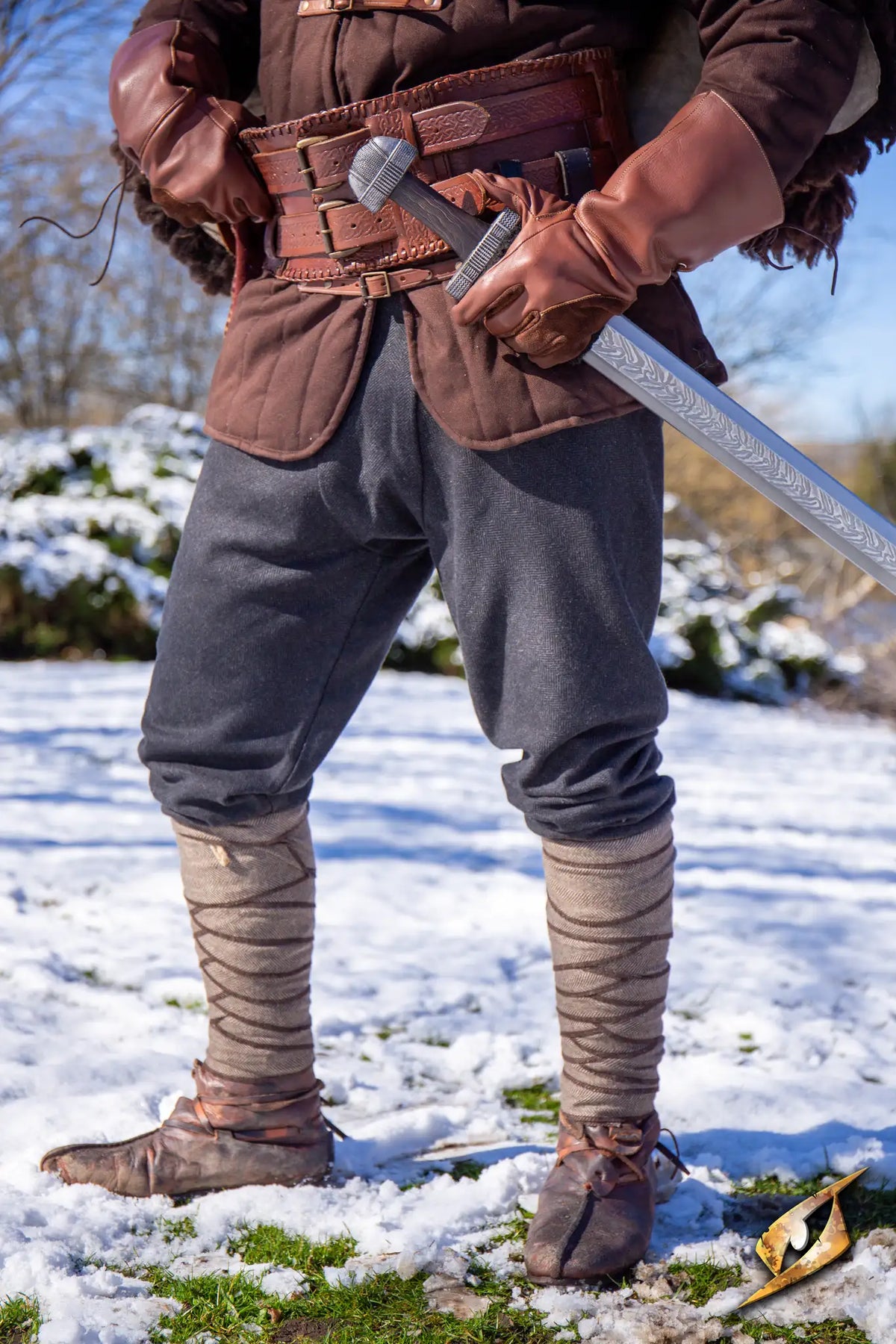
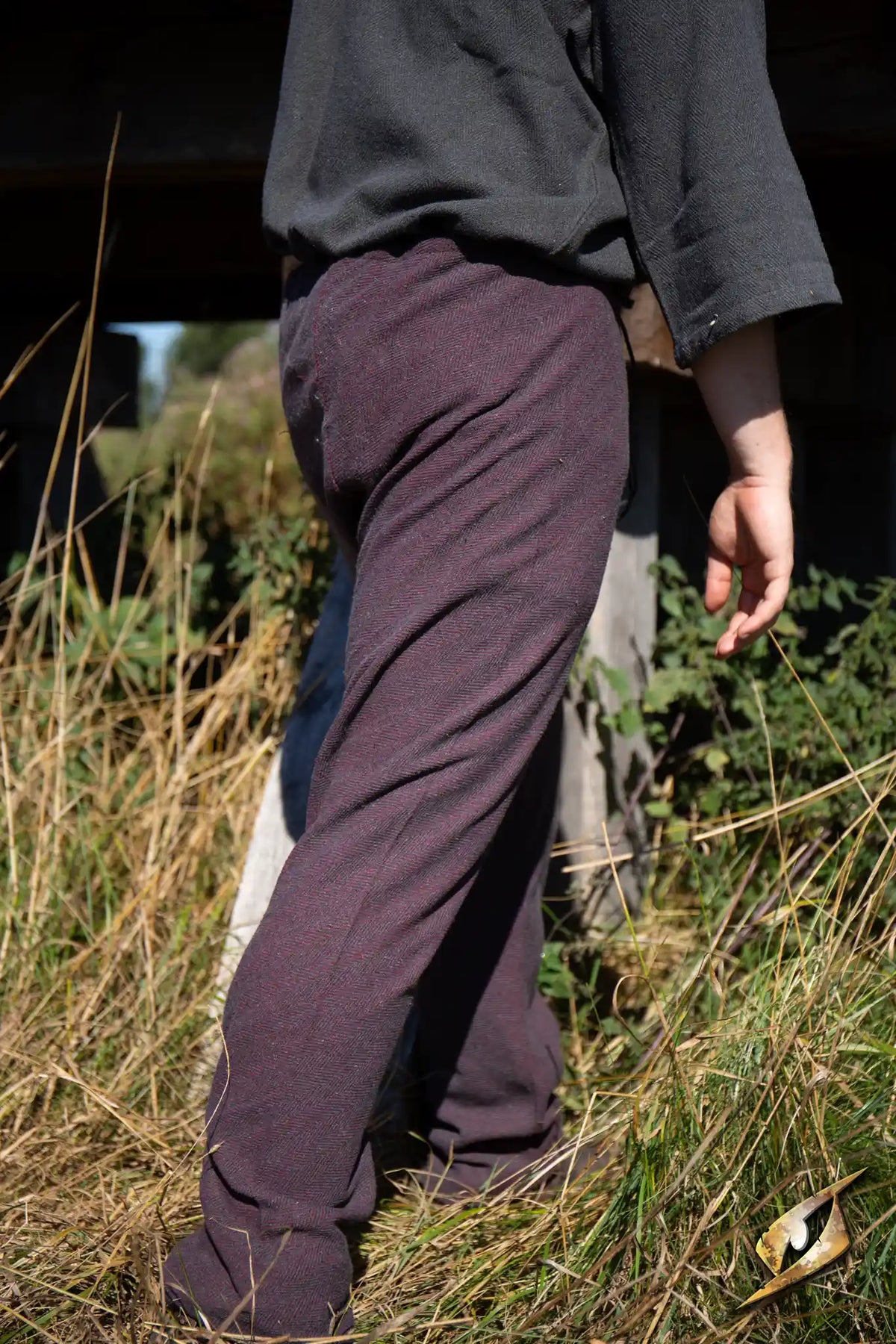
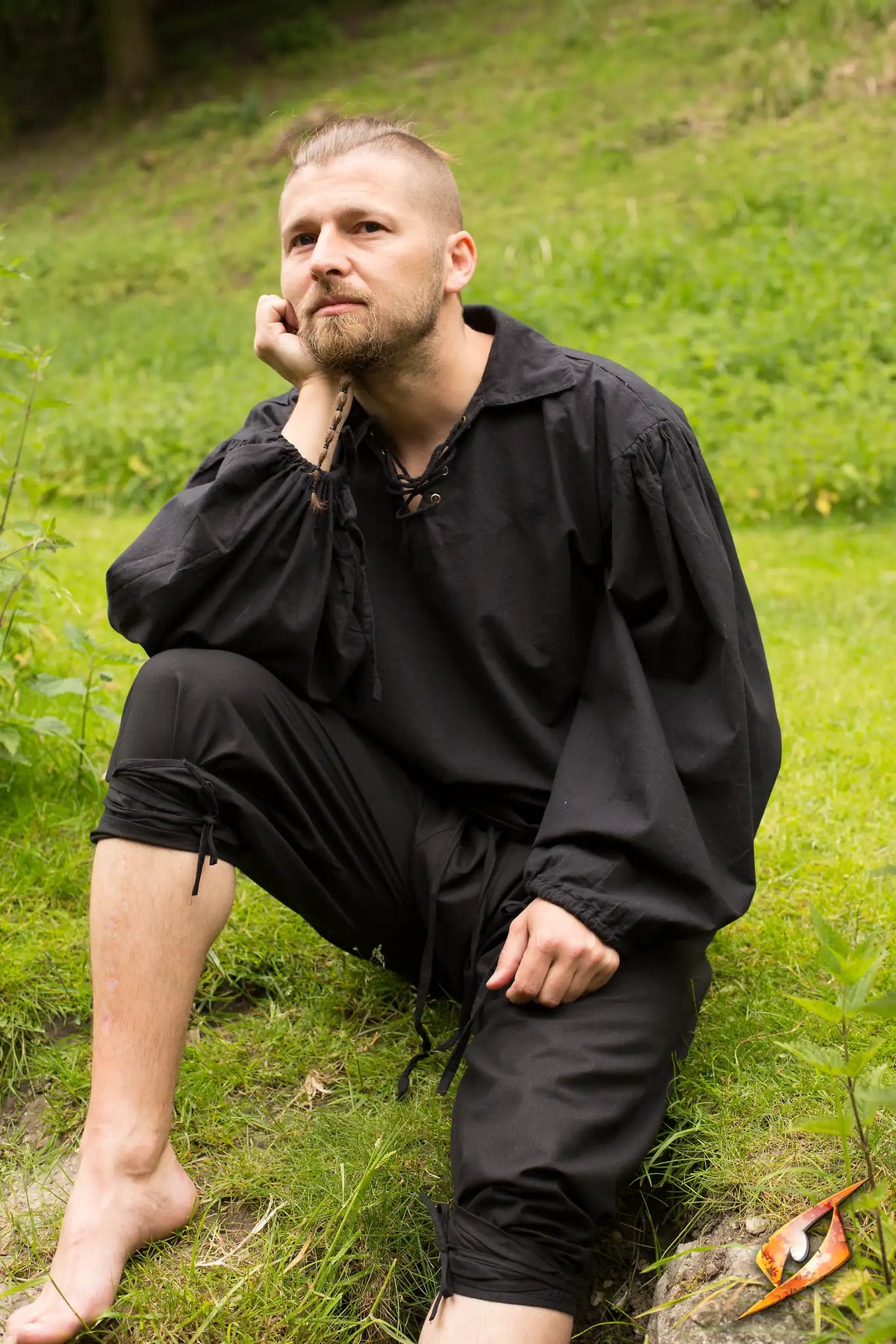
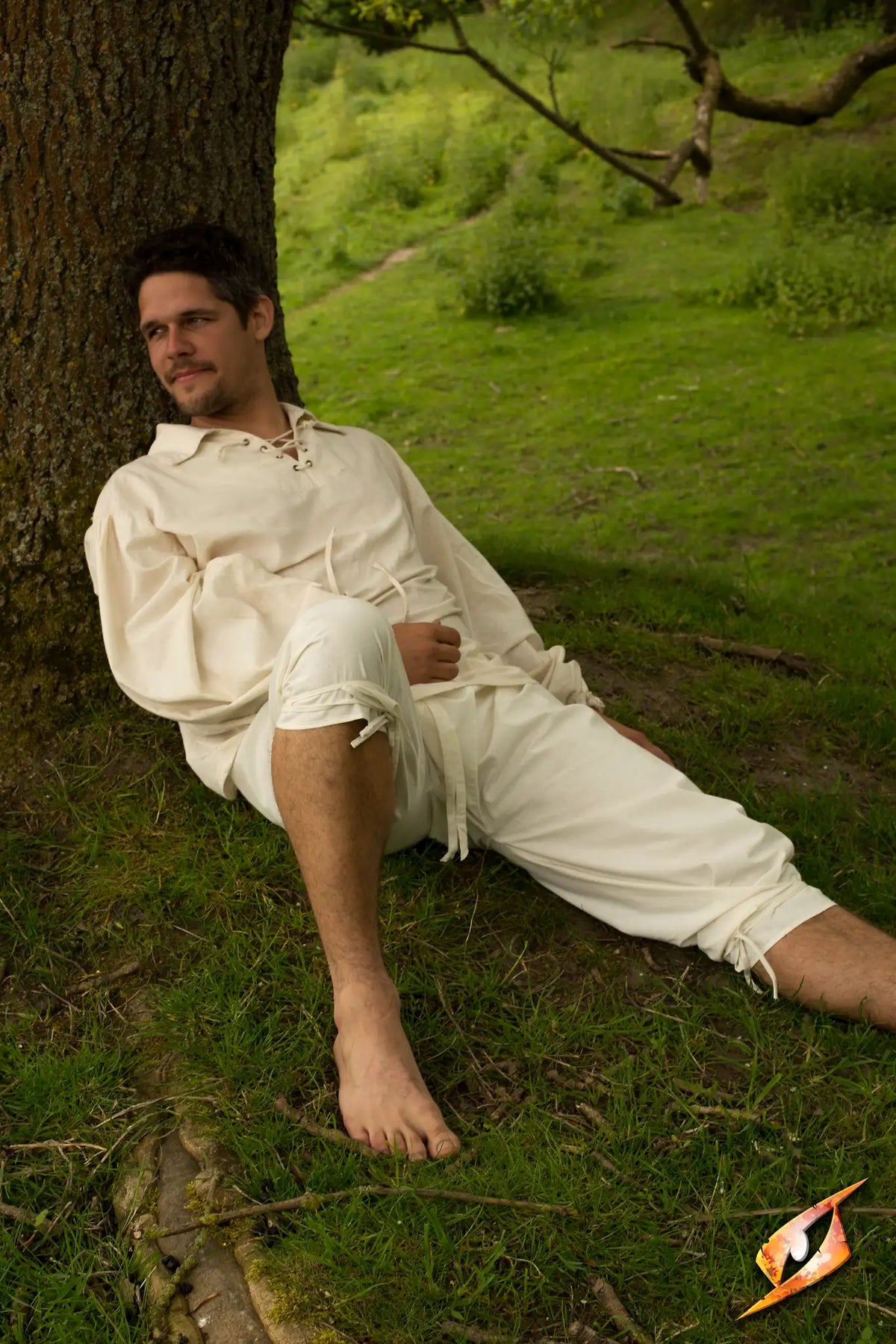
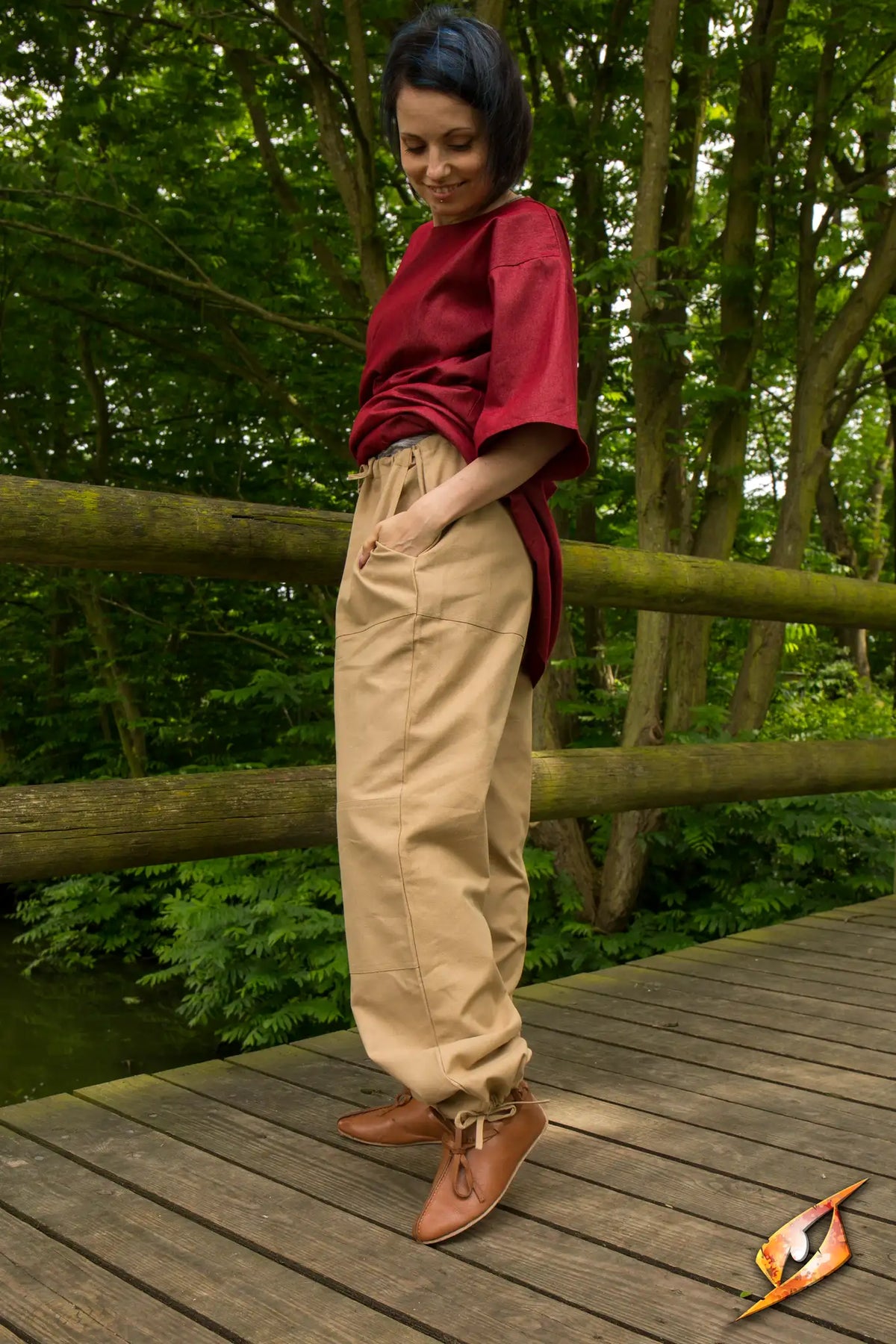
Beneath the tunic, men wore long trousers or leg wrappings bound with cross-gartering, strips of cloth wound around the lower leg and tied in place. Early forms of hose began appearing toward the end of this period, fitted more closely to the leg than the looser wrappings they gradually replaced.
Fabric, Color, and Social Rank
Wool and linen dominated across all classes. Color was one of the clearest markers of status: rich, saturated dyes were expensive and therefore associated with the wealthy, while undyed or simply dyed cloth was the norm for working men. Germanic and Roman influences blended gradually into a distinctly medieval aesthetic that would evolve significantly over the following centuries.
The High Middle Ages (11th to 13th Century): Layering and Regional Variety
The Cotte and Surcoat
By the 11th century the simple tunic had evolved into the cotte, a more structured outer garment worn over the linen shirt. Over the cotte came the surcoat: a sleeveless or short-sleeved overgarment that served as both a practical layer and a surface for heraldic decoration. Contact with the East through the Crusades introduced new fabrics and silhouettes that gradually filtered into European court dress.
The Rise of the Knight's Wardrobe
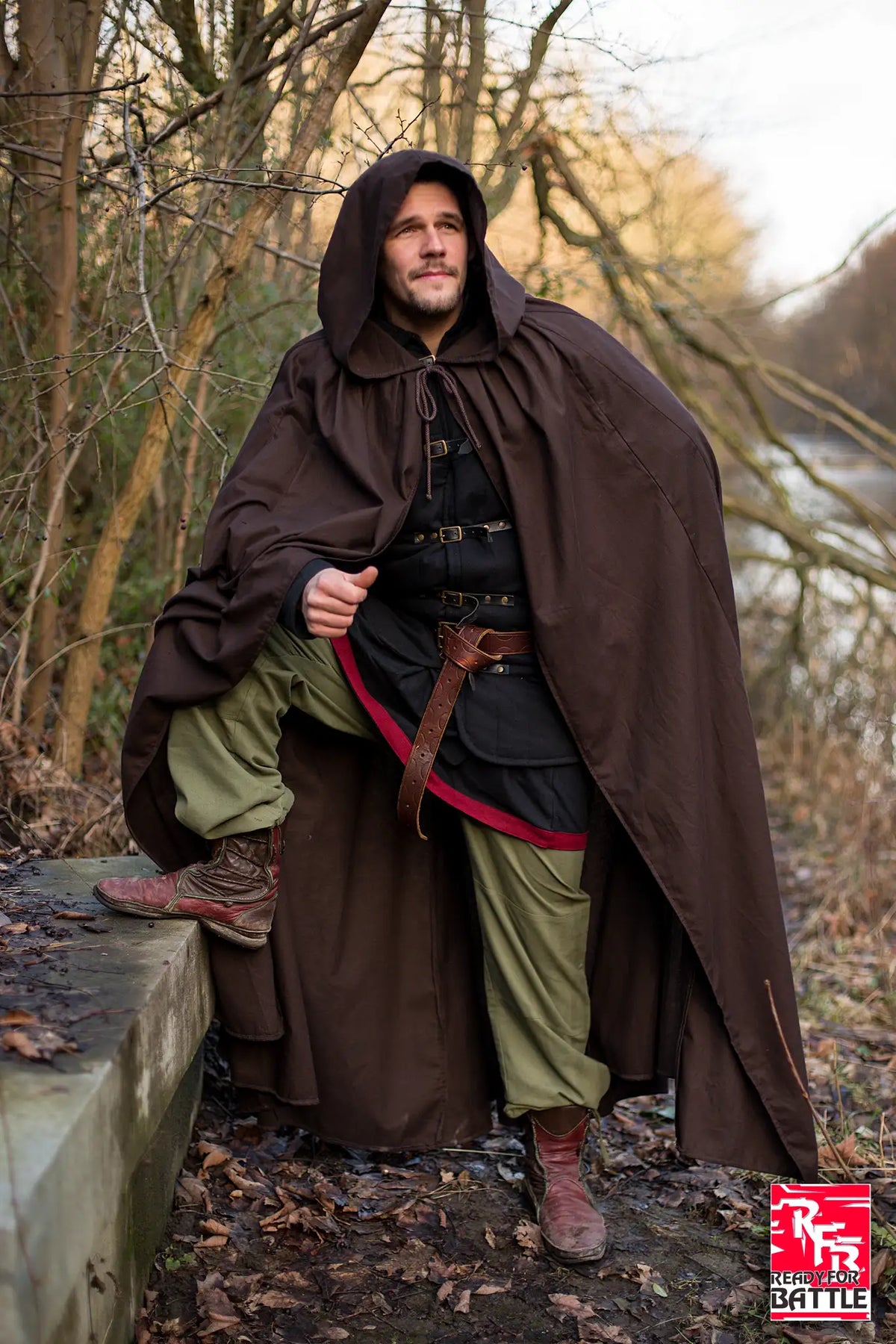
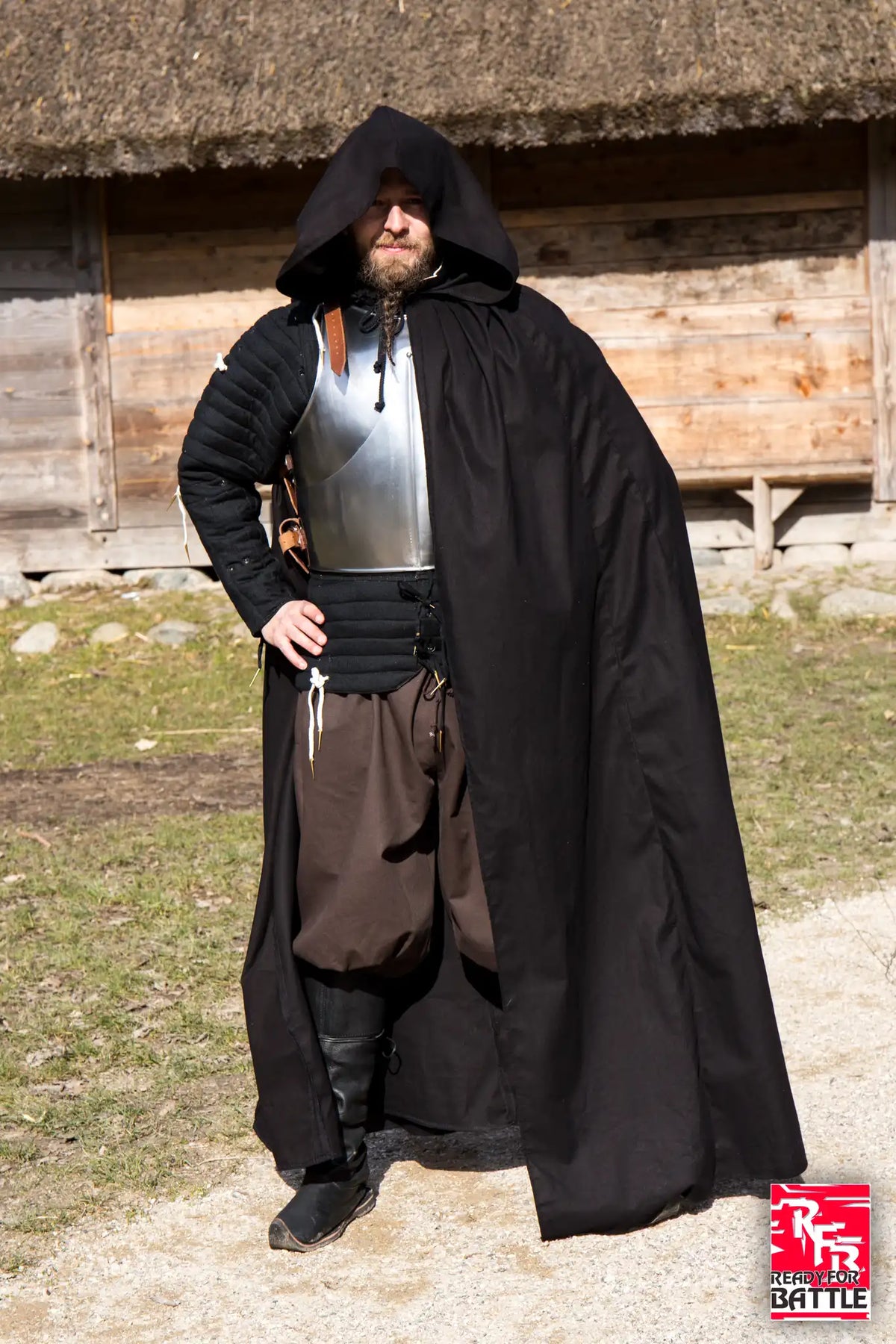
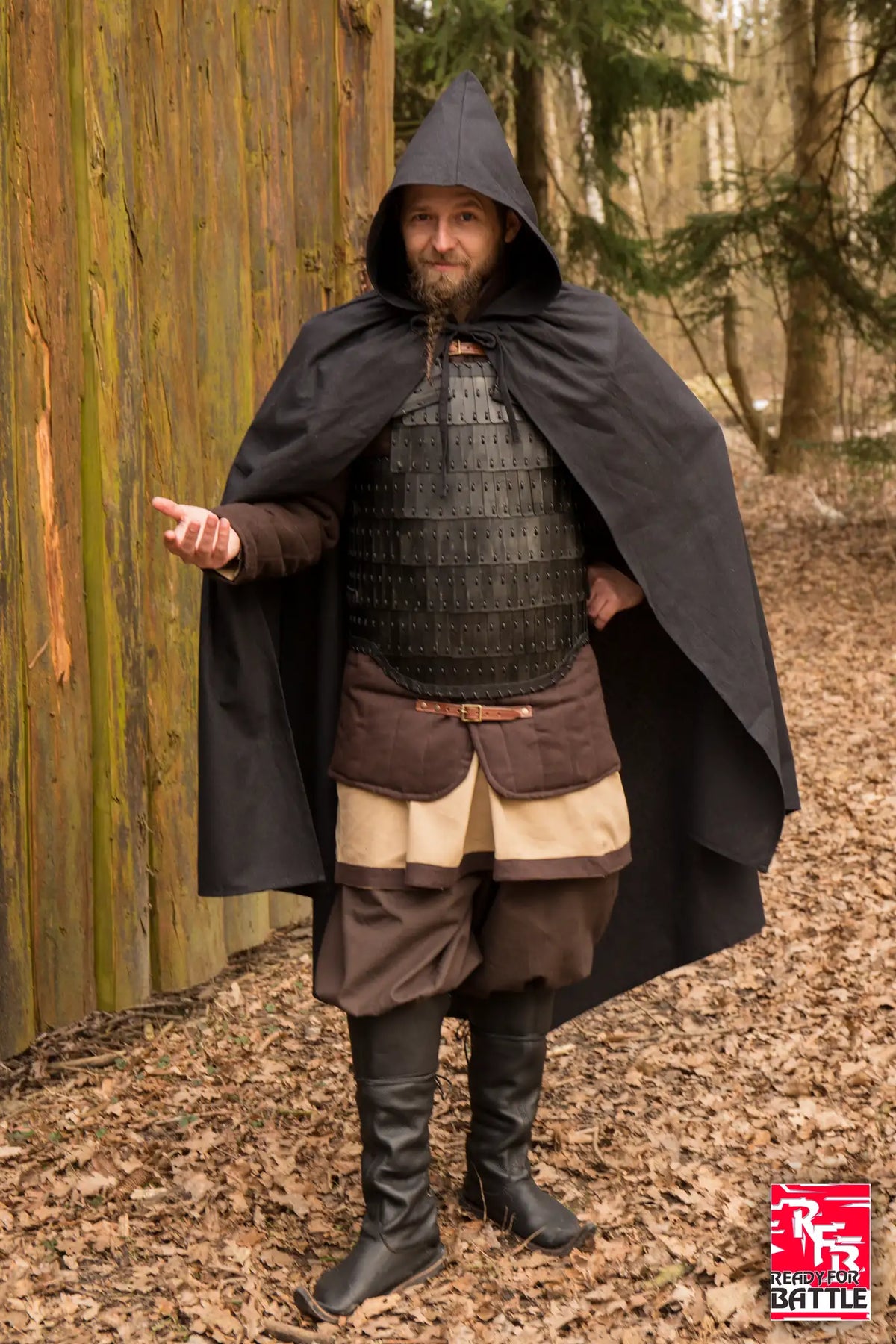
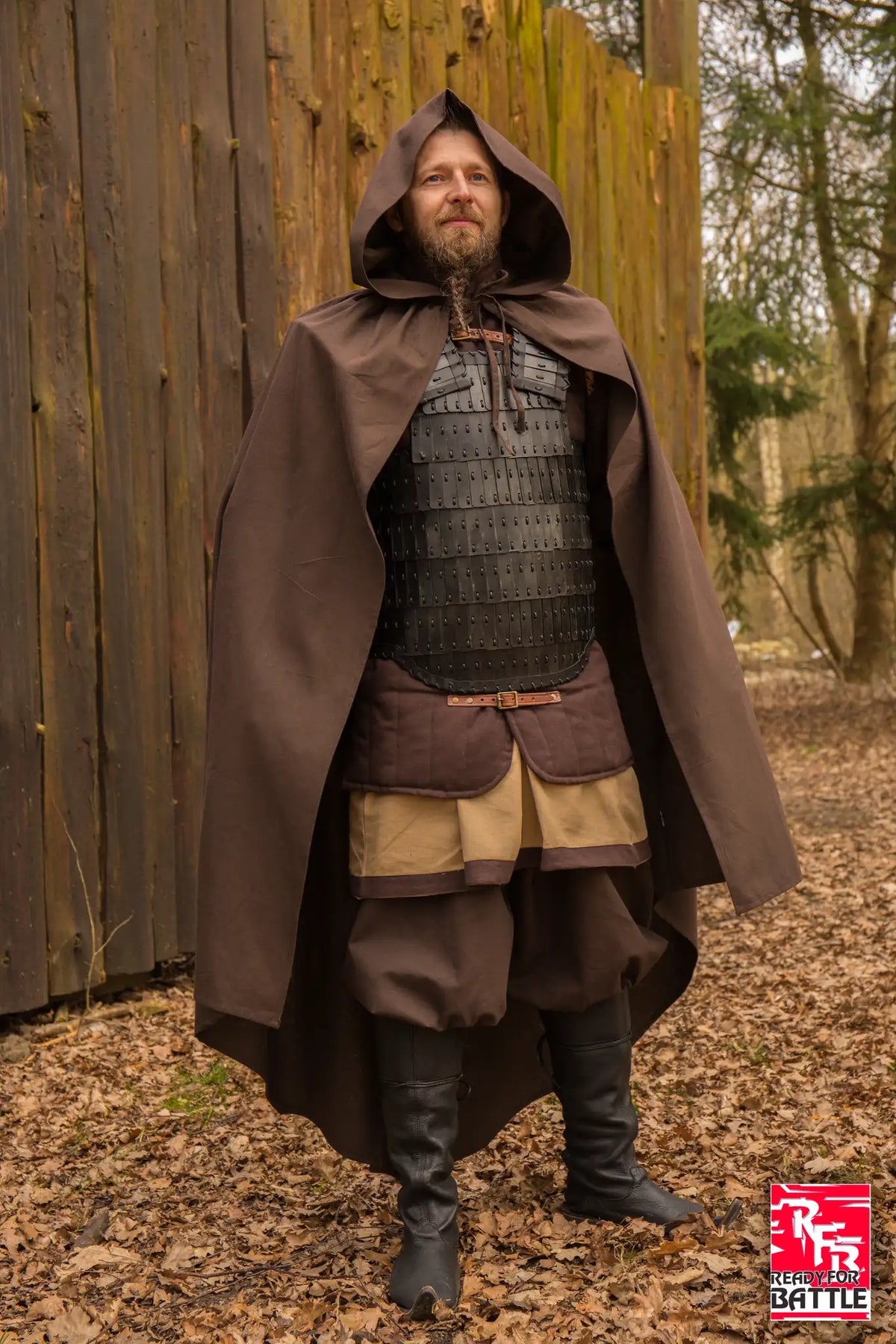
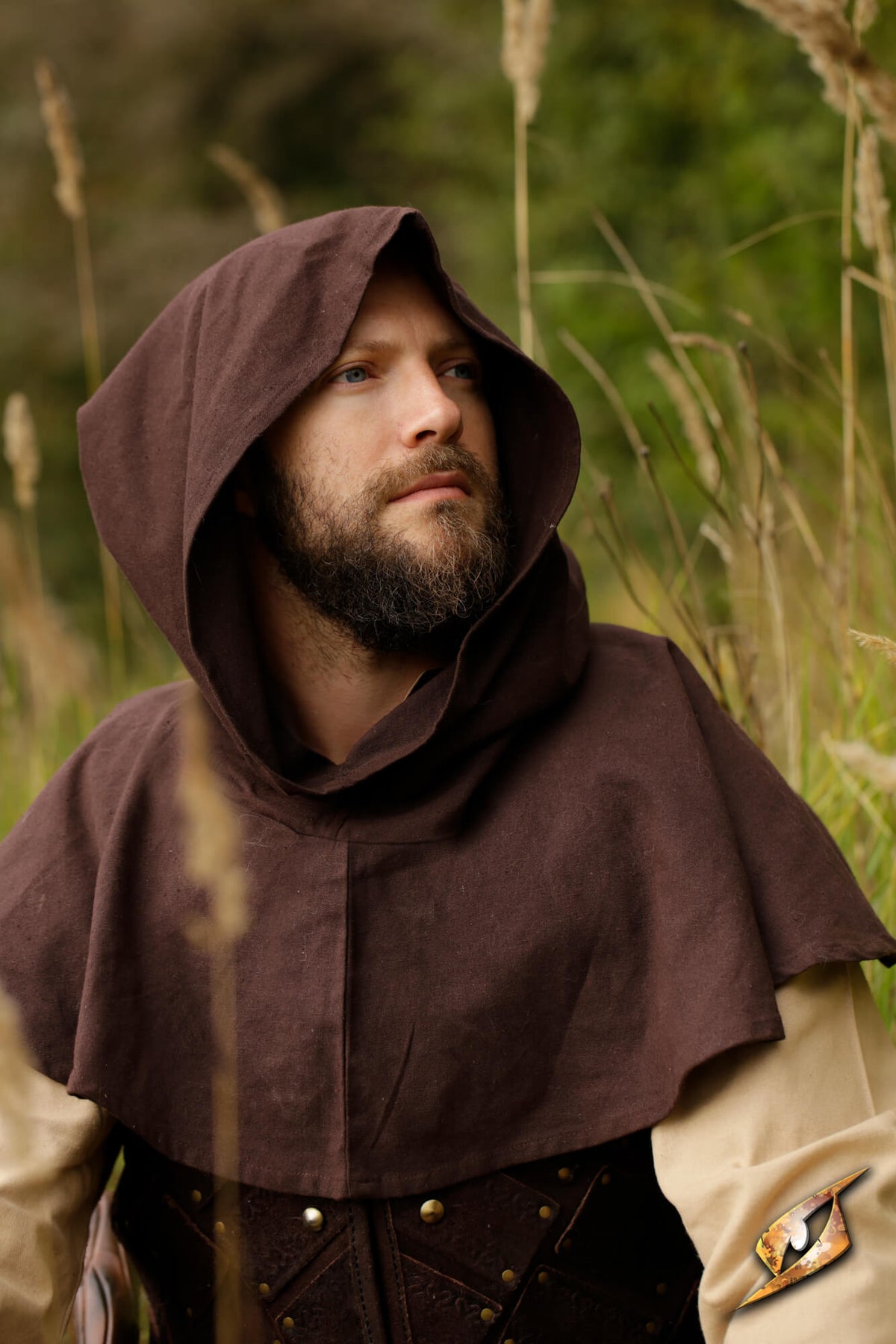
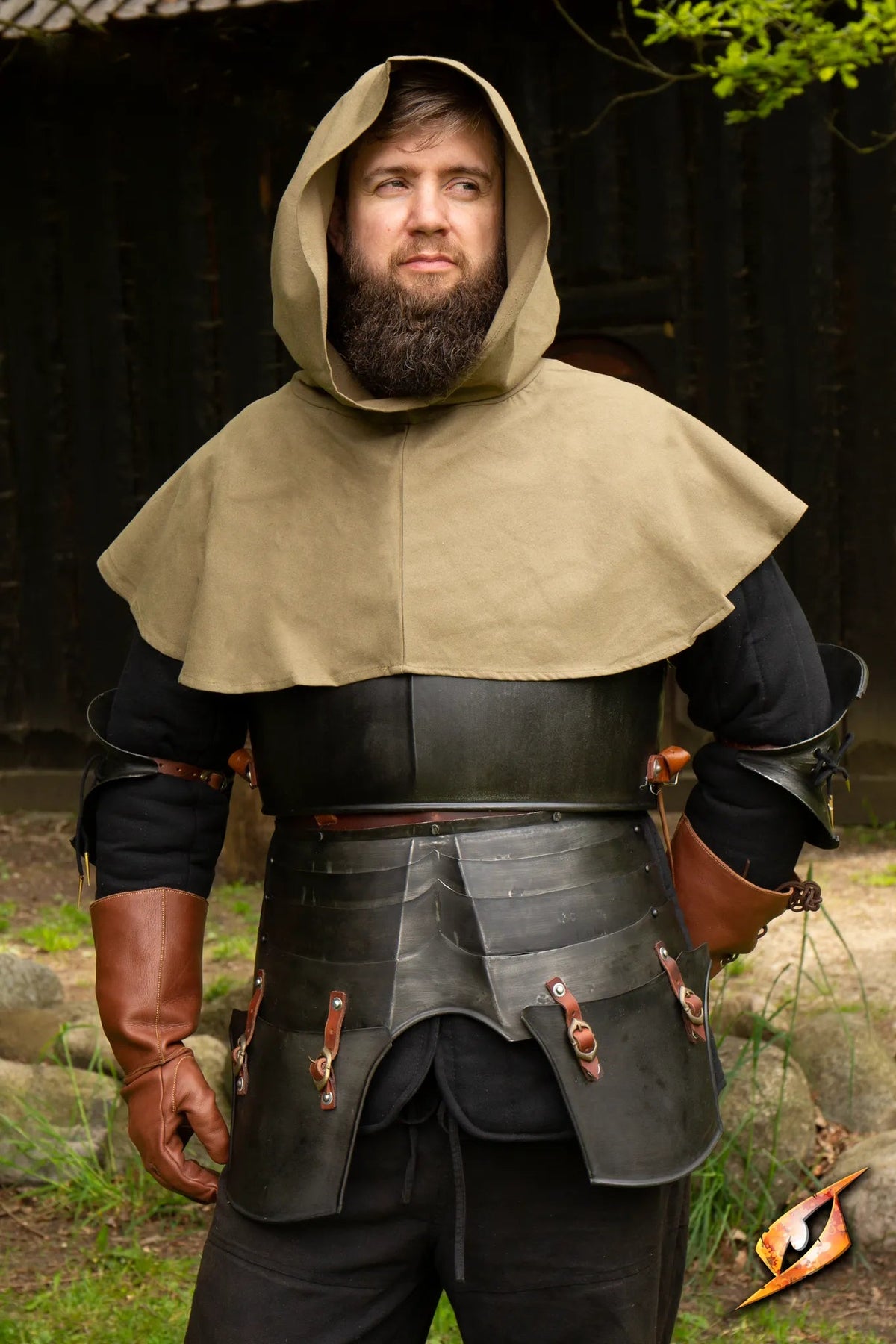
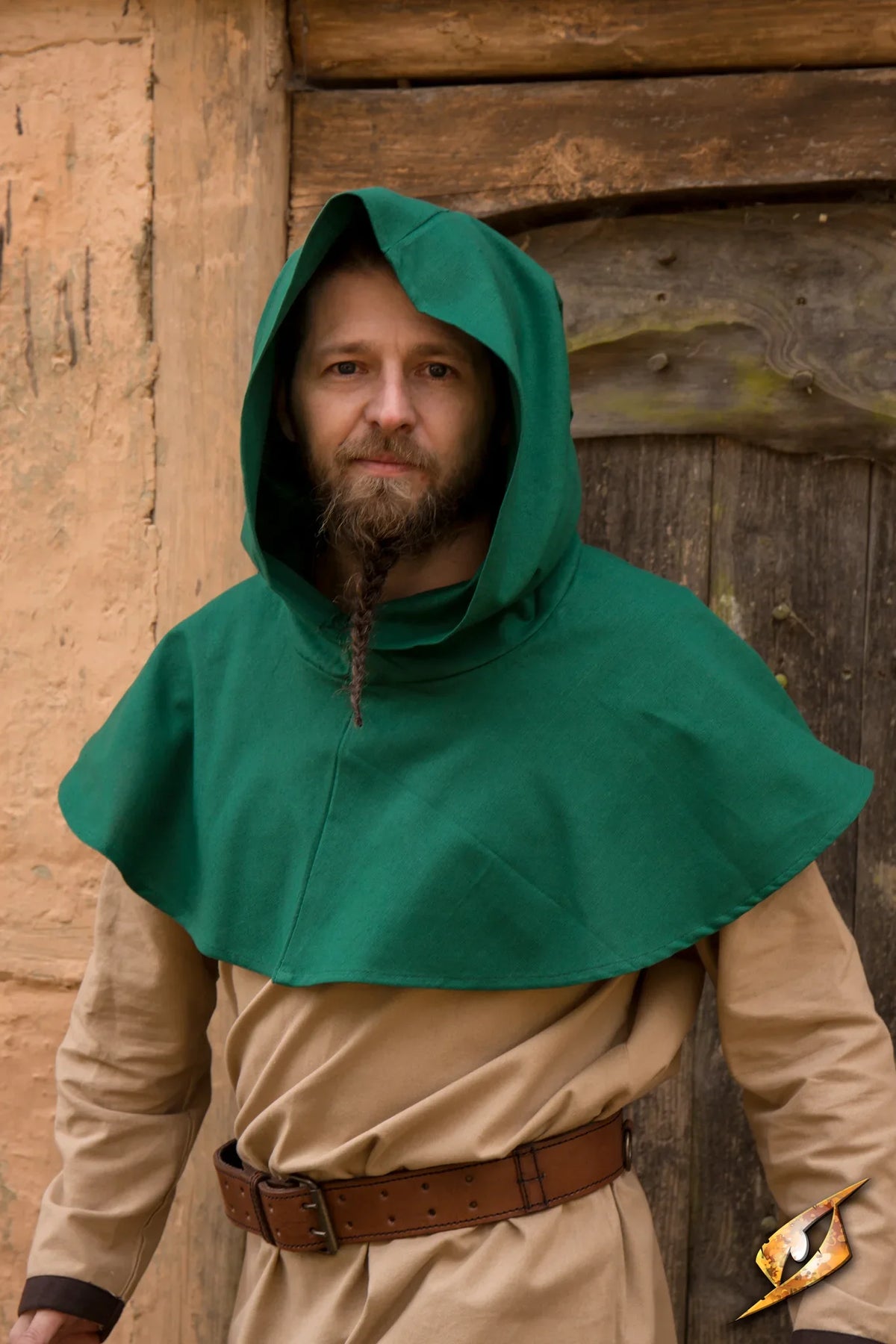
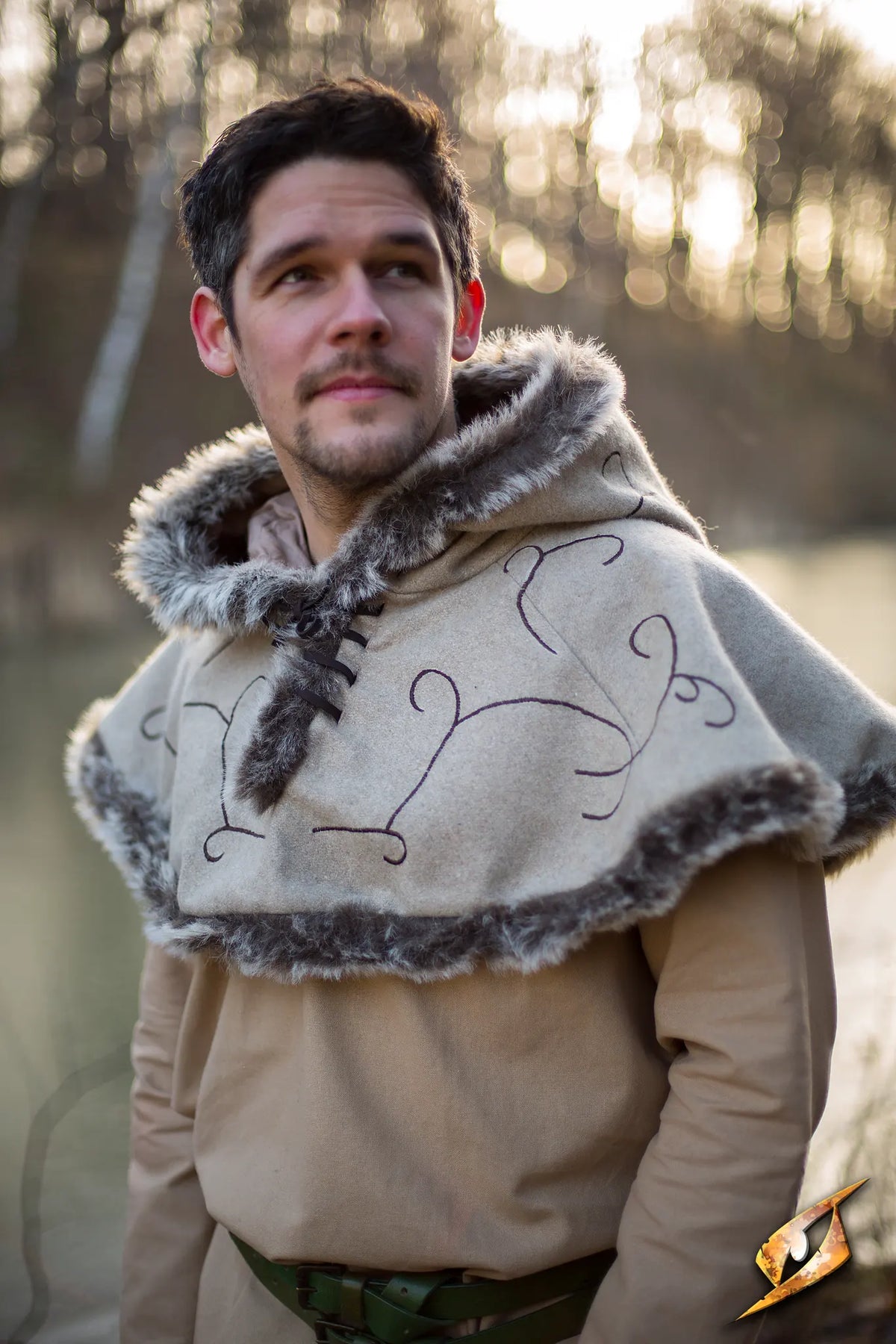
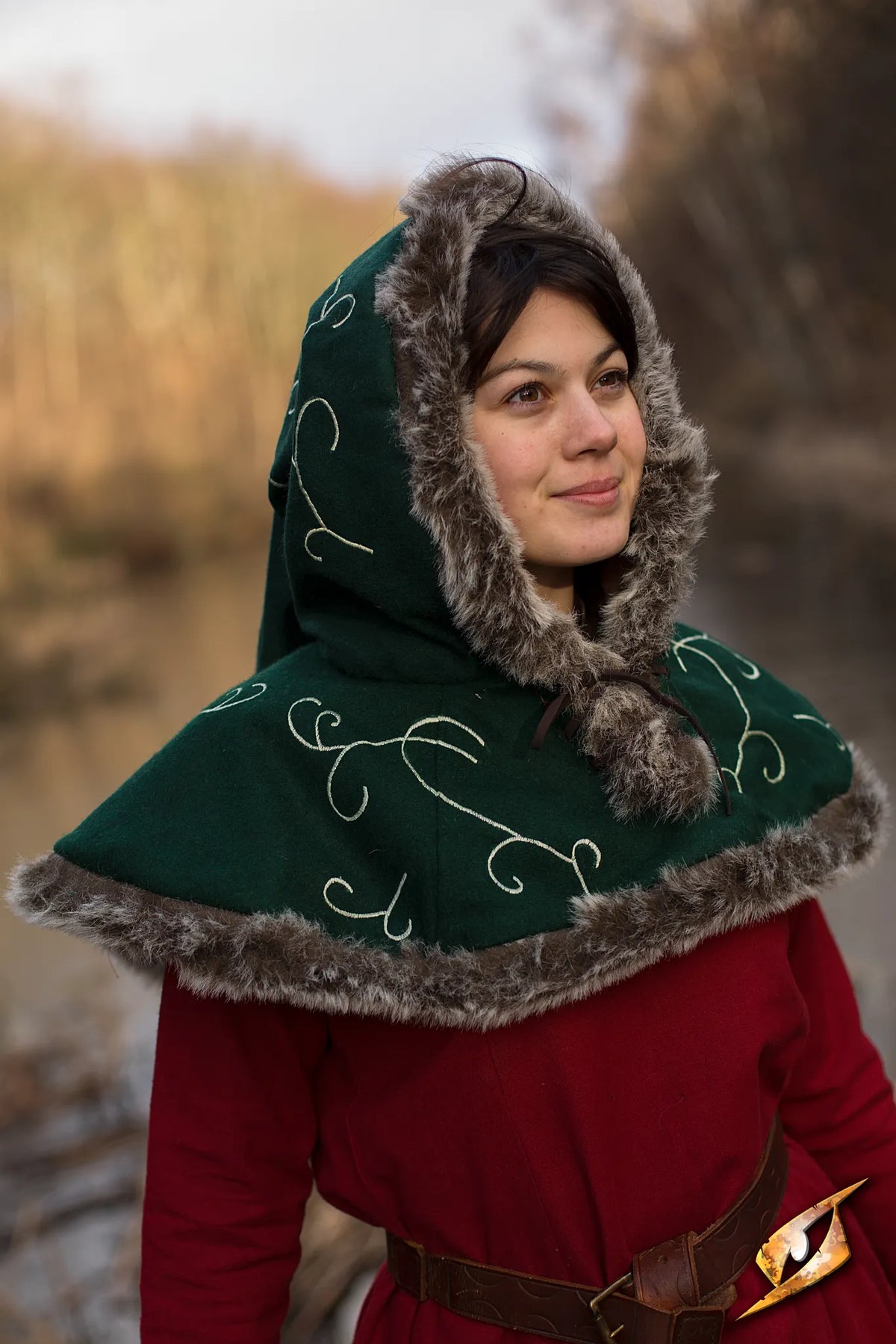
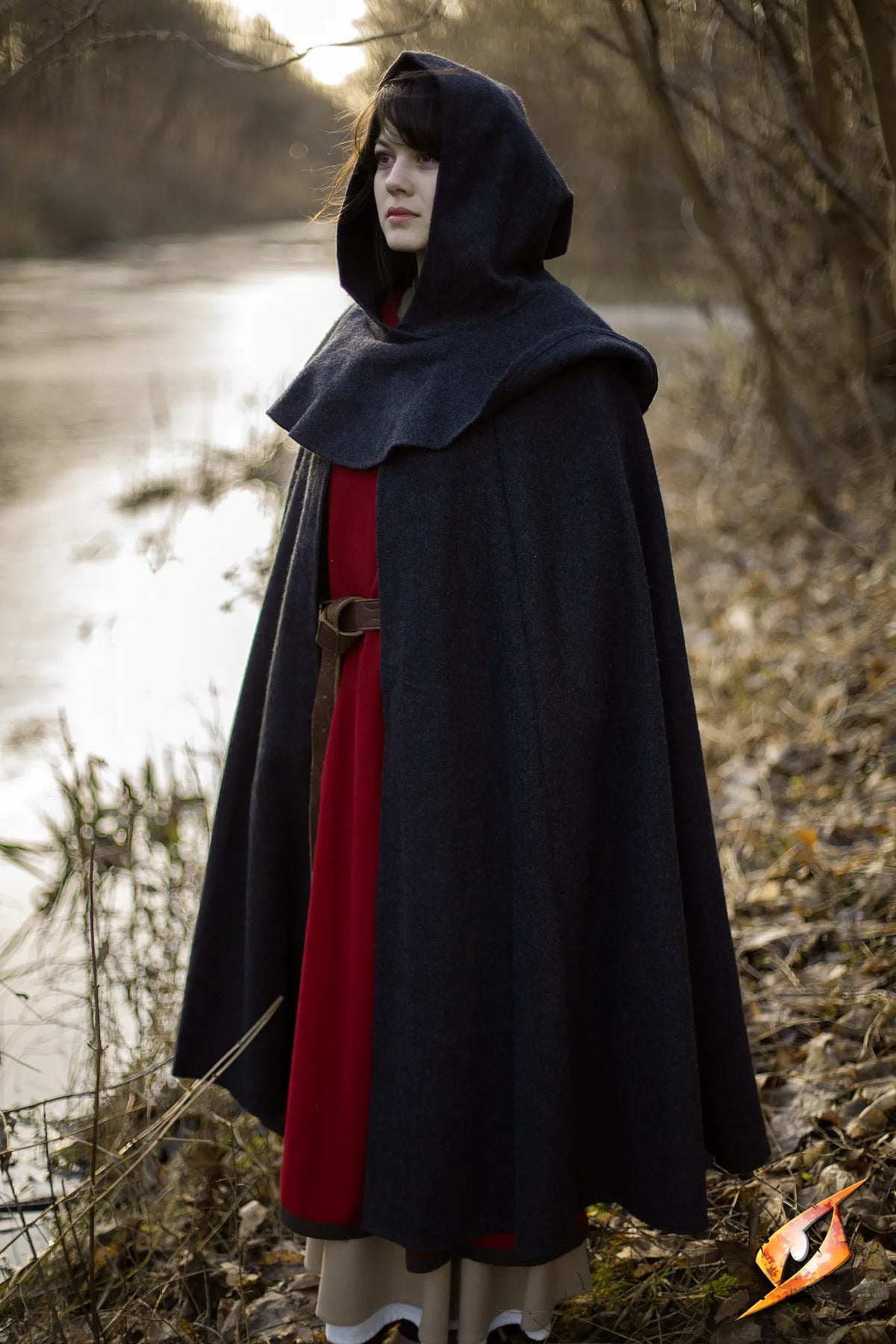
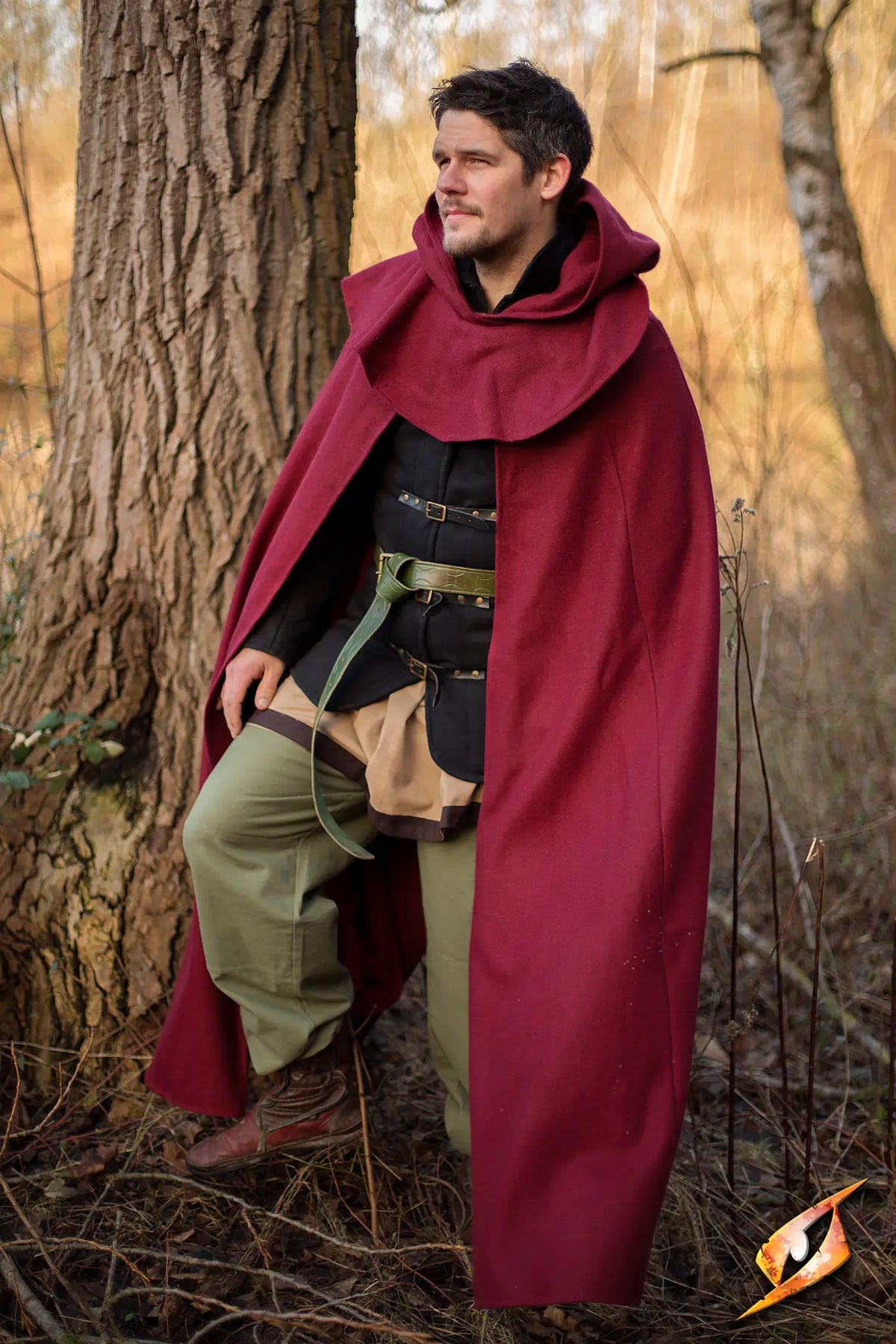
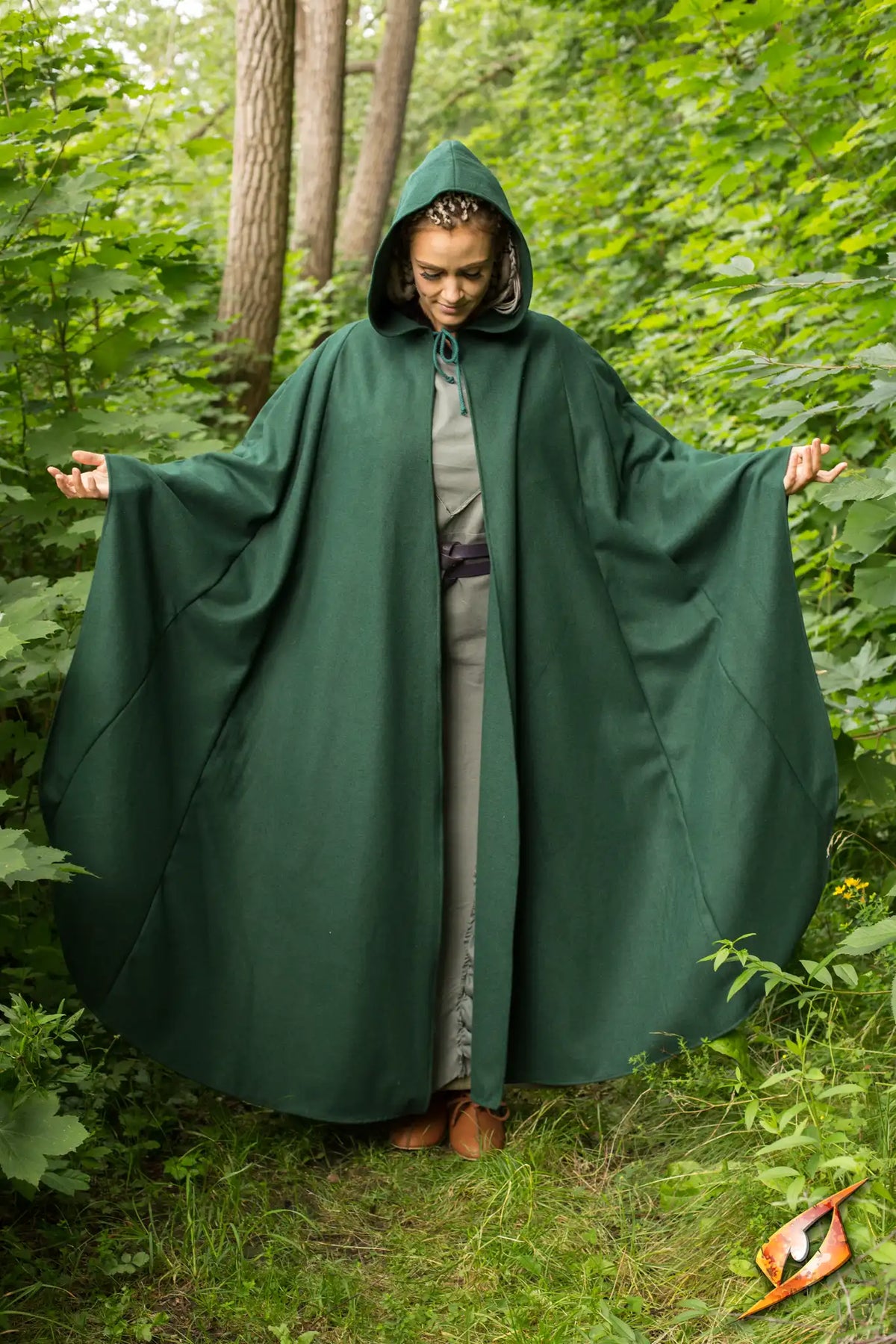
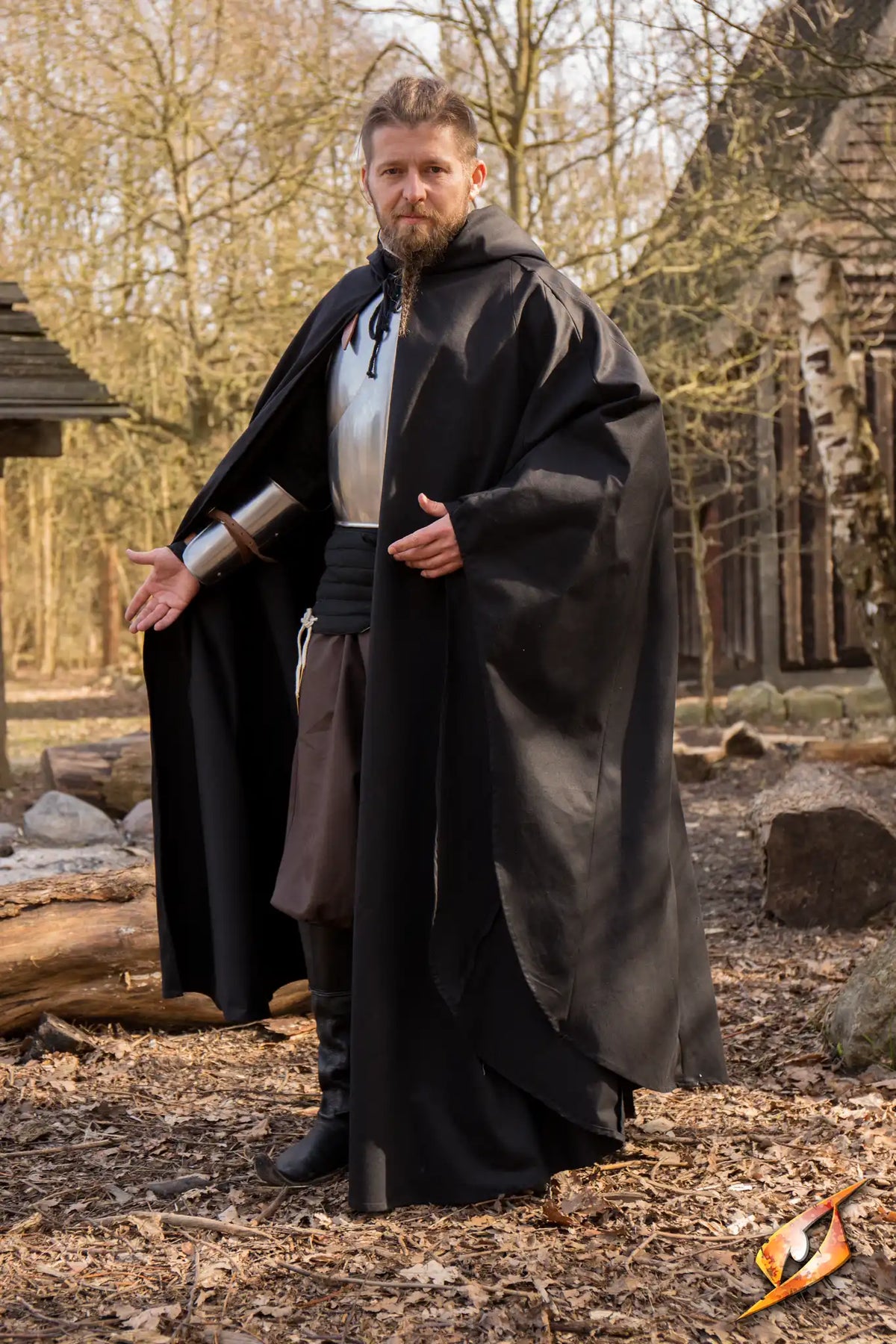
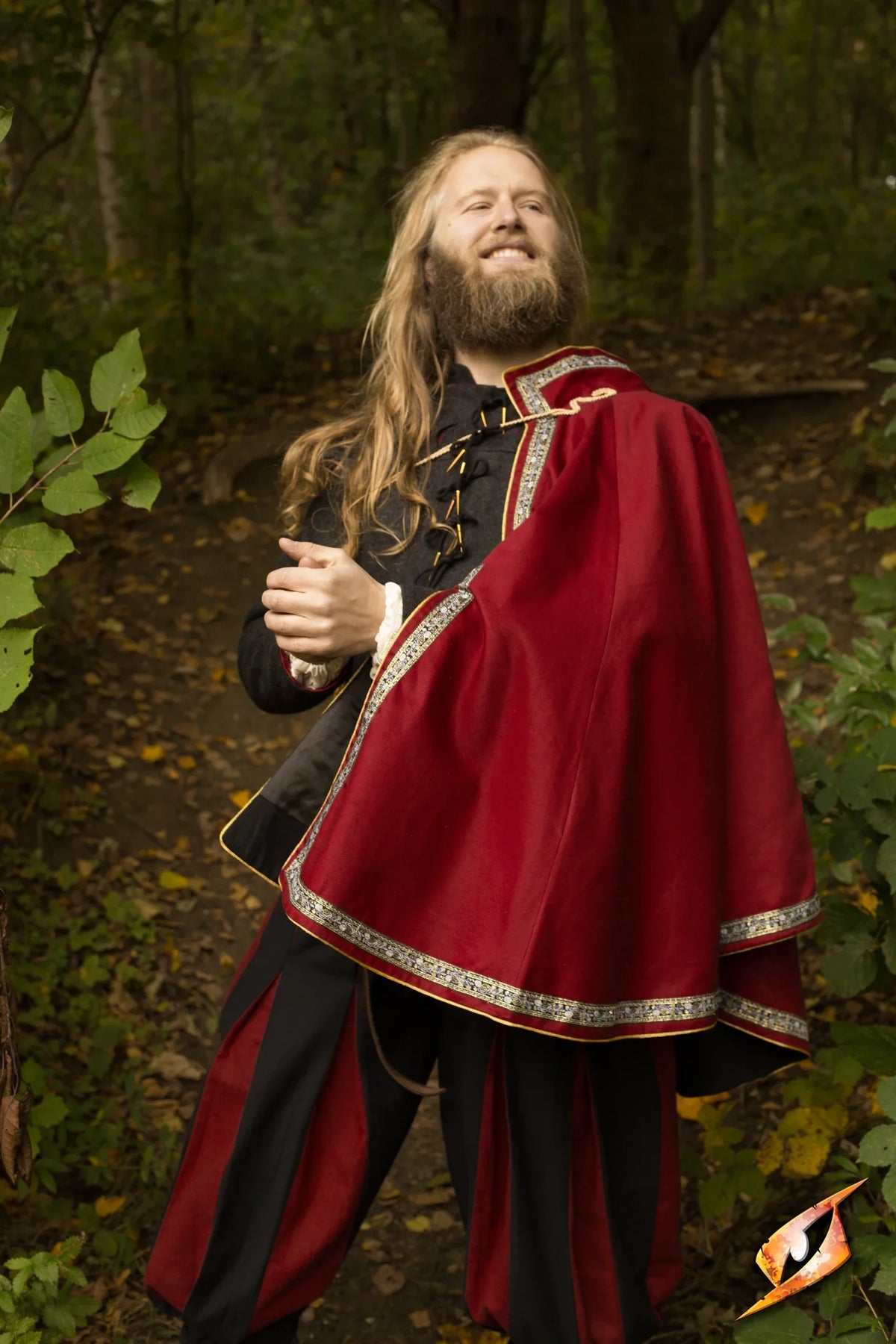
Knights in civilian dress wore the cotte, surcoat, a wide cloak, and the chaperon, a hood that evolved from a purely practical head covering into a recognizable status piece. Belts became increasingly elaborate, hung with pouches, keys, and decorative fittings. Rings, brooches, and embroidered detail completed the look for those of rank.
The Late Middle Ages (14th Century): Fashion Is Born
The Great Shortening
The 14th century brought one of the most dramatic shifts in the history of European dress. In the 1340s, men's clothing shortened and tightened dramatically. Out went the long loose robes that had been standard for centuries. In came short fitted tunics, tight hose, and body-conscious silhouettes that scandalized contemporary commentators. One French chronicler complained that men could not kneel in prayer without exposing their undergarments.
The Cotehardie and the Doublet
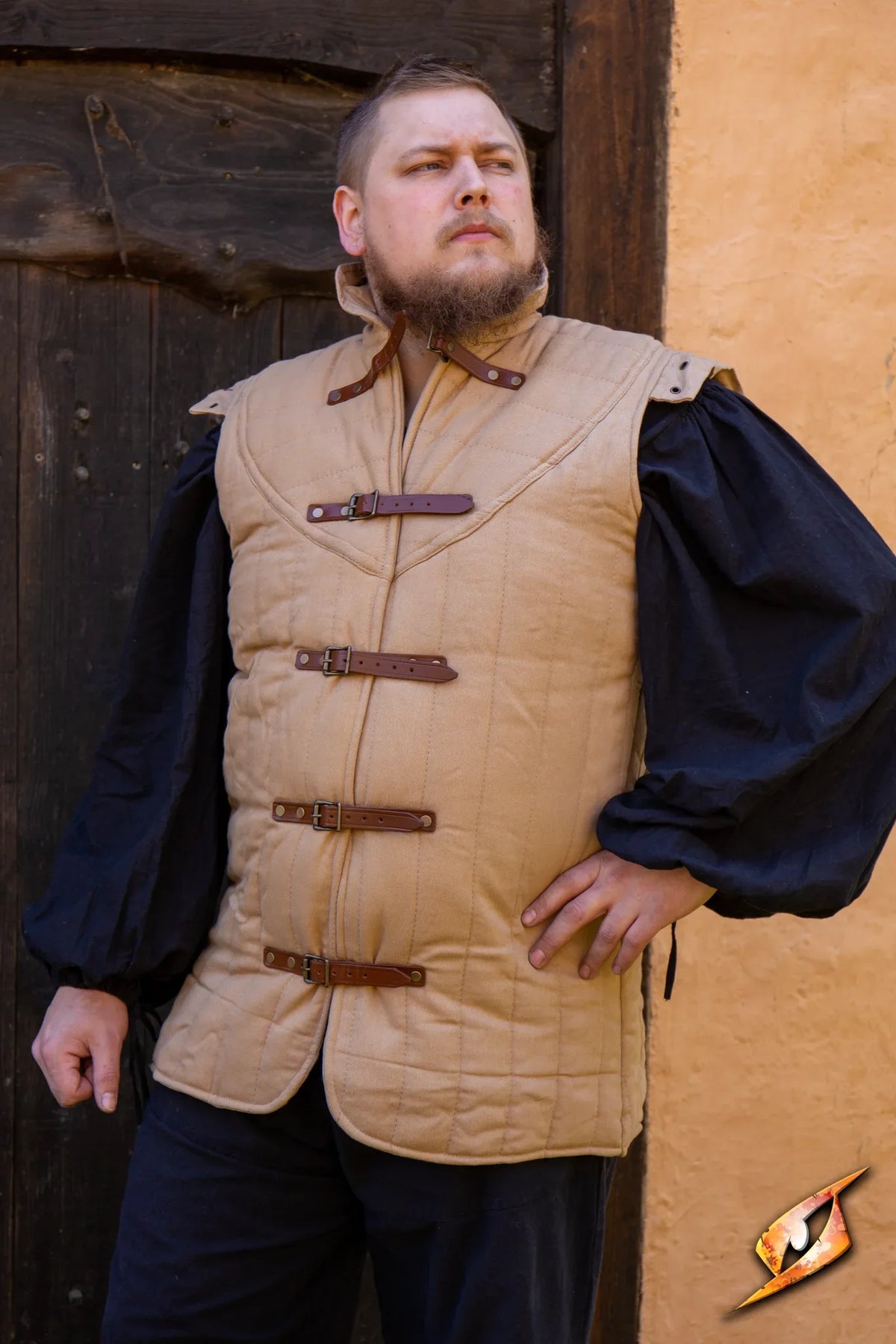
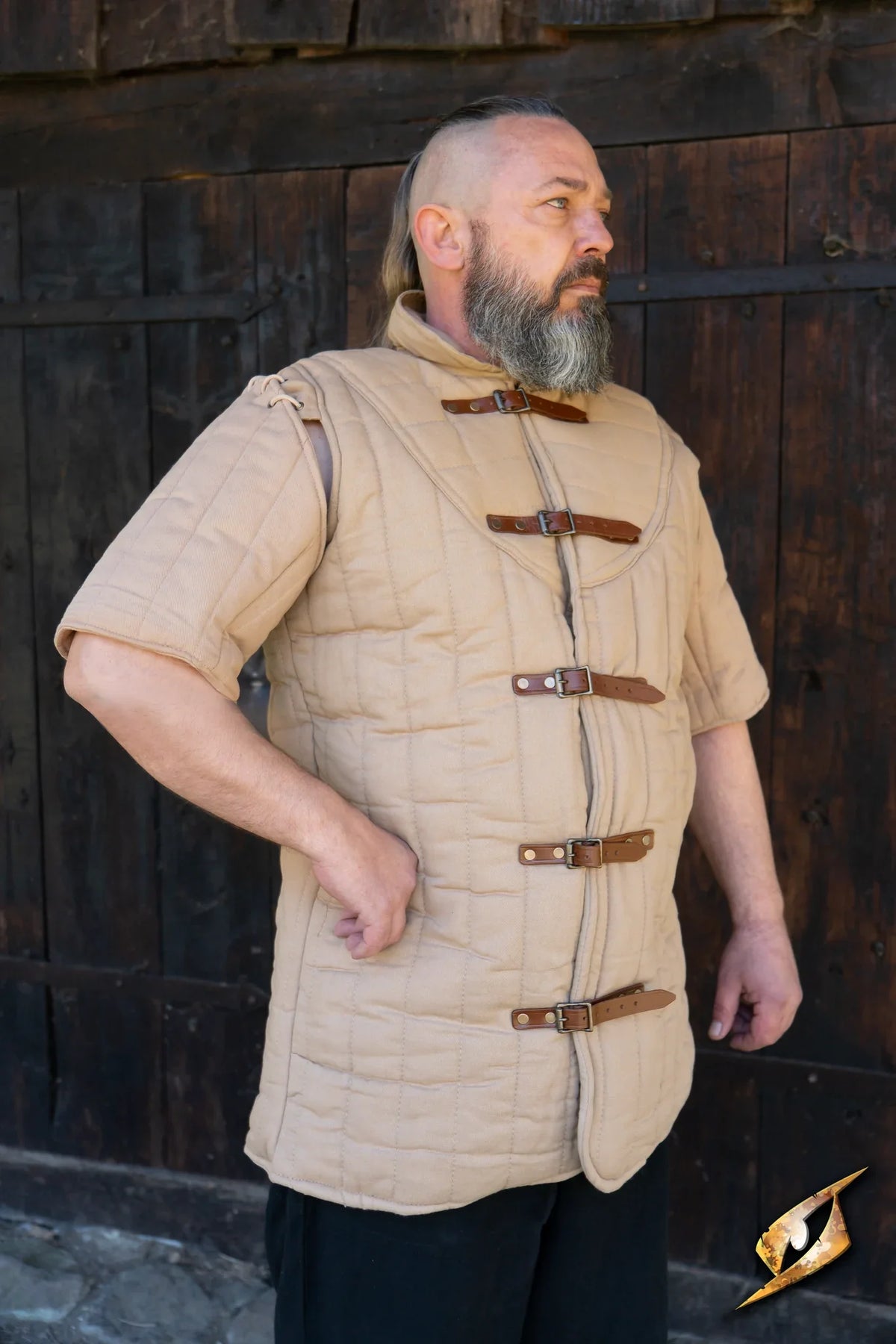
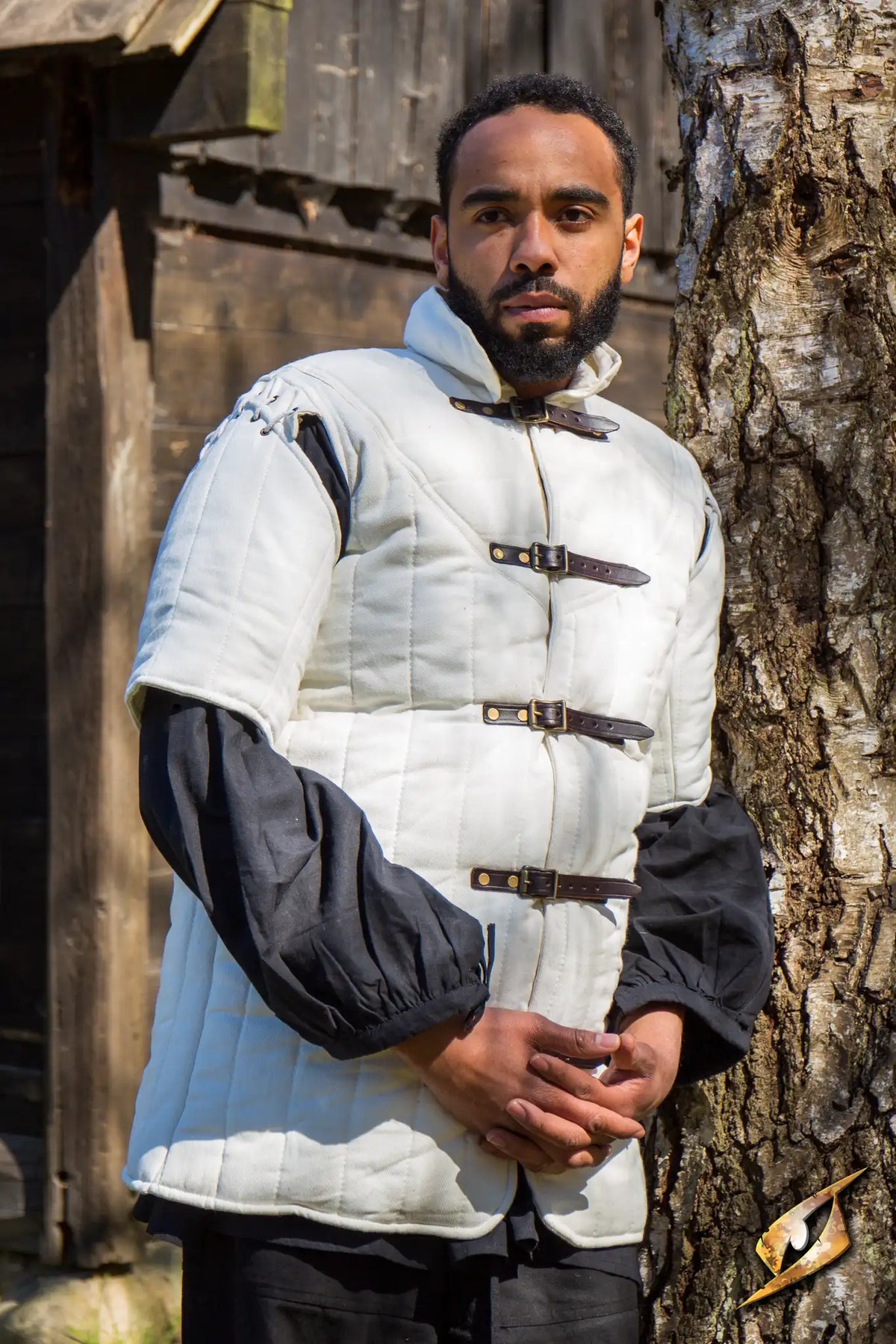
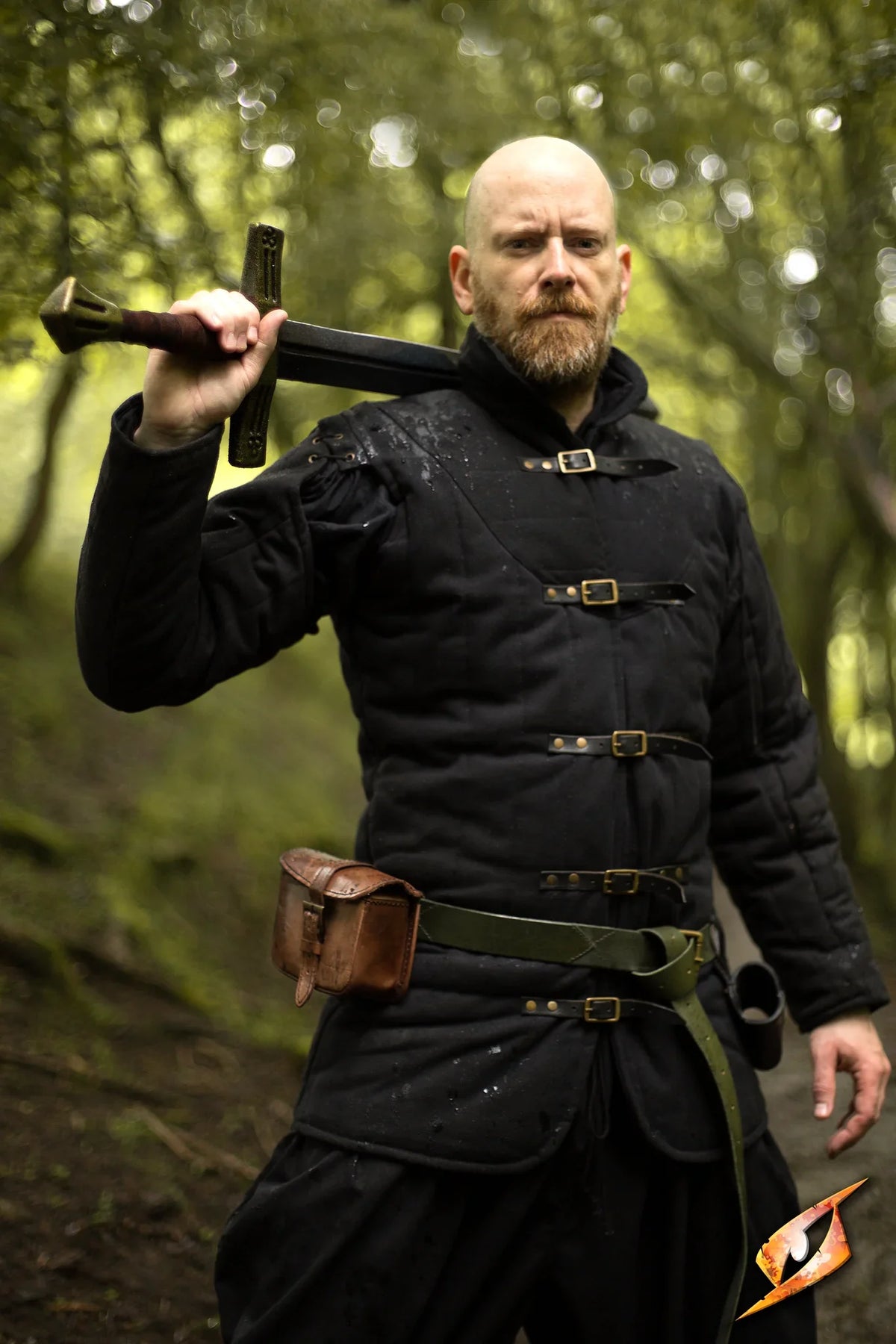
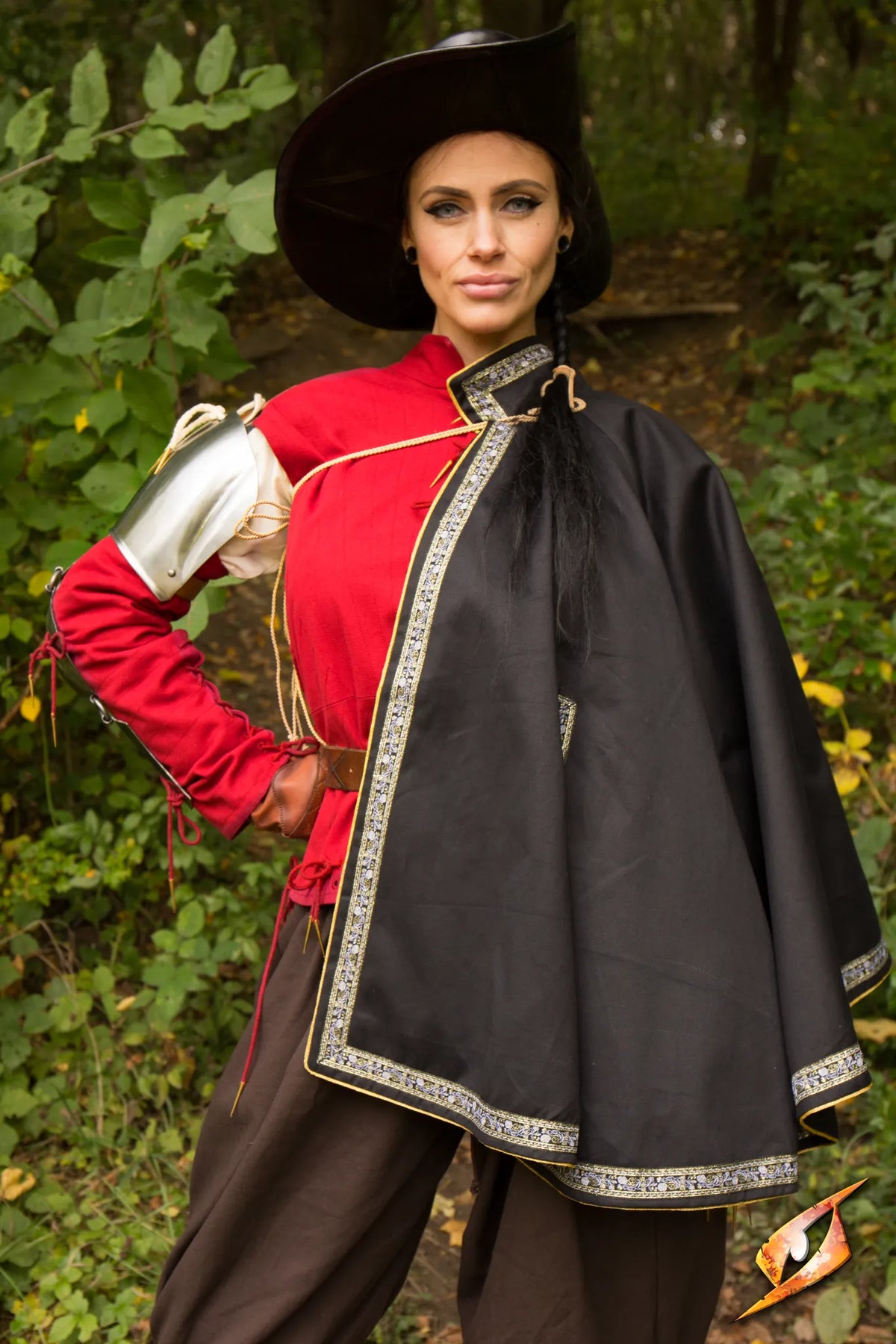
The cotehardie became the defining fitted outer garment of the mid 14th century: close-fitting through the torso and arms, buttoned down the front, worn over a linen shirt. As tunics shortened further, the doublet emerged as its natural successor: a fitted, padded jacket worn as the standard male upper garment from the mid 14th century onward. Hose lengthened to meet the rising hemline, eventually becoming full tights attached by laces to the doublet.
Parti-Colored and Decorative Dress
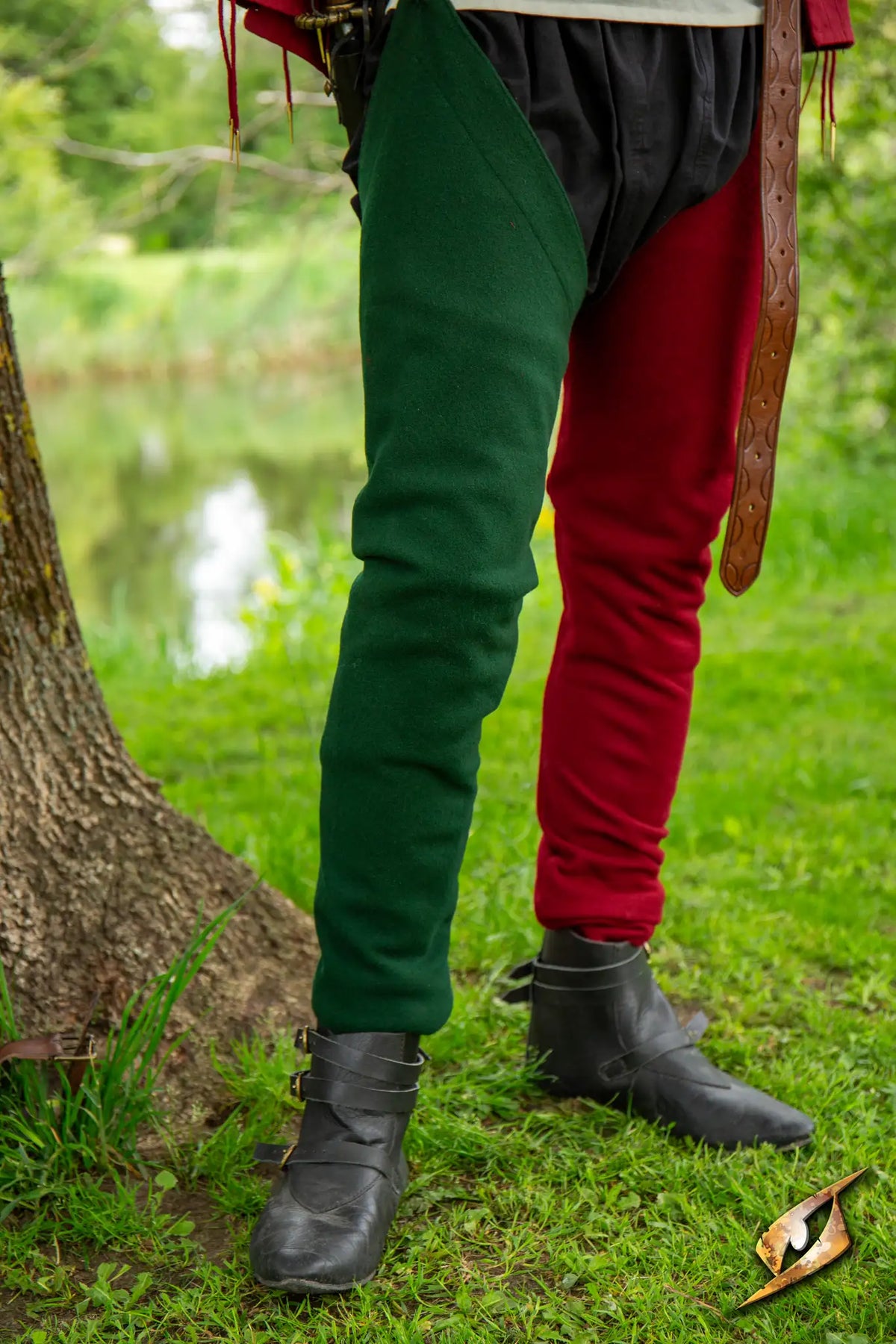
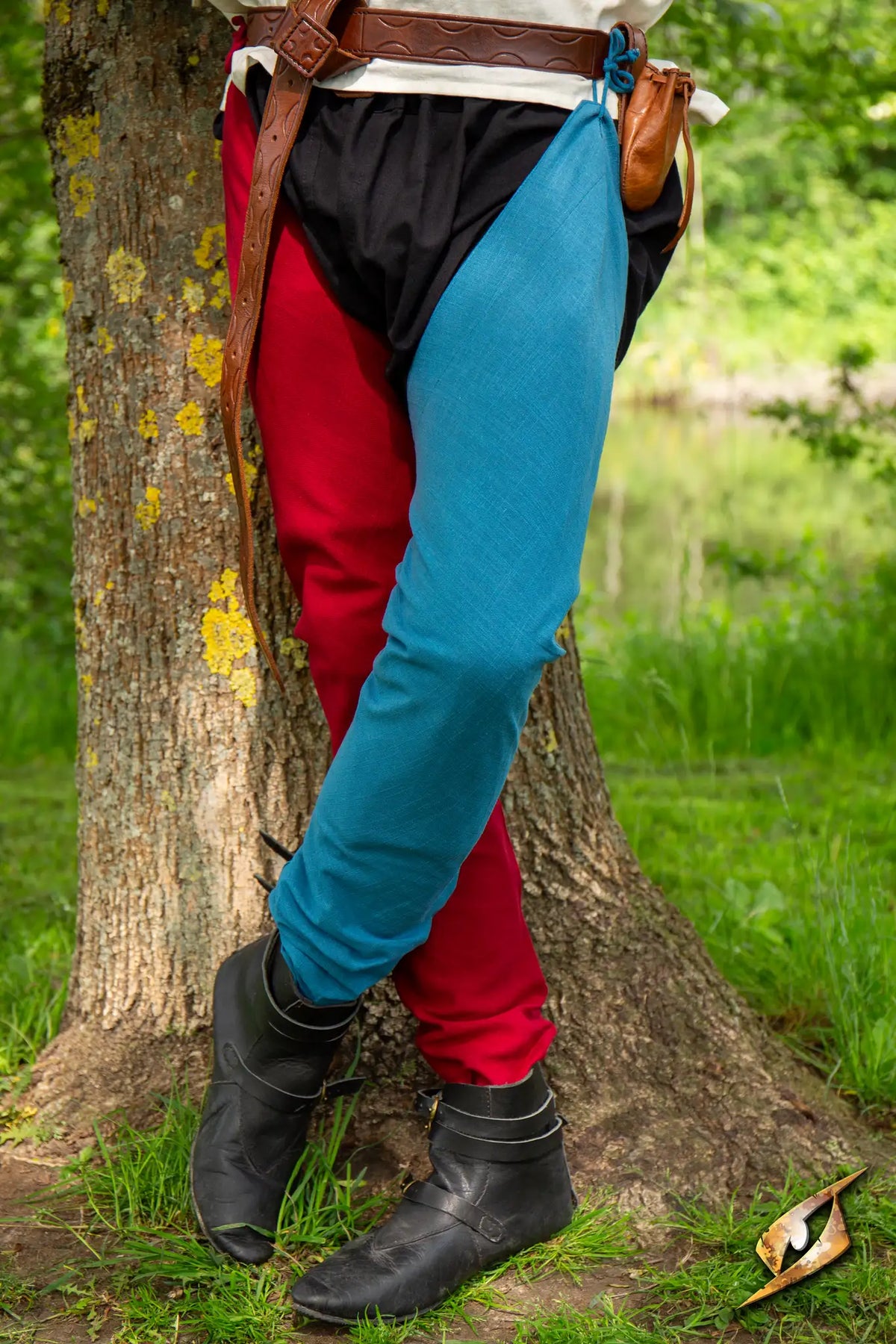
The 14th century also saw a fashion for mi-parti, garments made of two contrasting fabrics divided vertically down the center. Dagged and scalloped edges appeared on sleeves and hems. Color, pattern, and decorative detail became deliberate expressions of personality and wealth in a way they had not been in earlier centuries.
The 15th Century: Extravagance and the Burgundian Influence
The Houppelande
As the 15th century opened, the houppelande dominated male outerwear. A voluminous gown with a high collar, sweeping floor-length sleeves, and heavy fur lining, it was worn by men of all classes in varying degrees of elaboration. Its bulk and richness were the point: the more fabric, the more wealth implied.
The Burgundian Court and European Fashion
From roughly the 1430s onward, the Duchy of Burgundy became the fashion capital of Europe. Under Philip the Good, the Burgundian court set trends that spread across England, France, and the Holy Roman Empire. Silhouettes became increasingly exaggerated: tightly cinched waists, wide padded shoulders, and the dramatically pointed poulaine shoes that became symbols of noble status. The doublet evolved with the times, growing shorter and more fitted, while outer gowns became more tailored with vertical pleats and turned-back collars.
Hats, Hoods, and Accessories
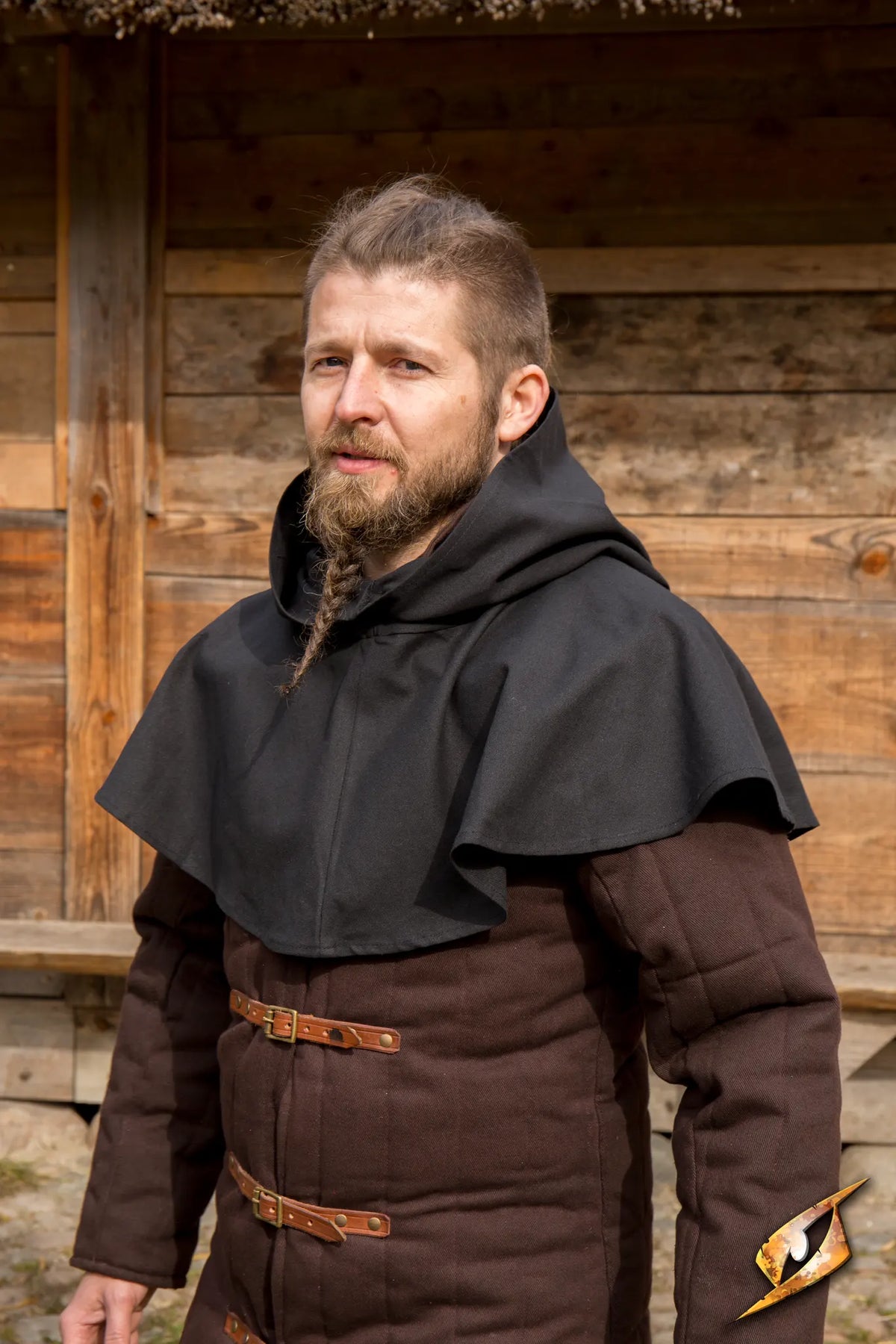
The chaperon, once a simple hood, had by the 15th century become a complex and fashionable hat twisted and draped into elaborate shapes. Bowl cuts with shaved napes were the dominant hairstyle of the mid century, giving way to shoulder-length hair toward the end. Belts, daggers, purses, and rings remained essential accessories for men of all classes.
What Men Wore: A Quick Reference by Class
Nobility: Doublet, hose, houppelande or outer gown in velvet, silk, or brocade. Fur lining, elaborate belt, jewelry, chaperon or fashionable hat.
Merchants and tradesmen: Cotte or doublet in good quality wool, hose, practical cloak. Less decoration, but following noble fashion at a distance.
Common men and laborers: Simple linen shirt, woolen tunic or cotte, practical trousers or hose, leather belt. Function over fashion, with color and fabric limited by both cost and sumptuary law.