
Authentic Tableware in LARP
If you've ever sat around a campfire at a LARP event: wooden bowl in hand, horn cup by your side, you know how much the right tableware changes the experience. Authentic dining gear doesn't just make a meal feel more medieval. It deepens immersion, supports character storytelling, and adds richness to every scene.
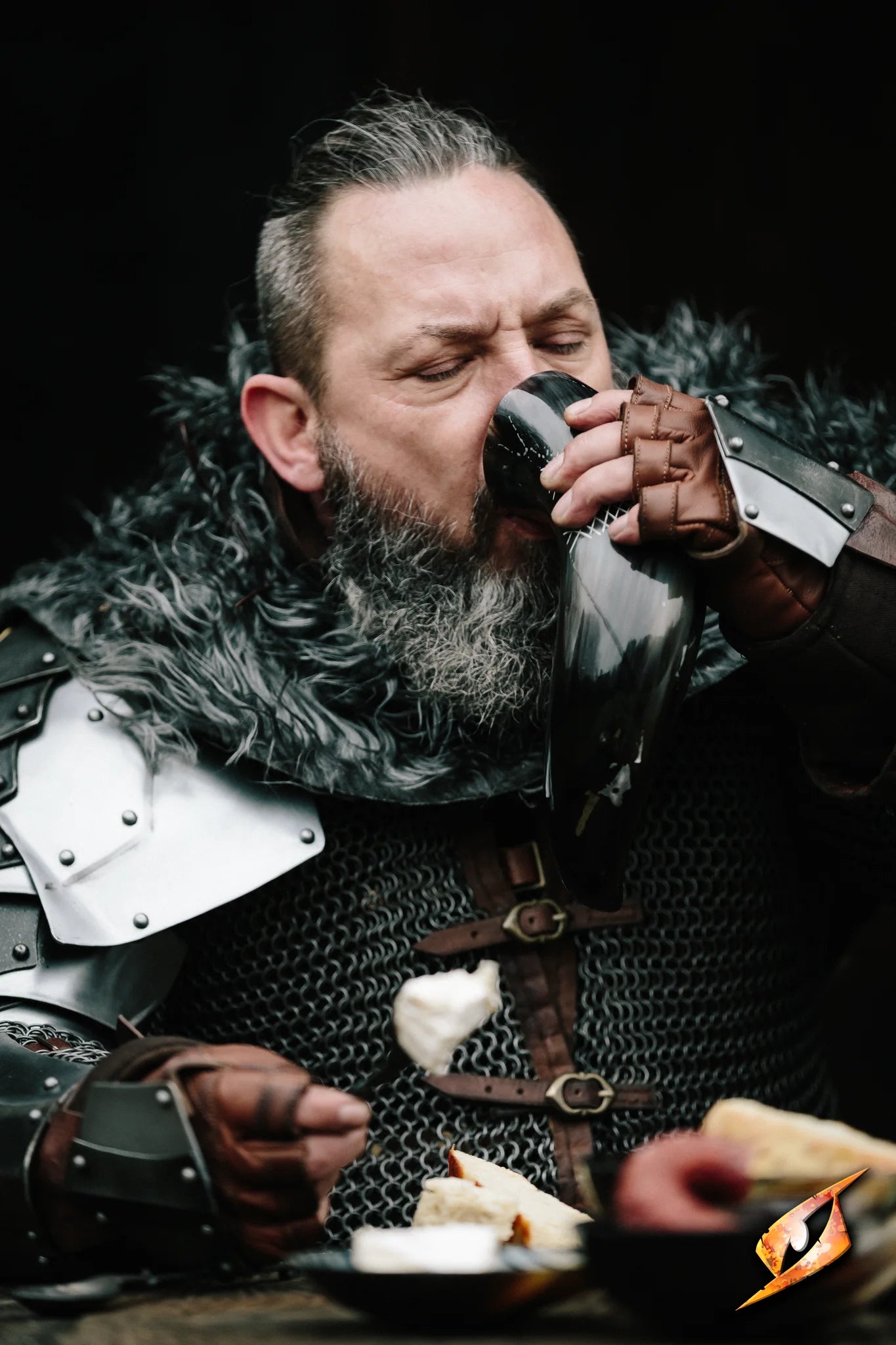
Whether you're sipping from a drinking horn or carving meat with iron cutlery, your tableware helps tell your story.
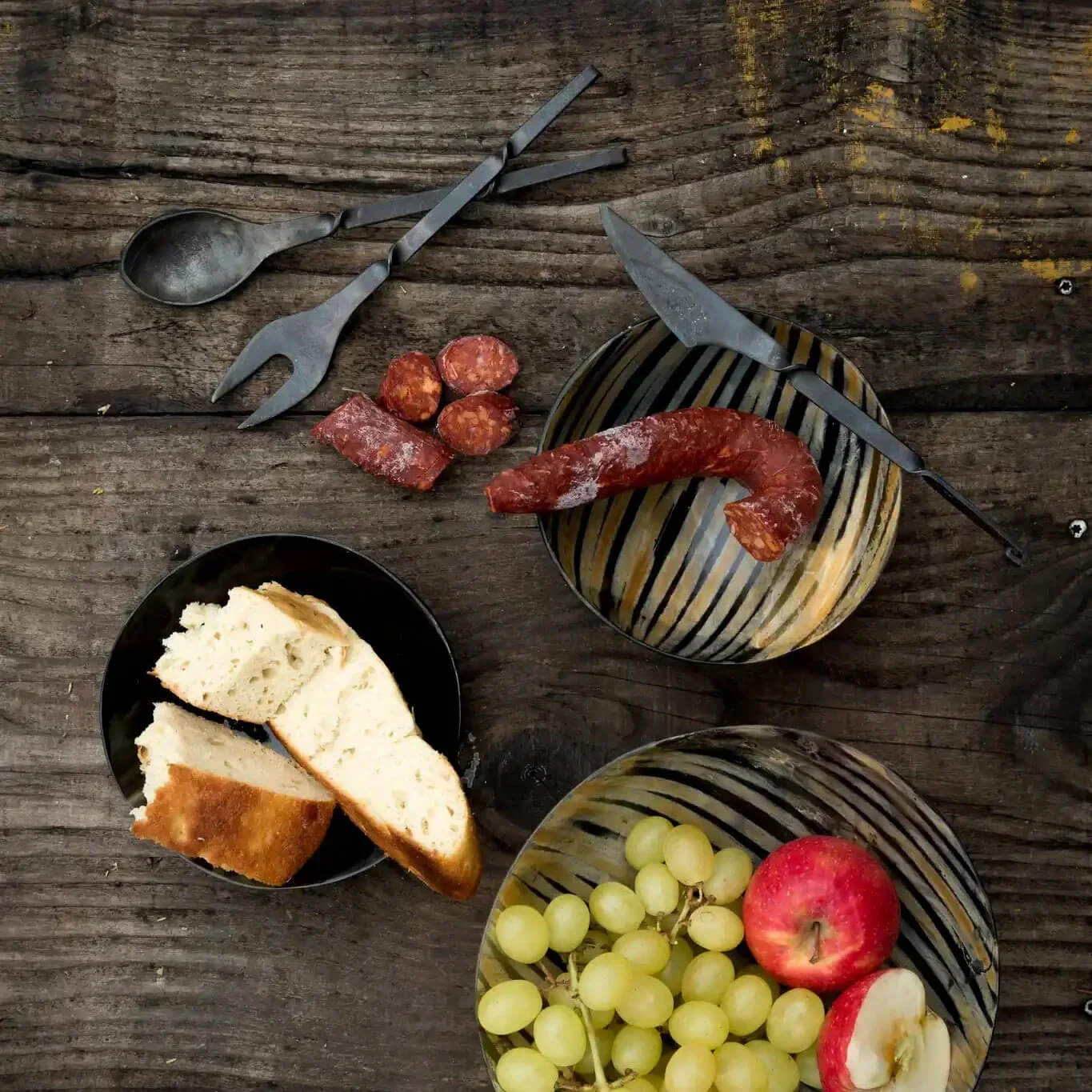
Why Tableware Matters in LARP
In the early days of LARP, most of us made do with plastic cups or modern silverware — whatever we had on hand. But once you switch to a proper drinking horn or a handcrafted bowl, there's no going back.
The right tableware transforms a meal into a roleplay moment. It's not just what you eat, but how you eat it.
- A peasant character might carry a worn wooden spoon or a horn bowl passed down through generations
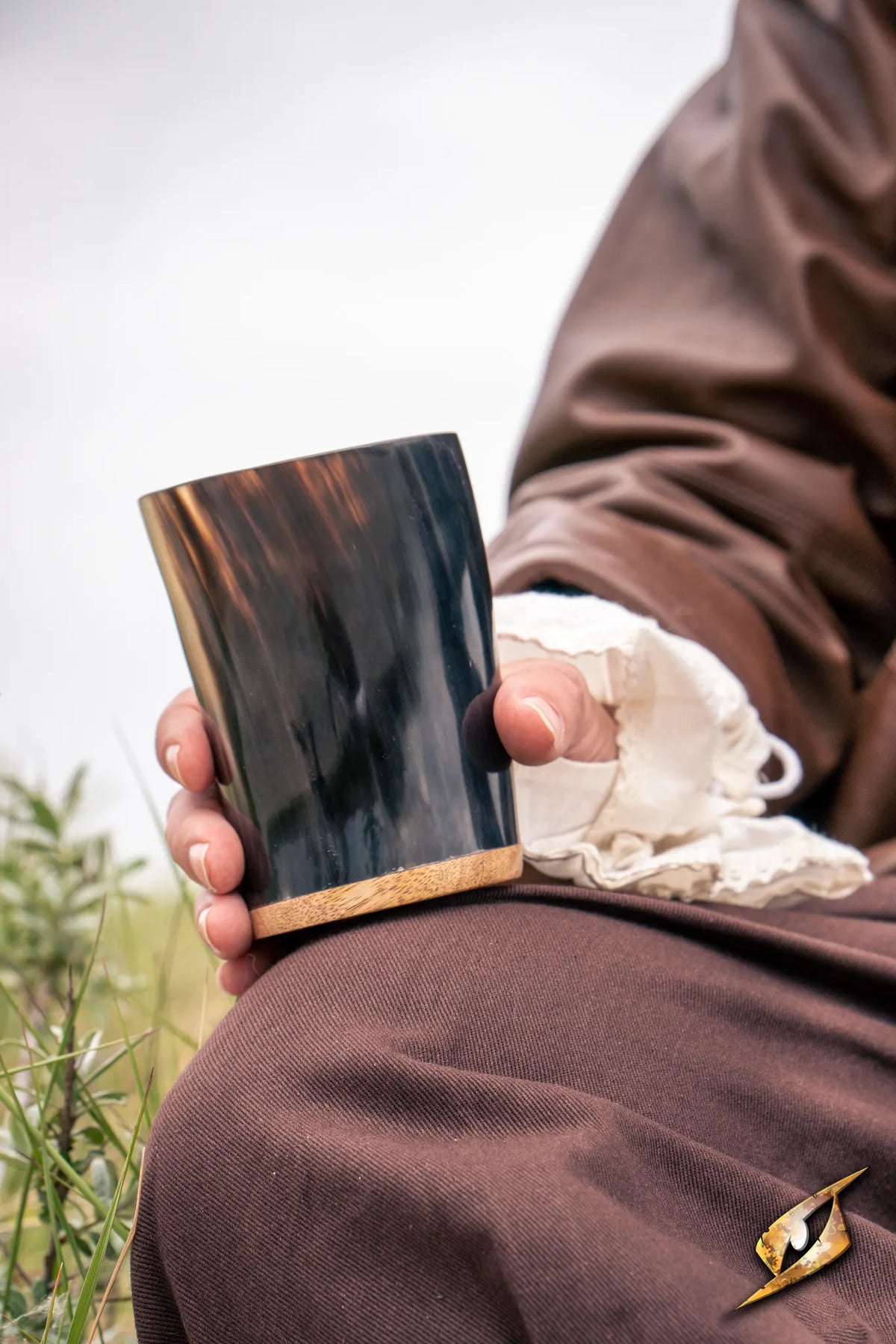
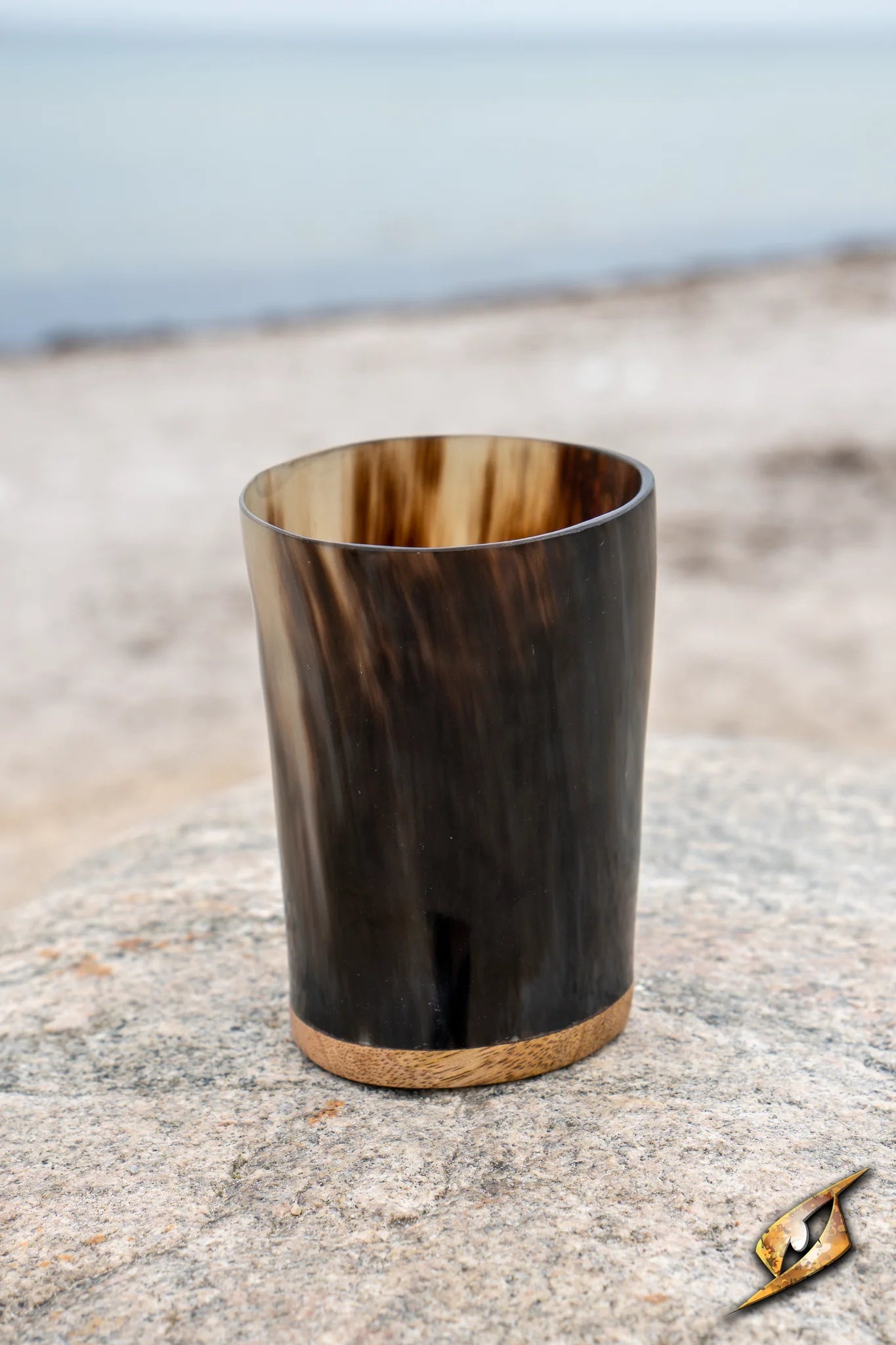
- A noble might drink from a polished horn cup with metal trim or dine from ceramic glazed dishes
These choices communicate status, wealth, and backstory without a single word of dialogue.
What People actually used in medieval times
Dining customs in the medieval period were as varied as the people themselves. Common folk typically used unglazed clay or wooden dishes, while nobles had access to bronze, tin, or silver. Finely crafted wooden tableware was valued across all social classes.
One clever historical detail worth knowing: the trencher, a thick slice of bread used as an edible plate. It caught sauces and juices and was either eaten afterward or given to the poor. It's a great piece of medieval ingenuity, and a fun touch to recreate around the campfire.
Horn, Wood, Clay and Metal:
Choosing the Right Material
Different materials suit different characters, settings, and budgets. Here's how they break down:
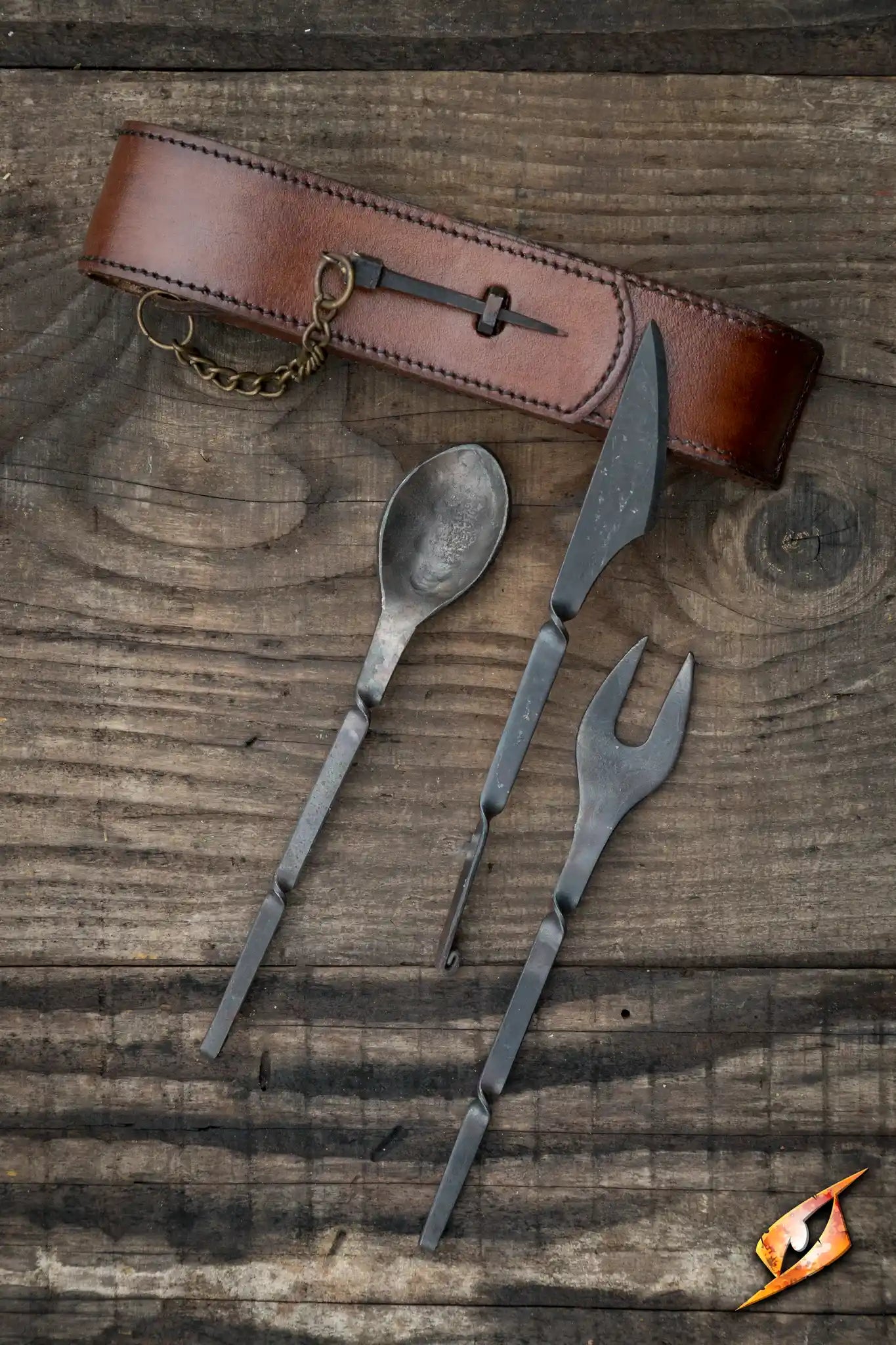
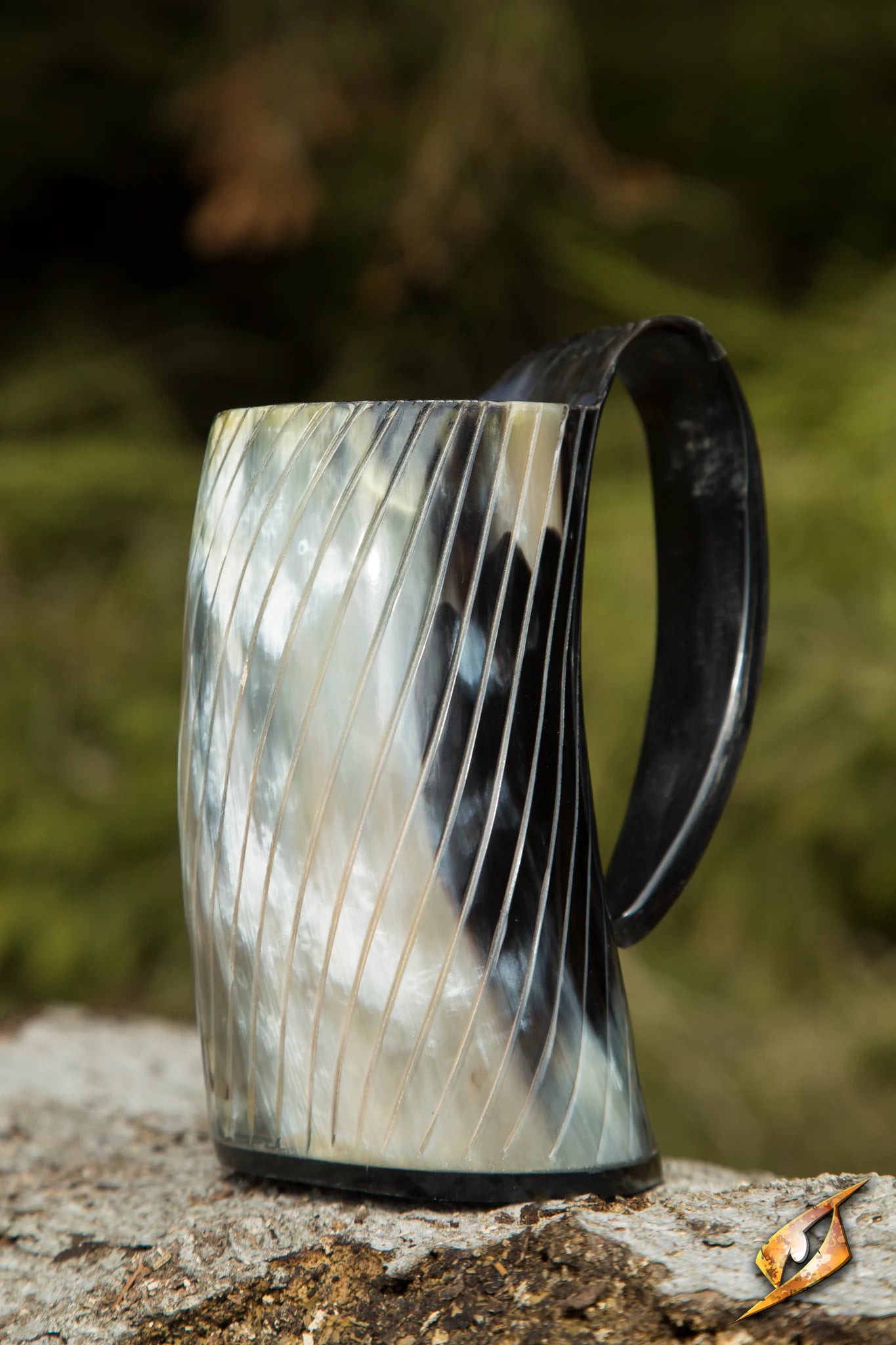
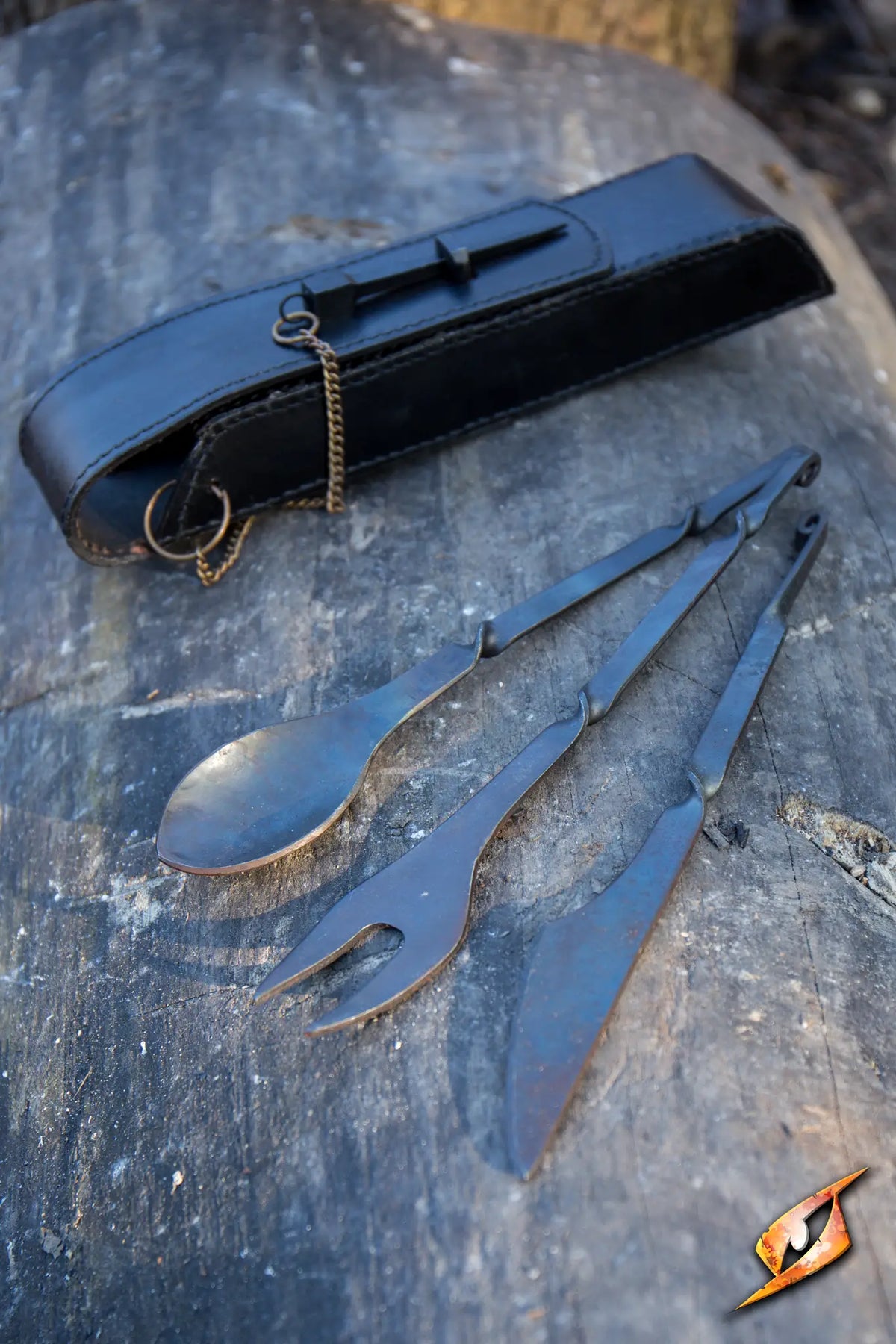
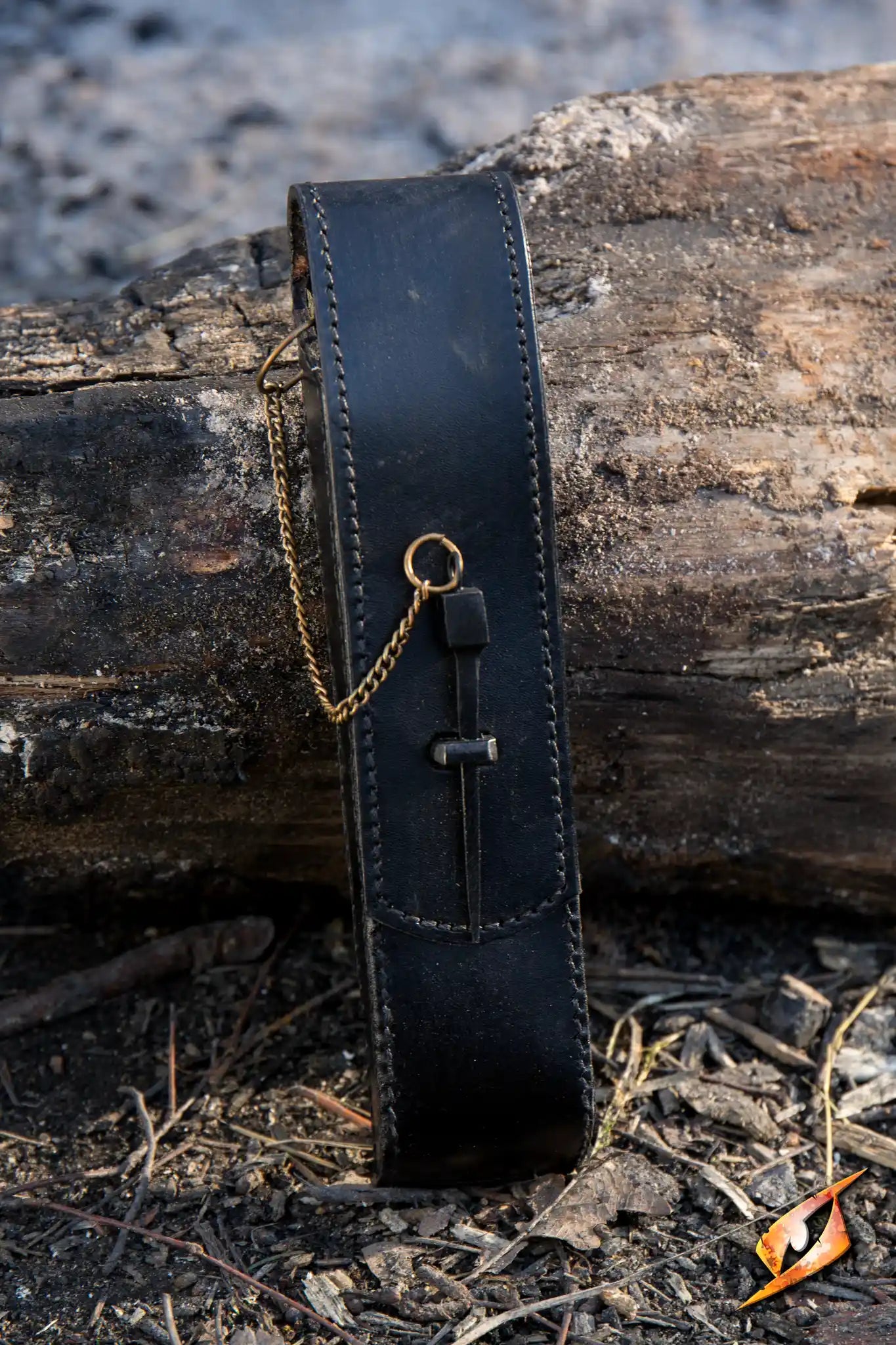
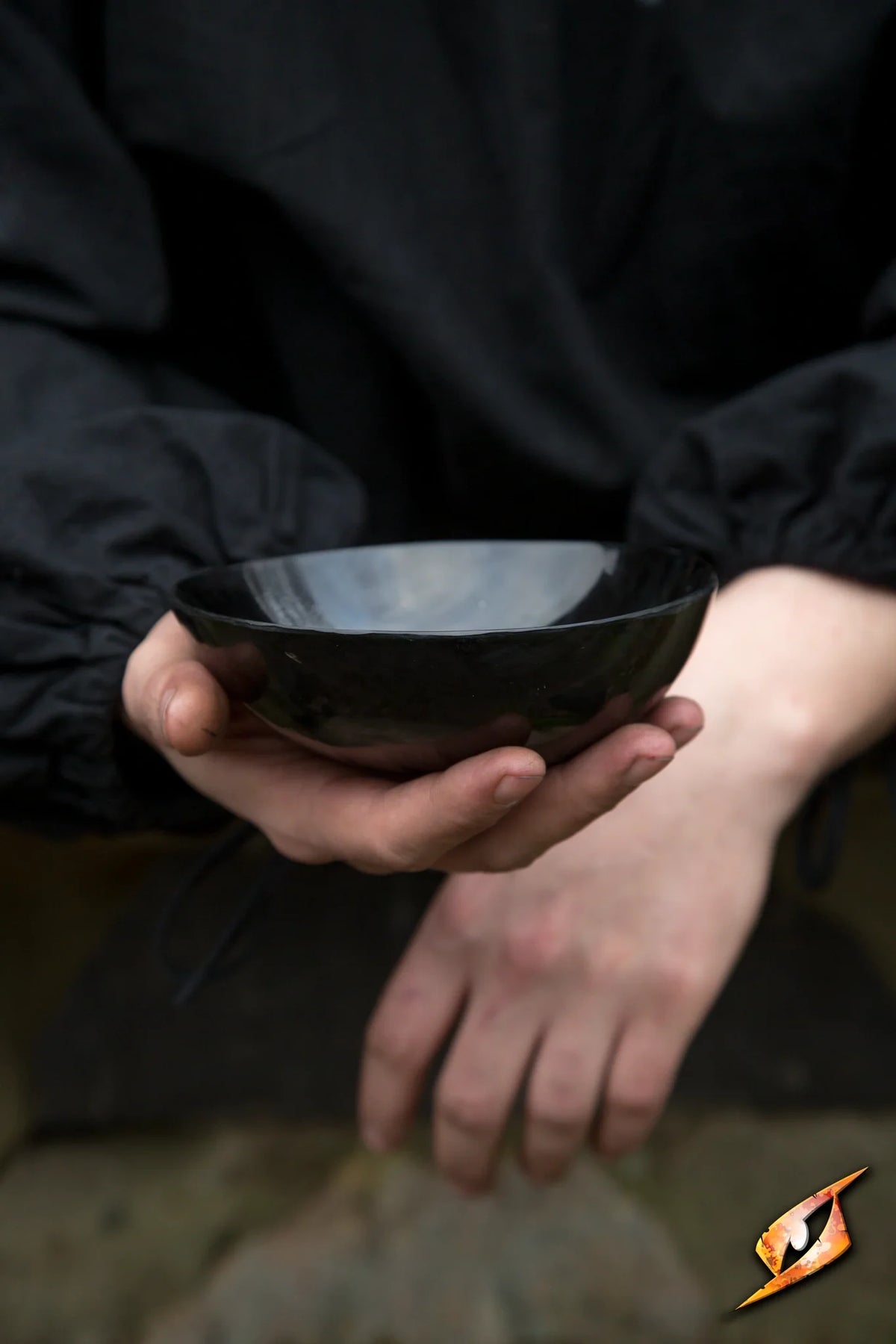
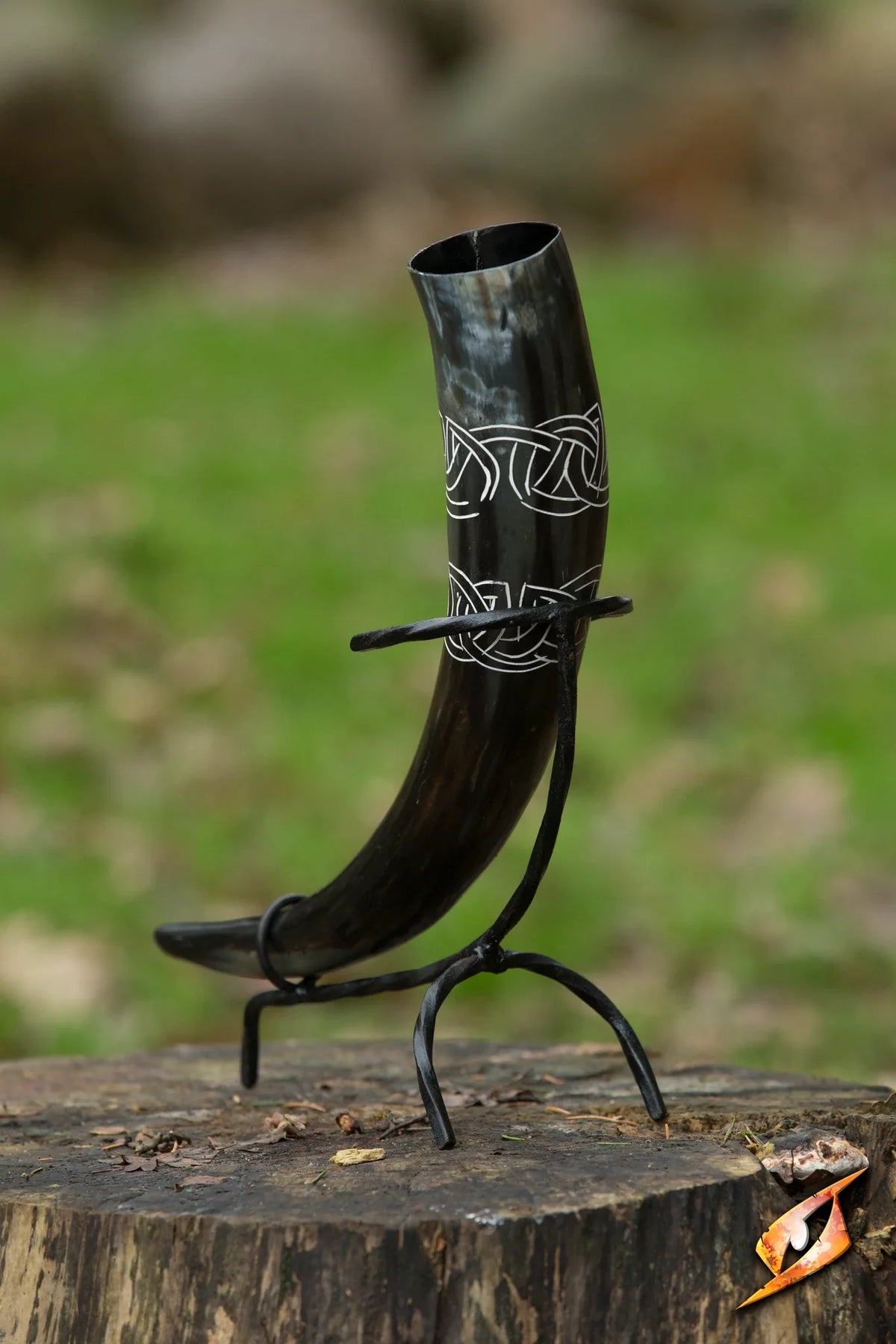
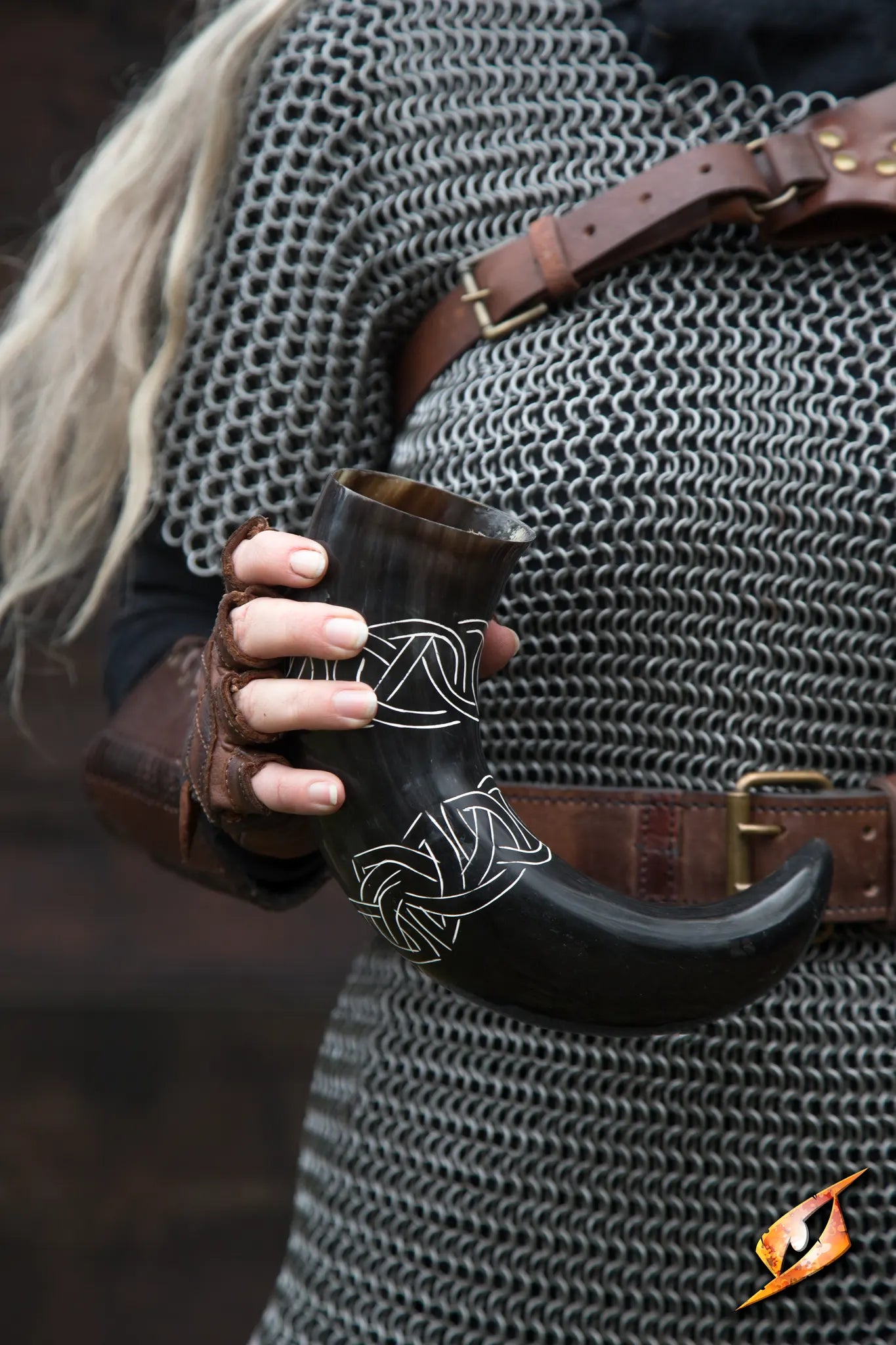
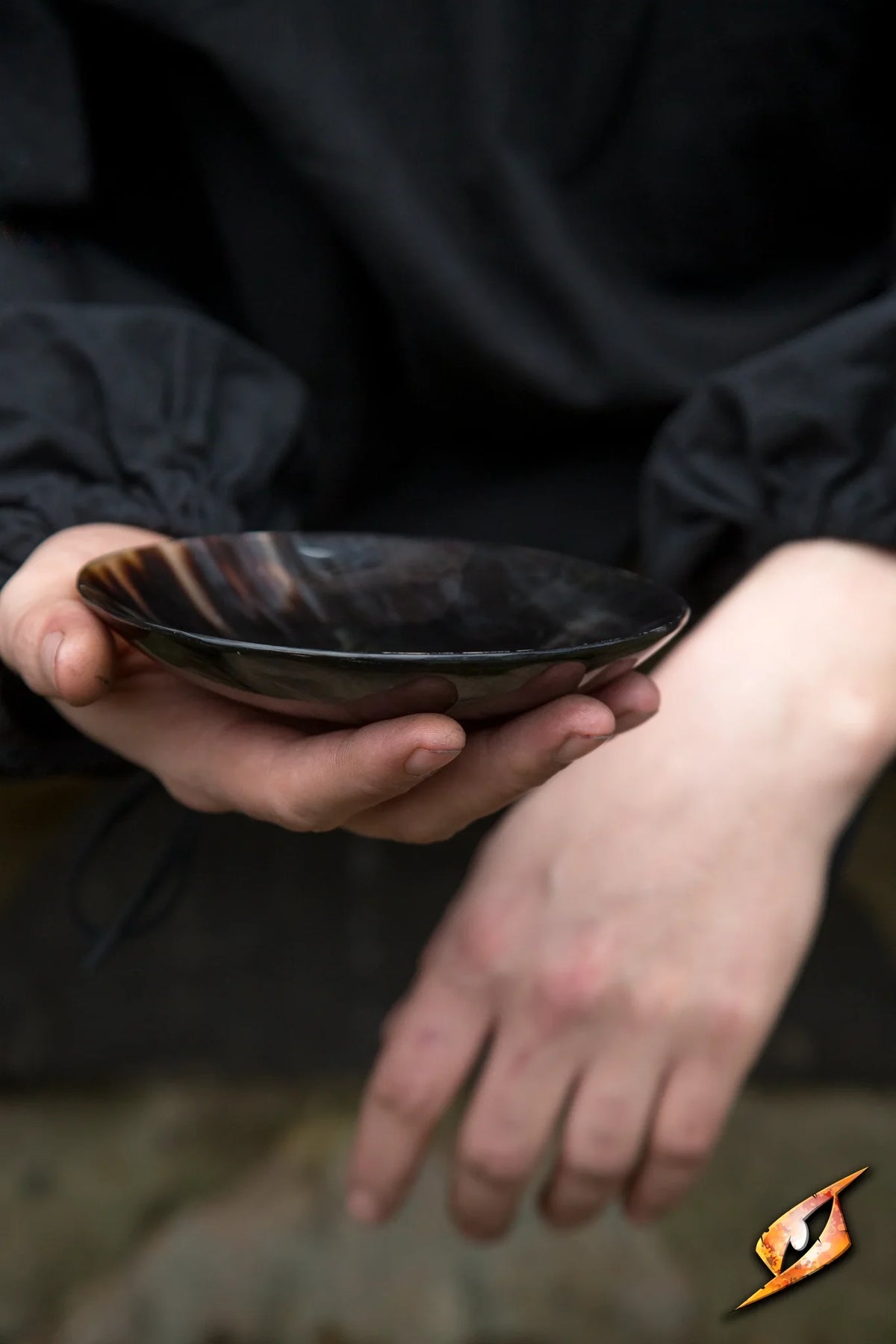
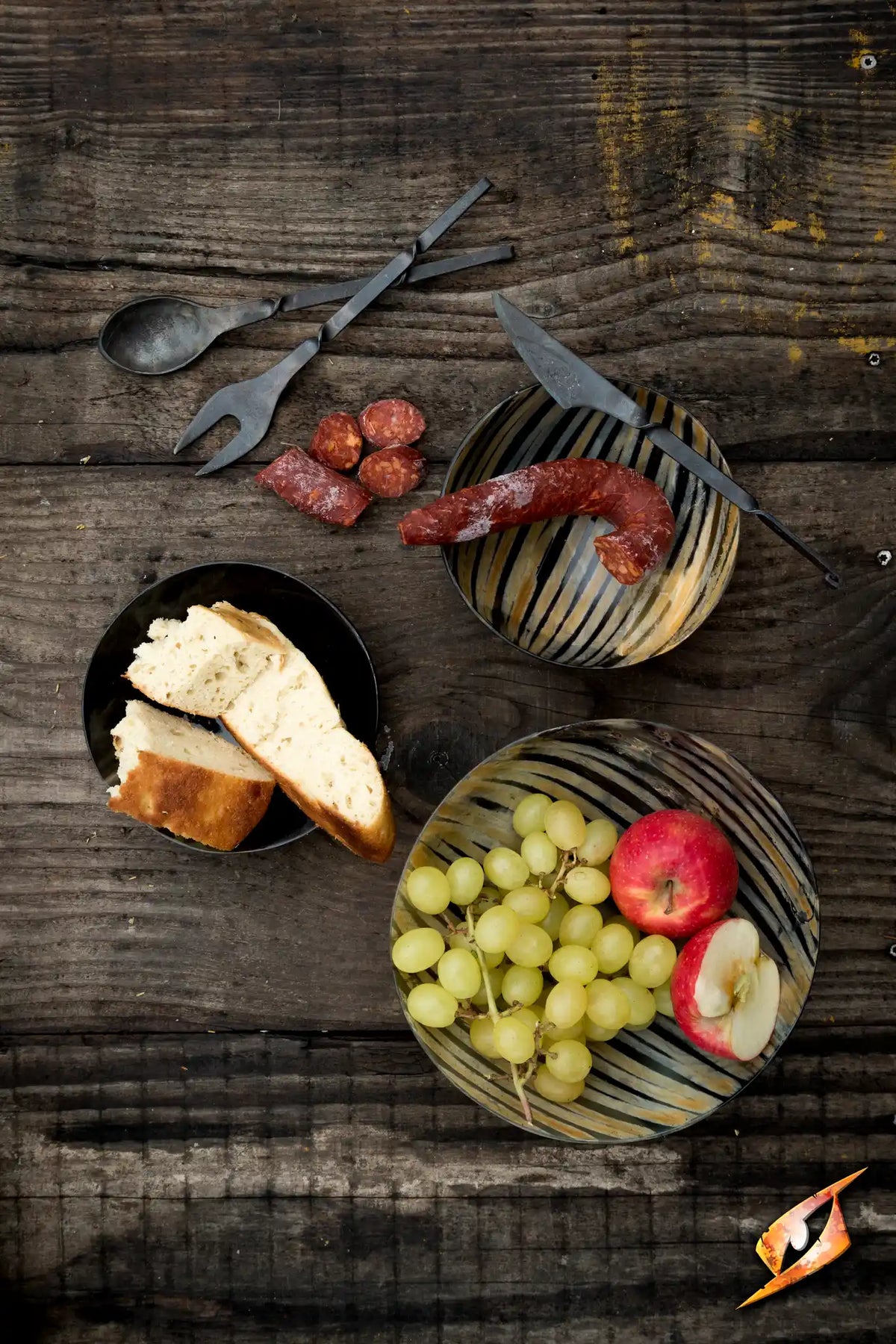
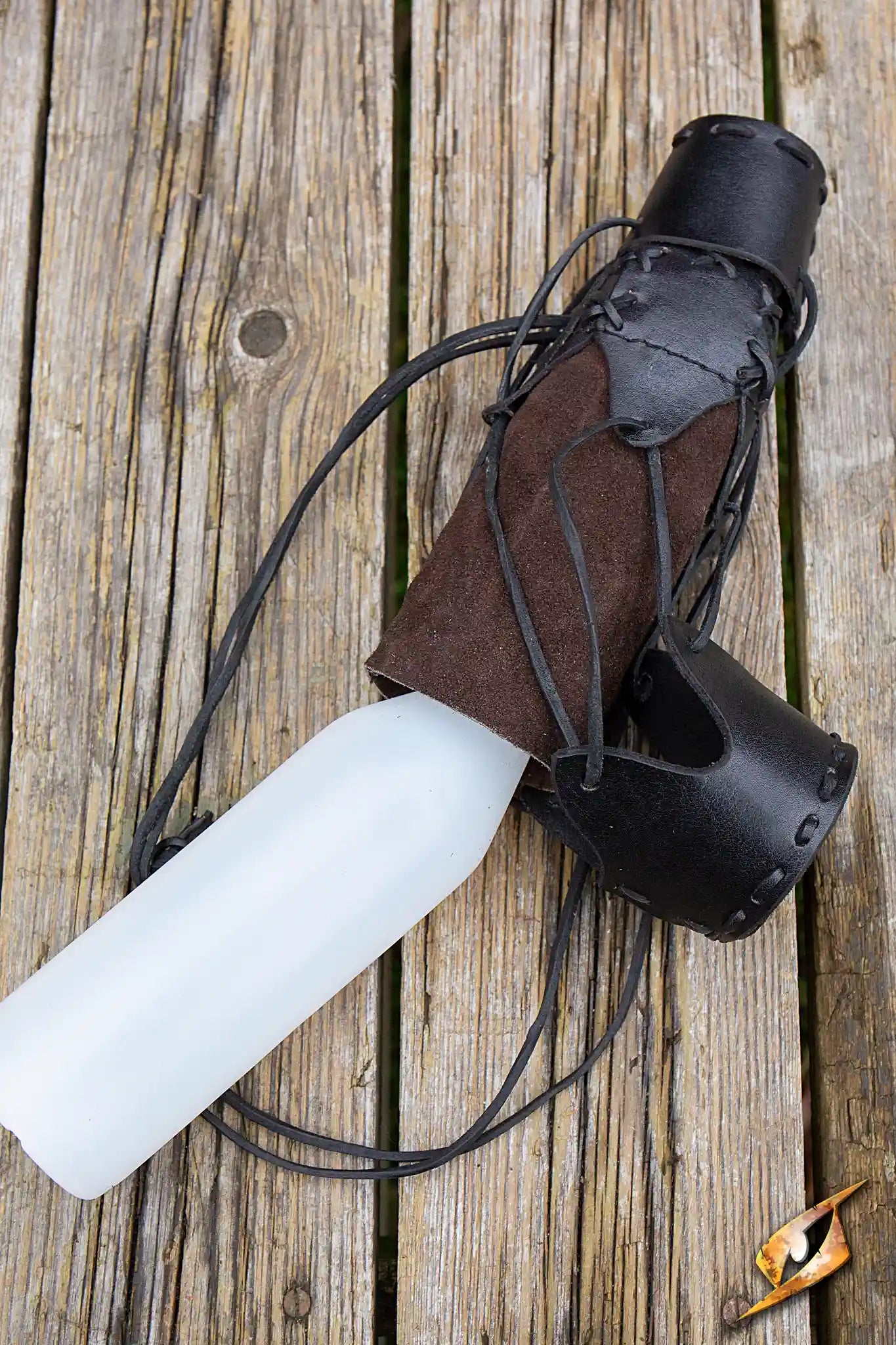
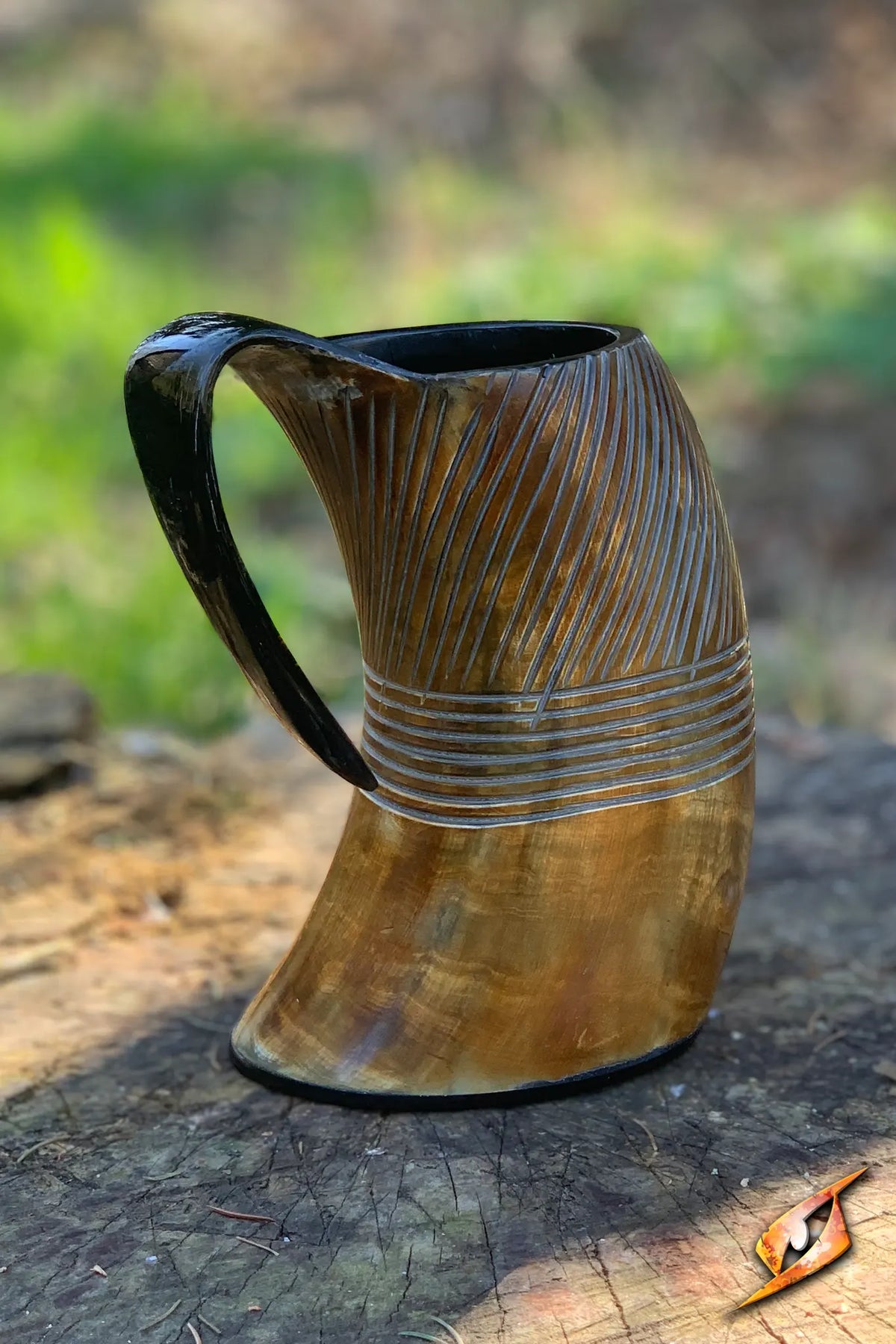
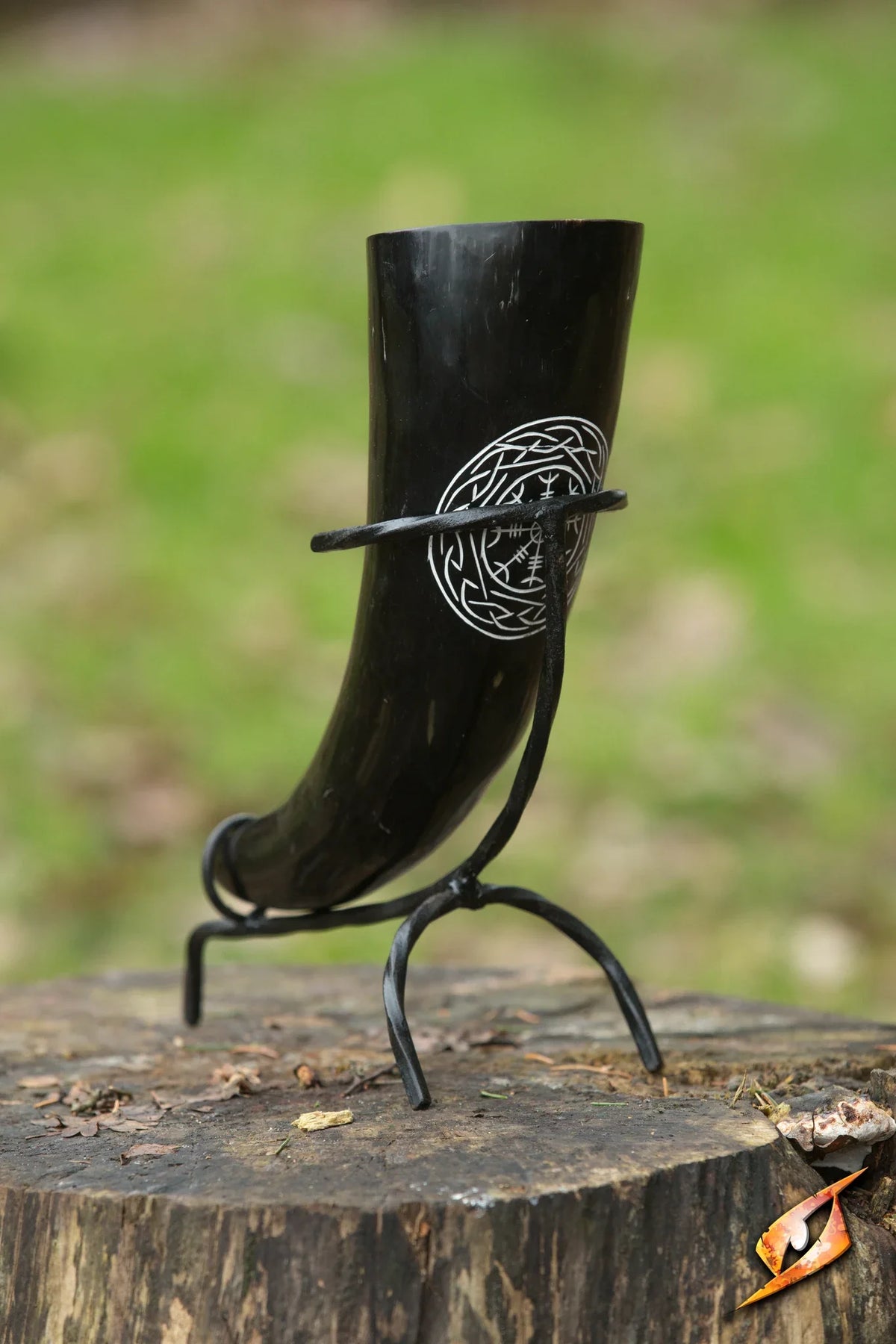
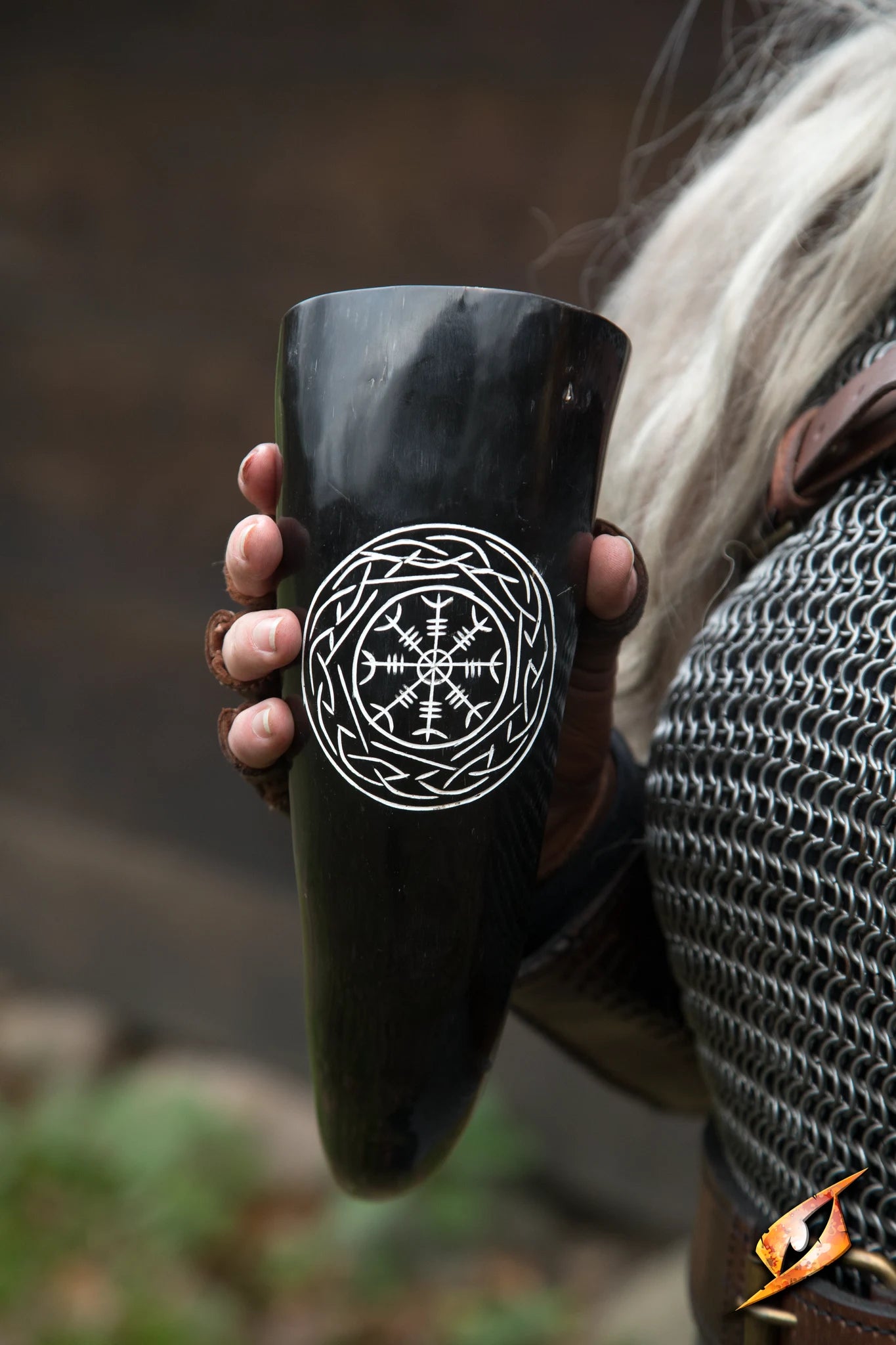
- Horn: Natural texture, durable, and atmospheric. Horn mugs, cups, and bowls suit everything from Viking warbands to rugged mercenaries. Epic Armoury's Horn Tableware and forged Iron Cutlery are built to last and easy to integrate into any character kit.
- Wood: Lightweight, quiet, and deeply immersive. A fan favorite across the LARP community for good reason.
- Ceramic and clay: Visually authentic and widely used in historical settings, especially among wealthier character archetypes.
- Tin and bronze: Common in reenactment circles, though less popular at fantasy-focused events due to cost and upkeep.
- Forged iron: Heavy in the hand, simple in shape, and timeless. Iron cutlery feels exactly right for almost any setting.
How to Care for your LARP Tableware
The right care keeps your gear looking good and lasting longer.
Horn items:
- Rinse with warm water after use
- Dry thoroughly and store upside down to prevent trapped moisture
- Apply food-safe oil occasionally to prevent drying or cracking
Wood and ceramic:
- Clean gently, dry completely, and oil when needed
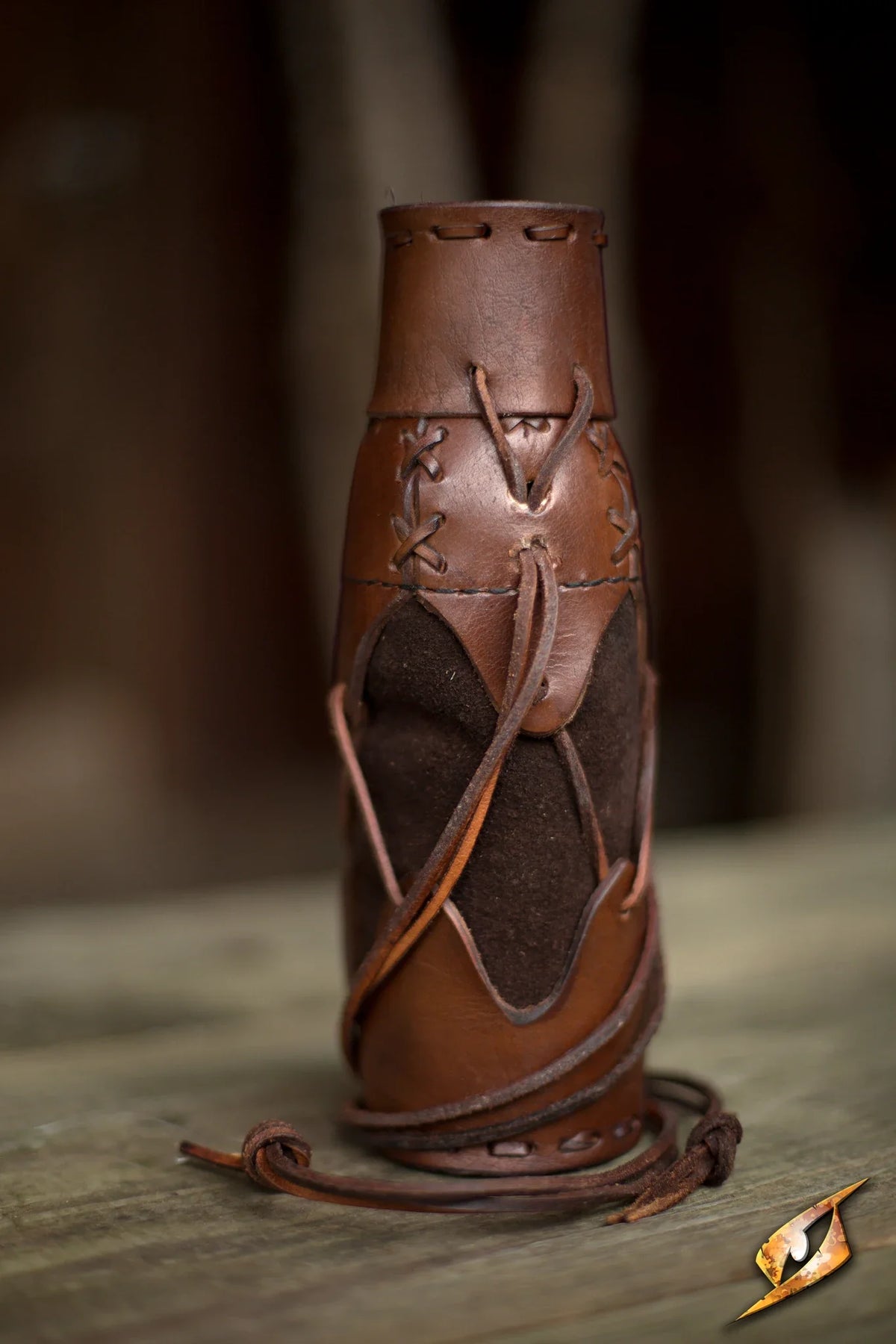
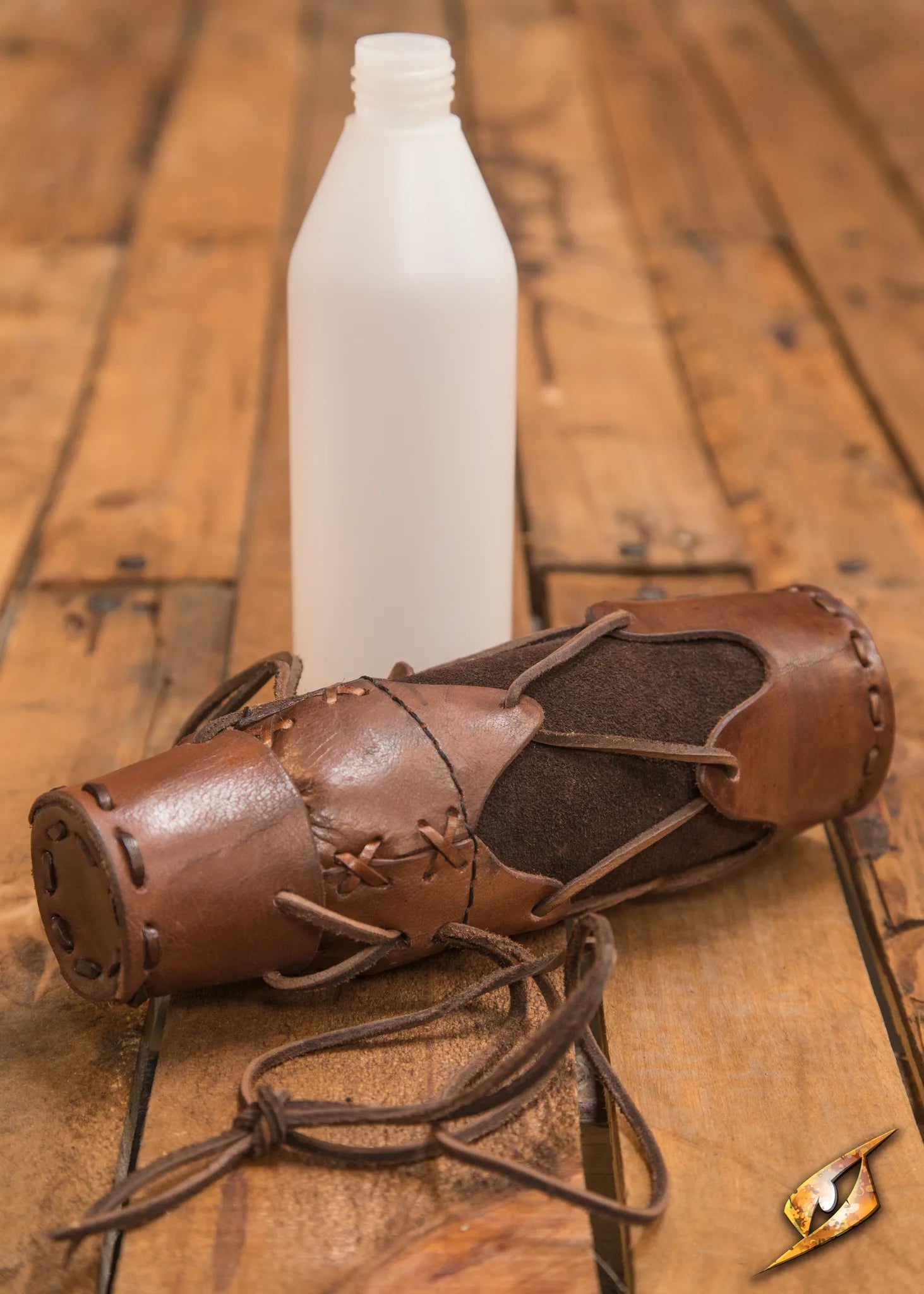
For transport: a padded wooden box or cloth-lined chest protects fragile pieces between events. A simple crate or wrapped bundle works well on-site while still fitting the aesthetic.
Every Piece Tells a Story
Authentic tableware is one of the simplest ways to enrich your LARP experience — and the right costume brings it all together. You don't need a banquet hall or a full wardrobe to make an impact. A few well-chosen pieces are enough to bring your character to life.
At Epic Armoury, we've selected gear that combines practicality with presence. So when you're packing your kit for the next event, don't overlook the small things. The clang of a spoon, the grip of a horn mug, the weight of a forged knife — these are the moments that turn a meal into a memory. And the right costume ensures that when you stand up from that table, your character is just as convincing on their feet as they were at the feast.
Ready to build your Feast Kit?


Read more
Have You Heard of Play to Lose and Play to Lift?
Most games are built around winning. LARP is built around something better. In competitive games, the contract is simple: learn the rules, outmanoeuvre your opponent, take the win. It's clean, sati...
Read more
A Beginner's Guide to Your First LARP Sword
If your LARP involves combat, chances are you'll need a weapon. But not just any prop will do, LARP swords are built to be safe, sturdy, and fun to swing, so it's worth understanding the basics bef...
Read more